

Maddy summaryThe Protecting Access to Recreation with Cash Act (PARC Act) requires all National Park System units that charge entrance fees to accept cash payments. This ensures visitors can pay with cash at every park entrance where a fee is collected, not just through electronic methods. The bill amends existing law to explicitly mandate cash acceptance at all such fee locations. The policy change applies to all national parks, monuments, and other units currently charging entrance fees under federal regulations.
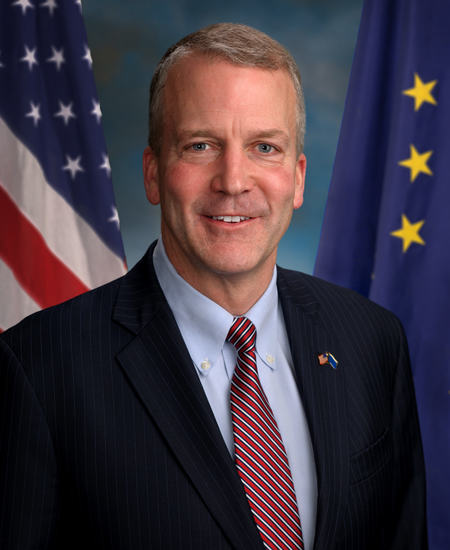
Sen. Dan Sullivan
Sponsored bills
Maddy summaryThis non-binding resolution expresses Congress's support for Israel by declaring it is not a racist or apartheid state, rejecting antisemitism and xenophobia, and affirming the U.S. as a steadfast partner. It serves as a symbolic statement of bipartisan backing without creating new laws, funding, or obligations. Introduced by Senators Cotton, Cruz, and others in July 2023, it reflects congressional sentiment rather than policy change.
Maddy summaryThis bill requires the Federal Aviation Administration (FAA) to hire the maximum number of new air traffic controllers each year from 2024 through 2028, based on the training capacity of the FAA Academy. It directly affects the FAA, which must set annual hiring targets aligned with its ability to train new controllers. The law does not change existing hiring rules but mandates that the FAA utilize its full training capacity each year for new controller hires during this period. It excludes certain individuals specified under federal law, but the core provision focuses on maximizing new controller recruitment within available training resources.
Maddy summaryThe Pay Our Military Act of 2023 ensures that military personnel, Defense Department civilians supporting them, and qualifying Defense contractors continue receiving pay during any funding gap in fiscal year 2024. It appropriates funds from the Treasury to cover military pay, allowances, and support staff salaries when regular budget legislation is delayed. The funding remains available until either a full budget is passed, a continuing resolution is enacted, or January 1, 2025, whichever occurs first. This bill directly affects active-duty service members, reserve components, Defense civilians, and contracted support staff by guaranteeing their compensation during fiscal uncertainty.
Maddy summaryThis bill (S 2820) would amend the Antiquities Act to impose time limits on national monument designations. It requires that any new national monument or land reservation under the Act expire 6 months after creation unless Congress passes a new law extending it. If a monument expires without extension, the same land cannot be re-designated as a national monument for 25 years. This directly affects the President’s authority to establish monuments under the Antiquities Act and limits the permanence of such designations without congressional action.
Maddy summaryThis bill requires the U.S. Fish and Wildlife Service (USFWS) and National Oceanic and Atmospheric Administration (NOAA) Fisheries to withdraw three specific proposed rules related to the Endangered Species Act. The rules would have changed how species are listed, habitats designated, and interagency cooperation is handled under the Act. The bill prohibits these agencies from finalizing, implementing, or enforcing the withdrawn proposals. It directly affects federal agencies' regulatory process for endangered species protection, halting these specific rulemaking efforts.
Maddy summaryThis bill requires federal agencies to assess how energy regulations and policies impact at-risk communities, including low-income, rural, elderly, minority, and tribal populations. It mandates studies to identify barriers to affordable energy access in these communities and requires agencies to certify that new energy rules won't cause energy poverty. The Comptroller General and OMB must jointly report on energy poverty impacts and recommend solutions, such as improving infrastructure access or lowering fees. Agencies must also include "energy poverty statements" in new energy rules, stating they won't worsen energy poverty in vulnerable areas.
Maddy summaryThis bill ensures Coast Guard personnel receive continued pay and benefits during funding gaps specific to the Coast Guard, without requiring new appropriations. It directly affects all active-duty Coast Guard members (including reserves), qualified civilian employees, and contract workers who perform duties during such gaps. Key provisions mandate payment of military pay, death gratuities, funeral expenses, and housing allowances for dependents of service members who die on duty, using existing funding mechanisms. The law applies only when Coast Guard funding is delayed but Department of Defense funding is secured, preventing service disruptions during government shutdowns. It does not create new benefits but guarantees existing ones remain accessible during Coast Guard-specific funding lapses.
Maddy summarySRES 335 is a ceremonial Senate resolution designating September 23-October 1, 2023, as "Blue Star Welcome Week." It directly affects military families (including active duty, transitioning veterans, and their dependents) who relocate annually during permanent change-of-station moves. The resolution expresses gratitude for their service, acknowledges challenges in community belonging (citing a 2022 survey), and encourages civilians to welcome military-connected families into their communities. As a symbolic gesture, it does not create new laws or funding but formally recognizes this annual observance initiated by Blue Star Families.
Maddy summaryS 2766, the Honoring National Recovery Month Act, authorizes $1 million annually (2024-2028) for federal activities to support National Recovery Month. The bill directs the Health and Human Services Secretary to fund toolkits, public service announcements, websites, and community engagement efforts that celebrate people in recovery from substance use disorders or mental illness, combat related stigma, and educate the public. It does not change eligibility for services or create new benefits but focuses on awareness through federally funded communications. The primary direct effect is on the Department of Health and Human Services, which will implement these activities, while the broader impact supports communities and individuals affected by mental health and substance use challenges.