

Maddy summaryS.3028, the PUNISH Act of 2023, extends existing U.S. sanctions against Iran by preventing their modification or removal until a specified termination date. It requires the Secretary of State to submit annual reports to Congress assessing whether Iran's government or affiliated entities (like the Islamic Revolutionary Guard Corps) have engaged in activities such as assassinations, violence against U.S. citizens, or politically motivated detention of Iranian nationals in the U.S. The bill maintains current sanctions tied to Executive Orders 13871, 13876, 13902, and 13949, as well as sanctions on Iran's Central Bank and National Development Fund. These measures remain in effect until the President certifies compliance with specific conditions under the Comprehensive Iran Sanctions Act.
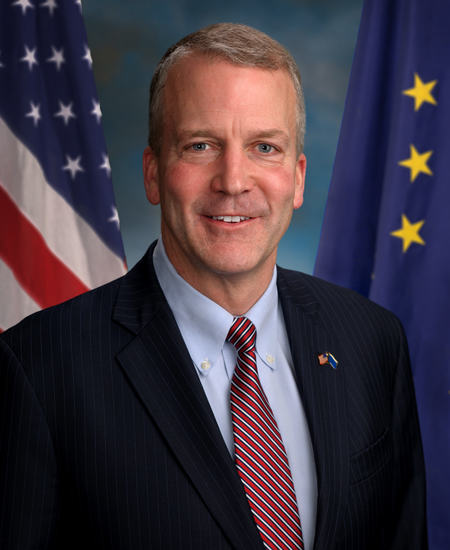
Sen. Dan Sullivan
Sponsored bills
Maddy summarySRES 388 is a ceremonial Senate resolution designating the week of September 25-29, 2023, as "National Clean Energy Week." It does not create new laws or programs but formally recognizes the importance of clean energy through symbolic designation. The resolution encourages individuals, organizations, and governments to support clean energy solutions and invest in affordable, low-emission technologies. It highlights the clean energy sector’s role in job creation (citing 8.1 million U.S. jobs in 2022) and economic growth without imposing any new requirements.
Maddy summarySRES 386 designates October 4, 2023, as National Energy Appreciation Day to honor energy workers and highlight the sector's contributions to reducing poverty, strengthening national security, and improving global quality of life. The resolution encourages federal, state, local, and community organizations - including schools, businesses, and nonprofits - to observe the day with educational events. It does not create new laws or alter existing policies, serving solely as a symbolic recognition of the energy industry's role in the U.S. economy and global impact.
Maddy summaryThis bill ensures that U.S. Customs and Border Protection (CBP) and U.S. Immigration and Customs Enforcement (ICE) border agents, officers, and certain contractors continue receiving pay and benefits during government funding gaps. It appropriates funds from the Treasury to cover salaries and specific benefits (like disability compensation and funeral expenses) for essential personnel in key border units, including CBP’s Border Patrol and ICE’s Enforcement and Removal Operations. The law applies during any lapse in appropriations for the Department of Homeland Security.
Maddy summaryThe Maritime Fuel Tax Parity Act extends an existing tax exemption for alternative motorboat fuels to cover vessels operating exclusively between U.S. Atlantic coast ports (including the Gulf of Mexico) or Pacific coast ports (including territories). This change, effective after December 31, 2021, removes an excise tax for these domestic coastal vessels on qualifying fuels. The exemption previously applied to other vessel types but did not cover vessels confined to single-coast domestic trade. The bill does not alter tax treatment for vessels operating internationally or between different coasts.
Maddy summaryThis joint resolution seeks congressional disapproval of a U.S. Fish and Wildlife Service rule that designated the Northern Long-Eared Bat as an endangered species under the Endangered Species Act. The rule, published in November 2022 (87 Fed. Reg. 73488), would have provided federal protections for the bat and restricted activities impacting its habitat. If passed, this resolution would block those protections from taking effect, removing the bat’s endangered status. It uses a procedural mechanism under Title 5, U.S. Code, allowing Congress to reject agency regulations.
Maddy summaryThis bill creates a 30% federal tax credit for owners of hydroelectric dams who make specific upgrades to their facilities. It directly affects dam operators who install qualifying improvements like fish passage systems, water quality enhancements, dam safety upgrades, or river restoration projects (such as removing obsolete structures). The credit applies to property placed in service after December 2022, requires prior approval from the Federal Energy Regulatory Commission or state officials, and expires for approvals received after 2031. It also includes special provisions for small, off-grid "approved remote dams" under 20 megawatts.
Maddy summaryThis bill adds a new exemption to the Fair Labor Standards Act for certain outdoor recreational guides and outfitting employees. It exempts workers primarily employed by businesses offering outdoor guiding or outfitting services if their employer operates for fewer than seven months annually or has a seasonal revenue pattern (where six-month revenue averages don't exceed one-third of the other six months). The exemption removes the requirement for overtime pay for hours worked beyond 40 per week under these specific conditions. This directly affects seasonal outdoor recreation businesses and their employees in this industry.
Maddy summarySRES 208 is a Senate resolution designating November 12, 2023, as "National Warrior Call Day." It encourages U.S. citizens, particularly those connected to military service, to reach out to veterans through peer-to-peer conversations to support their mental health and transition from military life. The resolution highlights veteran suicide statistics (6,146 deaths in 2020) and emphasizes that isolation - exacerbated by the pandemic - increases risks for conditions like PTSD. It does not create new programs but urges public engagement to connect veterans with support systems. This is a symbolic, awareness-raising measure with no binding policy changes.
Maddy summaryThis bill amends federal grant programs to support agriculture education at institutions serving Alaska Native and Native Hawaiian communities. It requires these grants to last no longer than three years (previously indefinite) and increases annual funding from $10 million to $15 million for fiscal years 2024 through 2028. The changes directly affect Alaska Native-serving and Native Hawaiian-serving institutions receiving agriculture education grants under the National Agricultural Research, Extension, and Teaching Policy Act. The key provisions establish fixed grant durations and boost funding levels to better support these specific educational programs. These adjustments aim to provide more stable, predictable resources for student programs in agricultural fields.