

This resolution urges the Department of State to take action on unpaid Peruvian agrarian reform bonds by encouraging Peru to negotiate in good faith with U.S. bondholders regarding payment of these bonds.
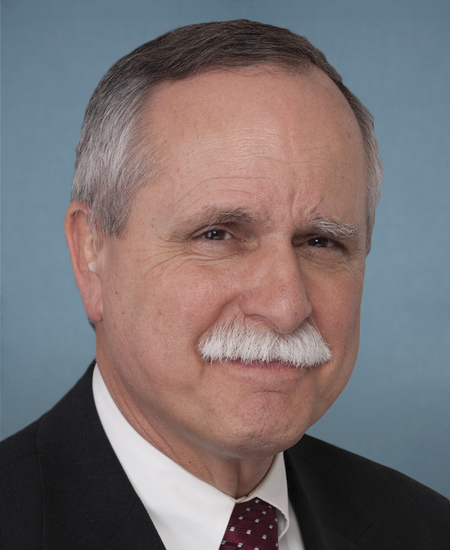
Rep. David B. McKinley
Sponsored bills
Historic Tax Credit Growth and Opportunity Act of 2021 This bill increases the rehabilitation tax credit and modifies certain requirements for the credit. The bill increases the rate of the credit for qualified rehabilitation expenditures in taxable years beginning after December 31, 2019, and before January 1, 2027, after which the rate reverts to 20%. The bill increases the rate of the credit to 30% for certain small projects whose qualified rehabilitation expenditures do not exceed $2.5 million. The bill also expands the types of buildings eligible for rehabilitation by decreasing the rehabilitation threshold from 100% to 50% of project expenses. It also eliminates the basis adjustment requirement for the credit and modifies rules relating to tax-exempt use property eligible for the credit.
Supporting Accurate Views of Emergency Services Act of 2021 or the 911 SAVES Act This bill requires the Office of Management and Budget, by 30 days after the bill's enactment, to categorize public safety telecommunicators as a protective service occupation under the Standard Occupational Classification System.
PPP Extension Act of 2021 This bill extends the Paycheck Protection Program, established to support small businesses in response to COVID-19 (i.e., coronavirus disease 2019), through June 30, 2021. Currently, the program is set to expire on March 31, 2021. For the final 30 days of the program (i.e., from June 1 until June 30), the Small Business Administration may only process applications submitted prior to June 1, and it may not accept any new loan applications. The bill excludes the budgetary effects of this bill from PAYGO scorecards under the Statutory Pay-As-You-Go Act of 2010 and from Senate PAYGO scorecards.
Resident Physician Shortage Reduction Act of 2021 This bill increases the number of residency positions eligible for graduate medical education payments under Medicare for qualifying hospitals, including hospitals in rural areas and health professional shortage areas. Current law provides for an increase of up to 200 positions per fiscal year beginning in FY2023, with a total increase of 1,000 positions; each hospital may receive up to 25 additional positions. The bill provides for an additional increase of 2,000 positions per fiscal year from FY2023-FY2029; during this period, each hospital may receive up to 75 additional positions in total under the bill and current law. Additionally, one-third of the positions that are made available under the bill must be allocated to hospitals that are already operating above applicable resident limits. The bill also requires the Government Accountability Office to report on strategies to increase the diversity of the health professional workforce, including with respect to representation from rural, low-income, and minority communities.
Improving State and Local Government Access to Performance Contracting Act This bill requires the Department of Energy (DOE) to provide financial assistance to states for the implementation, improvement, or expansion of a state energy savings performance contracting program. Energy savings performance contract means a contract that provides for the performance of services for the design, acquisition, installation, testing, operation, maintenance, or repair of an energy conservation measure, water conservation measure, resiliency-related measure, utility cost savings measure, or series of measures. Upon the request of a state, DOE must provide information and technical assistance in the development and implementation of such a state program. Further, DOE must establish a national project facilitator certification program to expand the availability of individuals who are trained and certified to work on behalf of the state and local government as project facilitators who will assist with the oversight of projects under state programs.
Reinforcing Utility Restoration After Losses (RURAL) Act This bill provides authority and funding for the Department of Agriculture to establish a loan program for certain rural utility service providers (e.g., electric, telecommunications, or waste disposal service providers) to replace specified losses during a federally declared disaster or emergency. During such a disaster or emergency, interest on the loan shall not accrue, and repayment of principal shall not be required. Borrowers may qualify for partial loan forgiveness if certain requirements are met. The bill also establishes and provides funding for a Rural Utility Bridge Loan Fund to implement the program.
This resolution requires the chair of a House committee to administer a specific oath to any witness appearing before the committee. Currently, a committee chair is only authorized to administer an oath.
Willie O'Ree Congressional Gold Medal Act This bill provides for the award of a Congressional Gold Medal to Willie O'Ree or, if unavailable, to a member of his family, in recognition of his contributions and commitment to hockey, inclusion, and recreational opportunity.
Reopening America by Supporting Workers and Businesses Act of 2021 This bill permits states to provide a one-time lump sum payment, through July 1, 2021, to individuals who (1) were eligible for COVID-19 pandemic unemployment compensation during any week after enactment of this bill, and (2) are no longer eligible as a result of becoming thereafter reemployed. Payments of $1,200 shall be paid to individuals who work at least 30 hours and $600 to individuals who work at least 20 hours but less than 30. The payments are available for claimants (1) who are not employed by a government entity, (2) who return to work for at least four consecutive weeks, and (3) whose annual salary does not exceed $75,000. Before receipt of a payment, the individuals' employers must verify their hours and earnings. Additionally, the bill (1) accelerates a scheduled increase in funding for reemployment services and eligibility assessments (RESEA), (2) allows states to use RESEA funds to serve all workers receiving unemployment benefits, and not just those most likely to exhaust their benefits; and (3) allows states to provide reemployment services to individuals receiving pandemic unemployment assistance and pandemic emergency unemployment compensation. Finally, the bill reinstates the requirement that unemployment claimants certify they are able, available, and actively seeking work.