Family Support Services for Addiction Act of 2021 This bill directs the Substance Abuse and Mental Health Services Administration to award grants to certain nonprofits to develop or expand services for individuals with substance use disorders and their families.
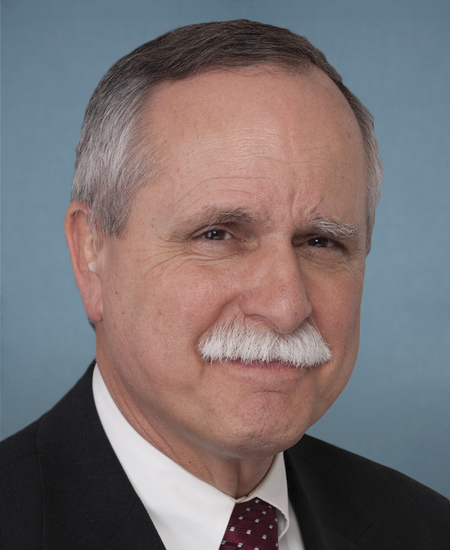
Rep. David B. McKinley
Sponsored bills
Combatting Racist Training in the Military Act of 2021 This bill prohibits the Armed Forces and academic institutions of the Department of Defense from promoting specified anti-American and racist theories (e.g., that any race is inherently superior or inferior to any other race). Specifically, the bill prohibits including anti-American and racist theories or materials in curricula, reading lists, seminars, workshops, trainings, or other educational or professional settings in a manner that could appear as sponsorship, approval, or endorsement; contracting with, hiring, or otherwise engaging speakers, consultants, diversity trainers, and other persons for the purpose of advocating anti-American and racist theories; compelling members of the Armed Forces to affirm or profess belief in anti-American and racist theories; and segregating members of the Armed Forces by race in any setting, including educational and training sessions.

Accelerating Kids' Access to Care Act This bill requires state Medicaid programs to establish a process through which qualifying out-of-state providers may enroll as participating providers without undergoing additional screening requirements. Among other things, a qualifying provider must (1) serve minors, or adults whose condition began as a minor; and (2) have previously been screened for Medicare participation or for participation in the Medicaid program of the state in which the provider is located.
Defund Cities that Defund the Police Act of 2021 This bill prohibits state or local governments that abolish or defund police departments from receiving certain Economic Development Administration grants or Community Development Block Grant funds. Specifically, the bill applies to state or local governments that abolish or disband the police or significantly reduce the police department's budget without reallocating a portion of those funds to any other community policing program. Further, a state or local government that abolishes or defunds a police department must return any Community Development Block Grant funds it has already received.
Repealing Illegal Freedom and Liberty Excises Act or the RIFLE Act This bill repeals the excise tax on the transfer of firearms. The bill shall not be construed as placing any regulated firearms under the jurisdiction of the U.S. Consumer Product Safety Commission.
This bill modifies the definition of water heater , otherwise revises energy conservation standards, and sets forth labeling requirements for water heaters.
Affordable Housing for Homeless Veterans Act of 2021 This bill reauthorizes and modifies a program of the Department of Veterans Affairs (VA) that provides housing assistance to homeless veterans. Specifically, the bill authorizes the VA to enter into agreements with specified entities (e.g., nonprofit organizations or tribal entities) through September 30, 2025, to assist homeless veterans and their families in acquiring shelter or permanent housing. Under the bill, the VA may enter into agreements where an entity that is buying, leasing, or receiving property agrees to sell or rent the property directly to homeless veterans or veterans at risk of homelessness.
Global Investment in American Jobs Act of 2021 This bill requires the Department of Commerce to conduct an interagency review of the global competitiveness of the United States in attracting foreign direct investment and addressing foreign trade barriers that firms in advanced technology sectors face in the global digital economy. Such review shall include an assessment of (1) the current economic impact of foreign direct investment in the United States, (2) trends in global cross-border investment and data flows, (3) federal government policies that are linked to the ability of the United States to attract and retain foreign direct investment, and (4) the adequacy of federal government efforts to increase the ease for foreign firms considering investment in the United States. Commerce must report the findings of such review and submit recommendations for increasing the global competitiveness of the United States in attracting foreign direct investment and developing new technologies and services.
Creating Opportunities Now for Necessary and Effective Care Technologies (CONNECT) for Health Act of 2021 or the CONNECT for Health Act of 2021 This bill expands coverage of telehealth services under Medicare. Among other provisions, the bill allows the Centers for Medicare & Medicaid Services (CMS) to waive certain restrictions, such as restrictions on the types of technology that may be used; permanently removes geographic restrictions on originating sites (i.e., the location of the beneficiary) and allows the home of the beneficiary to serve as the originating site for all services; permanently allows federally qualified health centers and rural health clinics to serve as the distant site (i.e., the location of the health care practitioner); and allows the CMS to generally waive coverage restrictions during any public health emergency. Additionally, the CMS must report on the effects of expanded telehealth services during the COVID-19 public health emergency, including with respect to the utilization, quality, and outcomes of services. The Center for Medicare and Medicaid Innovation may also test alternative payment models relating to expanded telehealth services.
Home Lead Safety Tax Credit Act of 2021 This bill allows owners of eligible dwelling units a new tax credit through 2024 for 50% of the lead hazard reduction activity costs for each such unit, up to an aggregate of $4,000 per unit. An eligible dwelling unit is any unit located in the United States that was placed in service before 1978. The bill (1) specifies the types of lead hazard reduction activity costs eligible for the credit, including risk assessment and abatement costs; and (2) limits the amount of the credit in any taxable year to $3,000 for specified abatement measures and $1,000 for interim lead control measures.