Supporting Medicare Providers Act of 2022 This bill extends a payment increase under Medicare's physician fee schedule through the end of 2023 (currently set to expire at the end of 2022).
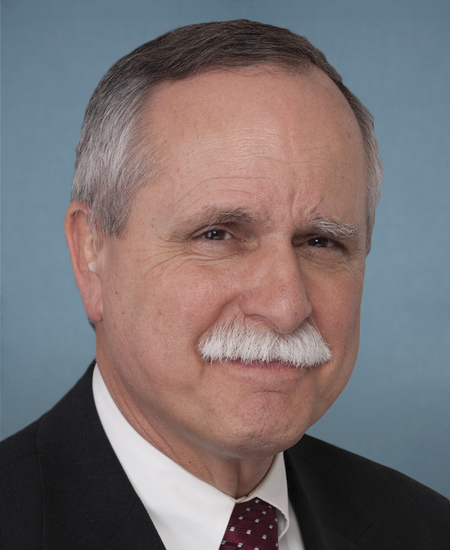
Rep. David B. McKinley
Sponsored bills
Menopause Research Act of 2022 This bill directs the National Institutes of Health to conduct or support research and related activities concerning menopause and the health of mid-life women. This includes evaluating past and current research and developing a strategic plan to guide future research.
Assistance for Rural Community Hospitals Act of 2022 or the ARCH Act of 2022 This bill extends certain payment adjustments for Medicare-dependent hospitals and low-volume hospitals until the end of FY2027 (the adjustments currently expire at the end of FY2022).
DHS Restrictions on Confucius Institutes and Chinese Entities of Concern Act This bill restricts funding to an institution of higher education (IHE) that has a relationship with a Confucius Institute (a cultural institute directly or indirectly funded by the Chinese government). It also requires certain disclosures related to Chinese entities of concern (generally, universities or colleges involved in China's military, police, or intelligence activities). Specifically, the Department of Homeland Security (DHS) must ensure that an IHE that has awarded a contract to, entered into an agreement with, or received an in-kind donation or gift from a Confucius Institute is ineligible to receive specified funds from DHS, unless the IHE terminates the relationship. The IHE may regain eligibility for these funds upon termination of the relationship. DHS may waive this funding restriction, on a case-by-case basis and for a period of not more than one year, if it is in the national security interests of the United States. Additionally, an IHE that has a relationship with a Chinese entity of concern and is seeking to receive or receives specified DHS funds must notify DHS about the relationship. DHS must provide outreach and, upon request, technical assistance to IHEs related to compliance with this bill.

Veteran Recruitment Act This bill requires the Department of State and the U.S. Agency for Global Media to develop and implement plans to ensure that veterans receive priority hiring recruitment. The bill also requires the State Department to align Foreign Service positions with military ranks and to expand outreach efforts in recruiting veterans for the Foreign Service.
Taxpayers Support Life Act This bill prohibits the Department of Health and Human Services (HHS) from finalizing, implementing, administering, or enforcing a proposed rule (published on August 4, 2022) that implements the statutory ban on discrimination in federally funded health programs and activities. Further, HHS may not use federal funds to contravene the administration or enforcement of the existing nondiscrimination rule, which became effective on June 19, 2020.
Physicians for Underserved Areas Act This bill modifies how a hospital's residency positions are redistributed after it closes for purposes of graduate medical education payments under Medicare. Under current law, if a hospital with an approved medical residency program closes, the Centers for Medicare & Medicaid Services (CMS) must redistribute the hospital's residency positions to other hospitals in the following order: (1) hospitals in the same core-based statistical area as the closed hospital, (2) hospitals in the same state as the closed hospital, (3) hospitals in the same region of the country as the closed hospital, and (4) other remaining hospitals. In order to receive the additional positions, hospitals must demonstrate a likelihood of filling the positions within three years. The bill removes the requirement that the CMS prioritize hospitals in the same region of the country as the closed hospital. It also requires hospitals to demonstrate a likelihood of (1) starting to use the positions within two years, and (2) filling the positions within five years.
National World War II Memorial Commemorative Coin Act This bill directs the Department of the Treasury to mint and issue up to 50,000 $5 coins, 400,000 $1 silver coins, and 750,000 half-dollar clad coins in commemoration of the National World War II Memorial in the District of Columbia. The design of the coins shall be emblematic of the memorial and the service and sacrifice of American soldiers and civilians during World War II. All surcharges received from the sale of such coins shall be paid to the Friends of the National World War II Memorial to support the National Park Service in maintaining and repairing the memorial, and for educational and commemorative programs.
Safeguarding Treatment for the Restoration of Ecosystems from Abandoned Mines Act or the STREAM Act This bill allows a state to set aside up to 30% of its annual grant for abandoned mine reclamation provided under the Infrastructure Investment and Jobs Act for the treatment and abatement of acid mine drainage, which is the release of acidic water from abandoned coal mines.
National Plan to End Parkinson's Act This bill requires the Department of Health and Human Services (HHS) to carry out a project to prevent and cure Parkinson's disease (a progressive brain disorder that causes unintended or uncontrollable movements) and related conditions. Among other components of the project, HHS must (1) implement and periodically update a national plan to coordinate and guide efforts to prevent and cure the disease; (2) improve diagnosis, treatment, and care of those with the disease; and (3) address health and other disparities related to the disease. HHS must also conduct annual assessments on the preparation for and response to the increased burden of Parkinson's disease. In addition, the bill establishes a council, comprised of federal and nonfederal stakeholders, to advise HHS on and make recommendations concerning the prevention and cure of Parkinson's disease. The bill's provisions terminate at the end of calendar year 2035.