

Pain-Capable Unborn Child Protection Act This bill establishes a new criminal offense for performing or attempting to perform an abortion if the probable post-fertilization age of the fetus is 20 weeks or more. A violator is subject to criminal penalties—a fine, a prison term of up to five years, or both. The bill provides exceptions for an abortion (1) that is necessary to save the life of the pregnant woman, or (2) when the pregnancy is the result of rape or incest. A physician who performs or attempts to perform an abortion under an exception must comply with specified requirements. A woman who undergoes a prohibited abortion may not be prosecuted for violating or conspiring to violate the provisions of this bill.
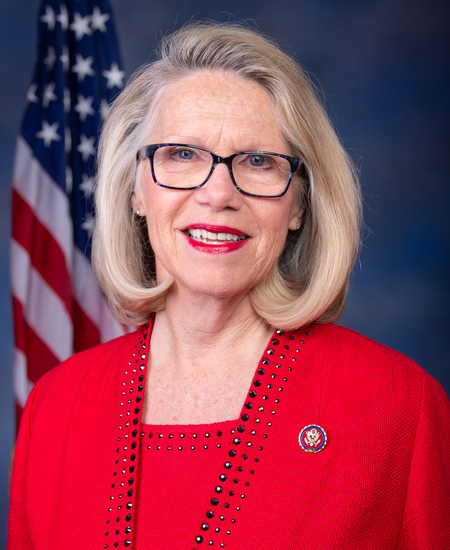
Rep. Carol D. Miller
Sponsored bills
Life at Conception Act This bill declares that the right to life guaranteed by the Constitution is vested in each human being at all stages of life, including the moment of fertilization, cloning, or other moment at which an individual comes into being. Nothing in this bill shall be construed to authorize the prosecution of any woman for the death of her unborn child.
No Taxpayer Funding for Abortion and Abortion Insurance Full Disclosure Act of 2021 This bill modifies provisions relating to federal funding for, and health insurance coverage of, abortions. Specifically, the bill prohibits the use of federal funds for abortions or for health coverage that includes abortions. Such restrictions extend to the use of funds in the budget of the District of Columbia. Additionally, abortions may not be provided in a federal health care facility or by a federal employee. Historically, language has been included in annual appropriations bills for the Department of Health and Human Services (HHS) that prohibits the use of federal funds for abortions—such language is commonly referred to as the Hyde Amendment. Similar language is also frequently included in appropriations bills for other federal agencies and the District of Columbia. The bill makes these restrictions permanent and extends the restrictions to all federal funds (rather than specific agencies). The bill's restrictions regarding the use of federal funds do not apply in cases of rape, incest, or where a physical disorder, injury, or illness endangers a woman's life unless an abortion is performed. The Hyde Amendment provides the same exceptions. The bill also prohibits qualified health plans from including coverage for abortions. Currently, qualified health plans may cover abortion, but the portion of the premium attributable to abortion coverage is not eligible for subsidies.
Working Families Childcare Access Act of 2021 or the WFCA Act of 2021 This bill allows certain additional expenses in a dependent care flexible spending arrangement (FSA), specifically qualified sports, tutoring, and music or art expenses. It also increases the eligibility age for dependent care benefits to 15, allows a carry forward of unused benefits to the next plan year, and increases to $15,000 the maximum amount of dependent care benefits excludible from employee gross income.
This bill modifies the tax credit for carbon oxide sequestration. It increases the applicable dollar amount of such credit, repeals the placed-in-service deadline, expands the types of facilities to which the credit applies, and extends the credit period from 12 to 20 years.
Truth in Buffalo Labeling Act This bill prohibits the sale of food that contains water buffalo and is labeled as buffalo unless the specific term used in the labeling is water buffalo .
Affordable Housing Credit Improvement Act of 2021 This bill revises provisions of the low-income housing tax credit and renames it as the affordable housing credit . The bill increases the per capita dollar amount of the credit and its minimum ceiling amount beginning in 2021 and extends the inflation adjustment for such amounts. The bill modifies tenant income eligibility requirements and the average income formula for determining such income. It also revises rules for student occupancy of rental units and tenant voucher payments, and prohibits any refusal to rent to victims of domestic abuse. The bill further modifies the credit to increase state allocations of the credit; repeal the qualified census tract population cap; prohibit local approval and contribution requirements; increase the credit for certain projects designated to serve extremely low-income households; increase the credit for certain bond-financed projects designated by state agencies; eliminate the basis reduction for properties that receive certain energy-related tax benefits; and increase the population cap for difficult development areas (i.e., areas with high construction, land, and utility costs relative to area median gross income). The bill also includes Indian and rural areas as difficult development areas and modifies other requirements relating to casualty losses, acquisition credits, and foreclosures.
Accelerate Long-term Investment Growth Now Act or the ALIGN Act This bill makes permanent the expensing of certain new business equipment. Expensing allows the deduction of the full amount of an expense item in the same taxable year.
Paris Transparency and Accountability Act This bill restricts the President's authority to unilaterally establish or revise actions the United States plans to take to meet its obligations under the Paris Agreement (a climate change treaty adopted in 2015) and increases congressional oversight of those actions. The bill also prohibits any legal cause of action in U.S. courts pursuant to the Paris Agreement. Specifically, the President must report to Congress before proposing new or revised actions under the agreement. The report must describe the proposed actions, including their impact on global emissions, and outline a detailed plan to address economic effects and related considerations of the actions. If a proposed action results in increased energy or manufacturing costs, the report must include specific policy measures (and timelines for implementing the measures) to prevent (1) job displacement, (2) reduced global competitiveness of U.S. goods, and (3) leaked emissions that may occur as a result of the proposed action. After the President submits a report, the bill provides Congress with a 60-day period to review it. During the review period, Congress may block the actions proposed in the report by enacting a joint resolution of disapproval. The bill also outlines procedures for the introduction and consideration of this type of joint resolution.
Protecting Access to Ground Ambulance Medical Services Act of 2021 This bill modifies Medicare payment of ground ambulance services in rural areas. Specifically, the bill extends the specialized rate increase for such services for an additional five years (until January 1, 2028). The bill also requires the Centers for Medicare & Medicaid Services to (1) allow an area that has 1,000 or fewer individuals per square mile to retain its status as a rural area even if it would otherwise no longer qualify, and (2) establish an appeals process for providers to seek reconsideration of a change in an area's status.