

Maddy summaryHR 3982, the Methane Reduction and Economic Growth Act, creates a new tax credit for businesses capturing methane from mining operations. It directly affects mining facilities that capture at least 2,500 metric tons of methane annually from underground, abandoned, surface mines, or related activities, requiring the methane to be used for energy (with minimal leaks) or injected into compliant pipelines. The credit replaces carbon capture provisions in the tax code, defining "qualified methane" as methane captured at the source and verified for use or storage. The credit applies to methane captured after December 31, 2022, for facilities beginning construction before January 1, 2033.
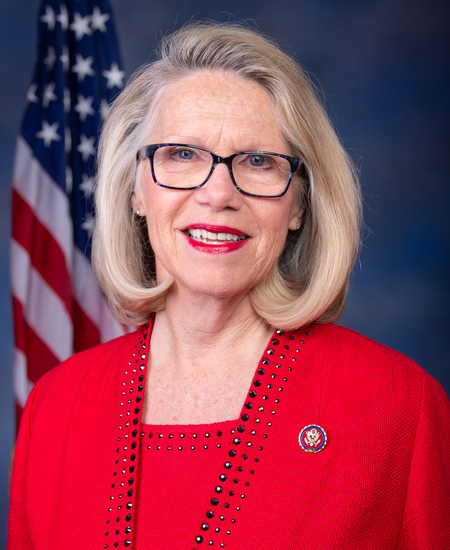
Rep. Carol D. Miller
Sponsored bills
Maddy summaryThis bill raises the threshold for businesses to report payments to independent contractors and vendors from $600 to $5,000 annually. It directly affects small businesses and self-employed individuals who receive payments below the new $5,000 level, reducing their reporting burden. The bill also adds an inflation adjustment mechanism to keep the threshold updated annually, rounding increases to the nearest $100. These changes apply to payments made after December 31, 2023, under tax code sections governing Form 1099 reporting and backup withholding.
Maddy summaryThe Neighborhood Homes Investment Act creates a new tax credit for developers who rehabilitate or build affordable homes in distressed communities. The credit is calculated based on the difference between rehabilitation costs and the sale price, with homes required to be sold at affordable prices to qualified homeowners with incomes up to 140% of the local median family income. The bill targets specific "qualified census tracts" defined by high poverty rates, low homeownership, and below-average home values. Developers must ensure homes are sold to qualified homeowners who use them as primary residences for at least five years, with additional safeguards to prevent program abuse and ensure fair housing practices.
Maddy summaryHR 3866, the Truth in Buffalo Labeling Act of 2023, requires food products containing actual water buffalo (genus *Bubalus*) to clearly label them as "water buffalo" instead of using the term "buffalo" alone. This directly affects food manufacturers selling products made from water buffalo meat and helps consumers distinguish these products from those made from North American bison (commonly called "buffalo" meat). The bill amends federal labeling law to prevent consumer confusion by prohibiting the use of "buffalo" for water buffalo products while allowing "buffalo" to remain the common name for products containing plains bison (*Bison bison bison*) or wood bison (*Bison bison athabascae*). The key provision mandates specific labeling for water buffalo products to ensure transparency in food labeling.
Rural Opportunity Zone and Investment Act This bill provides for the deferral of tax until December 31, 2032, on capital gains invested in qualified rural opportunity zones. A q ualified rural opportunity zone is any population census tract that is located in a rural county and is in persistent poverty.
Maddy summaryHR 3792 extends U.S. security funding for Israel through 2028 (Section 3) and expands energy cooperation to include advanced nuclear technologies and carbon capture (Section 5). It requires annual reports on regional security partnerships involving Israel (Section 6) and ensures countries in the Abraham Accords can access U.S. development programs (Section 8). The bill also mandates reports on diplomatic efforts against ICC investigations targeting the U.S. and Israel (Section 10) and encourages people-to-people programs to strengthen the Abraham Accords (Sections 7, 9). These provisions directly affect Israel’s diplomatic engagement, security partnerships, and economic cooperation in the Middle East.
Retail Revitalization Act of 2023 This bill amends tax rules for real estate investment trusts (REITs). It increases (1) the share of equity investments a distressed retail tenant may receive from a REIT from 10% to 50%, and (2) the equity share for regular tenants from 10% to 30%. The bill also allows taxable REIT subsidiaries to accept equity in a retail tenant's businesses as a form of rent, subject to certain restrictions.
Maddy summaryThe HALT Fentanyl Act expands the definition of fentanyl-related substances in the Controlled Substances Act to include many structurally similar compounds, making it easier to regulate new fentanyl analogs without individual listing. It defines these substances based on specific chemical modifications to fentanyl, with limited exceptions for substances already controlled or listed elsewhere. The bill also streamlines research procedures for schedule I substances by creating expedited registration processes and allowing multiple studies under one registration, while requiring the Attorney General to publish a list of substances meeting the new definition.
Maddy summaryHR 3678, the Pay Less at the Pump Act, terminates the Hazardous Substance Superfund financing rate effective January 1, 2023, and changes how advances from the Superfund are repaid. Specifically, it ends the requirement to apply a specific financing rate to the Superfund after 2022 and modifies repayment rules to require quarterly payments from unobligated funds until fully repaid. The bill directly affects the Superfund program and entities receiving advances from it, altering its financial structure. Note: The bill’s title is misleading - the legislation does not address fuel prices or gasoline costs at the pump. It focuses solely on Superfund financing terms, with effective dates specified in the text.
Maddy summaryThis bill requires the Treasury Secretary to report quarterly on foreign countries imposing "extraterritorial" or "discriminatory" taxes targeting U.S. businesses. It mandates progressively higher tax rates (starting at 5% and increasing to 20% over time) on income and payments from foreign individuals and corporations in those countries. The U.S. government can also restrict federal procurement from such entities and consider these taxes in trade negotiations. These measures directly affect foreign businesses operating in the U.S. or conducting transactions with U.S. entities. The policy aims to counter foreign tax policies that the U.S. views as unfair under international tax norms.