

Fostering Innovation and Research to Strengthen Tomorrow Act This bill doubles the rate of the tax credit for increasing research expenses and the alternative simplified research tax credit. It also increases the credit rate for taxpayers with no research expenses during a specified three-year period and the amount of the credit that certain small businesses may apply against payroll tax liabilities.
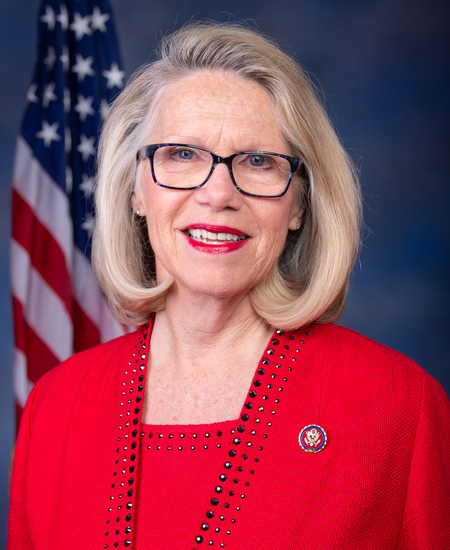
Rep. Carol D. Miller
Sponsored bills
Maddy summaryThis bill would expand employee ownership opportunities by making it easier for S corporations to adopt Employee Stock Ownership Plans (ESOPs). It extends tax deferral benefits for selling company stock to ESOPs, establishes a Treasury Department office to provide technical assistance for ESOP adoption, and amends small business laws to ensure ESOP-owned businesses remain eligible for small business programs. The bill also creates a new "Advocate for Employee Ownership" position within the Department of Labor to promote employee ownership and assist with related issues. These changes would directly affect S corporations considering or already using ESOPs, as well as employees who would become partial owners of their companies through these plans.
Build the Wall and Fight Fentanyl Act of 2023 This bill establishes accounts to fund the construction of physical barriers along the U.S. southern border and to provide grants to address fentanyl abuse. These accounts shall be funded from the sale of assets belonging to cartels that have been seized by the Drug Enforcement Administration, U.S. Immigration and Customs Enforcement, or U.S. Customs and Border Protection. The bill defines cartel as (1) an organization with operations in Mexico and the United States designated as a significant transnational criminal organization; (2) certain named organizations, such as the Sinaloa Cartel and the Juarez Cartel; and (3) other organizations as designated by the President.
Maddy summaryHR 4942 extends and modifies the Conrad State 30 program, which allows states to sponsor foreign medical graduates to work in medically underserved areas in exchange for a commitment to practice for three years. The bill directly affects foreign medical graduates seeking to work in the U.S., states that sponsor them, and health facilities in underserved communities. Key provisions include creating mechanisms for physicians to change employers or states if they face issues with their current employment, adding requirements for employment agreements (including prohibitions on non-compete clauses), and establishing exceptions to the three-year work requirement under certain circumstances. The bill also creates a process for states to recapture waiver slots when physicians leave their employment and requires annual reporting on the program's usage. These changes aim to improve physician retention in underserved areas by providing more flexibility and protections for foreign medical graduates.
Maddy summaryThis bill expands employee ownership in S corporations by extending tax deferral for selling company stock to employee ownership plans (ESOPs), creating a Treasury Department office to provide education and technical assistance for ESOPs, and amending small business rules to maintain eligibility for government programs after ESOP ownership exceeds 49%. It establishes a new Labor Department "Advocate for Employee Ownership" to coordinate federal efforts, educate stakeholders, and recommend policy improvements. The bill directly affects S corporations using ESOPs, their employees who become owners, and small businesses that might lose government program access due to ESOP acquisitions. Key provisions include tax incentive extensions, new support offices, and updated small business classification rules.
Maddy summaryThis bill directs the U.S. Treasury to mint commemorative coins marking the Marine Corps' 250th anniversary in 2025. It authorizes three coin types: $5 gold coins (max 50,000), $1 silver coins (max 400,000), and half-dollar coins (max 750,000), with surcharges of $35, $10, and $5 respectively. The surcharge proceeds will fund the Marine Corps Heritage Center's educational programs, with no net cost to taxpayers as the Treasury must recover all minting costs through the surcharges. The coins can only be issued during 2025, and the Treasury must ensure all costs are covered before distributing funds to the Heritage Foundation.
Strategy To Oppose Purposeful CCP Aggression at the United Nations Act of 2023 or the STOP CCP at UN Act of 2023 This bill requires actions to address efforts by China to expand its influence on the United Nations. Specifically, the bill requires the Department of State to establish the Office of Multilateral Strategy, which must implement a strategy to counter China at the United Nations. The office must report on its work to Congress. The State Department must also increase the number of U.S.-sponsored junior professional officers at the United Nations to match or exceed the number of such officers sponsored by China. Furthermore, the State Department and the U.S. Permanent Representative to the United Nations must report to Congress annually about China's actions to expand its influence on the United Nations, including through coercion, intimidation, and other illegitimate means.
Maddy summaryHR 4860, the PROTECT the Second Amendment Act, prevents landlords in specific federally assisted housing from banning or restricting residents' lawful possession of firearms in their private units or during travel between units and common areas. It directly affects tenants in housing funded by HUD or USDA programs, including public housing, Section 8 vouchers, and housing for veterans or people with disabilities. The bill prohibits landlords from imposing firearm bans or additional conditions on residents who lawfully carry firearms within their dwelling units or while moving through common areas to reach their units. This changes current policies in these housing programs by explicitly allowing firearm possession where state law permits.
Maddy summaryHR 4776, the Protecting Free Speech Act, ends a specific Department of Homeland Security (DHS) program called the Disinformation Governance Board and prevents federal funding for any similar entity. The bill directly affects DHS by terminating the board's operations and prohibiting the use of federal funds to create or support any replacement program with comparable functions. It does not create new free speech protections but formally removes this particular DHS initiative and blocks future funding for equivalent efforts. The bill focuses on eliminating an existing program rather than changing broader speech policies.
Maddy summaryHR 4695, the Unfair Tax Prevention Act, amends the tax code to create special rules for certain foreign-controlled companies operating under specific foreign tax regimes. It directly affects multinational entities controlled by foreign owners that face "extraterritorial taxes" (taxes based on income connections through ownership chains, not direct ownership). Key provisions include treating these entities as "applicable taxpayers" for base erosion rules, changing a key deadline to the bill's enactment date, and requiring 50% of their cost of goods sold to be counted as a tax benefit. This targets tax avoidance strategies used by some foreign-owned businesses in jurisdictions with complex cross-border tax structures. The changes apply to taxable years beginning after the bill's enactment.