

Maddy summaryThe Retirement Savings for Americans Act of 2023 would create a new government-administered retirement savings program called the American Worker Retirement Fund, designed to help workers without access to employer retirement plans. The program would automatically enroll eligible employees (those without existing retirement plans at work) at a 3% contribution rate (with an option to opt out), and provide a government match tax credit for contributions. Participants would have access to various investment options including government bonds, fixed income, and stock index funds, with funds in the account being non-forfeitable and not counting toward eligibility for public assistance benefits.
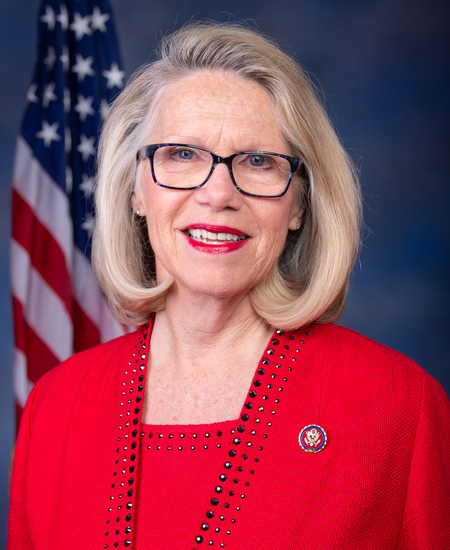
Rep. Carol D. Miller
Sponsored bills
Maddy summaryThis bill provides $13.1 billion in emergency funding to support Israel's defense and security needs following the situation in Israel. It allocates $4 billion for purchasing Iron Dome and David's Sling missile defense systems, $1.2 billion for developing the Iron Beam system, and $3.5 billion for foreign military aid (including grants for advanced weapons systems) to the Government of Israel. The funds cover military equipment, training, security operations, and diplomatic efforts related to the situation in Israel, with specific provisions allowing transfers between defense accounts and requiring emergency designation by Congress and the President. The funding directly affects Israel's military capabilities and U.S. diplomatic operations in the region.
'Operation Swords of Iron' Iron Dome Supplemental Appropriations Act This bill provides $2 billion in appropriations for the Department of Defense to provide to the government of Israel for the procurement of the Iron Dome defense system to counter short-range rocket threats. The funds must be provided to address emergent requirements in support of Operation Swords of Iron.
Health Care Practitioner Disaster Protection Act This bill extends certain liability protections available for health care practitioners who provide voluntary health care services in declared emergencies through a community health center other than the one that initially sponsored them. Current law makes the liability protections available to volunteer practitioners that are sponsored by a particular community health center. This bill maintains the liability protections for a volunteer practitioner who provides services through a different community health center if the center (1) seeks the assistance of the volunteer practitioner to respond to a declared emergency, and (2) promptly notifies the Department of Health and Human Services that the volunteer practitioner will be providing services.
Maddy summaryHR 5110, the Protecting Hunting Heritage and Education Act, amends the Elementary and Secondary Education Act of 1965 to clarify that federal education funds cannot be used for certain weapons - but this restriction does not apply to archery, hunting, or other shooting sports training programs. The bill directly affects schools and educational programs seeking to use federal funds for these specific activities, such as archery clubs or hunting safety education. It adds an explicit exception to the existing prohibition, allowing funds to support "educational instruction or enrichment activities" in these sports under authorized programs. This change removes ambiguity about funding eligibility for such educational initiatives in K-12 schools.
Maddy summaryHRES 755 is a procedural resolution introduced on October 2, 2023, that proposes expelling Representative Jamaal Bowman from the U.S. House of Representatives. It cites Article I, Section 5, Clause 2 of the Constitution, which grants the House authority to expel members. The resolution, referred to the Committee on Ethics, would remove Bowman from his seat if passed by the full House. This is a formal procedural step seeking to end Bowman's membership, not a law with broader policy effects.
Maddy summaryHR 5820, the Technology for Energy Security Act, extends a federal tax credit for businesses installing qualified fuel cell technology. It amends the tax code to change the expiration date for this credit from January 1, 2025, to January 1, 2033. This extension provides businesses with a longer timeframe to claim the credit for eligible fuel cell property investments. The bill directly affects companies deploying fuel cell energy systems by making the tax incentive available for an additional decade.
Maddy summaryHR 5791, the "Define the Mission Act," requires the President to submit a comprehensive strategy report to Congress within 30 days of the bill's enactment, detailing U.S. involvement in the Ukraine conflict. The report must define U.S. national interests in the conflict, set specific objectives with timelines, benchmarks, and resource estimates (including personnel and funding), list expected European NATO security contributions, and assess Russia’s natural gas market impact on resolving the conflict. It mandates the strategy must aim for a Russia-Ukraine cease-fire agreement and explicitly cannot depend on U.S. funding for Ukrainian reconstruction. The report must be unclassified but may include a classified annex for full transparency. This bill establishes a formal process for Congress to review and oversee U.S. policy toward Ukraine.
Maddy summaryThis bill blocks federal funding for states or local governments that suspend open or concealed firearm carry licenses. It directly affects state and local authorities by denying them access to federal financial assistance (such as for infrastructure or public programs) if they implement such license suspensions. The key mechanism is a funding penalty: any state or local government suspending gun permits forfeits eligibility for federal grants defined under 31 U.S.C. § 7501(a)(5). The policy change is a direct condition on federal aid, not a new regulation on gun ownership.
Maddy summaryThis bill updates the Opportunity Zones program by requiring designated census tracts to meet specific poverty and income criteria, with a process to replace tracts that no longer qualify. It establishes mandatory annual reporting for Opportunity Zone funds and investors, collecting data on investments, employment, and community impact. The bill extends the tax deferral period for capital gains invested in Opportunity Zones from 2026 to 2028. Additionally, it creates a $1 billion State and Community Dynamism Fund to support investments in underserved communities, with specific requirements for how these funds can be used for affordable housing, small businesses, and community capacity building.