

Maddy summaryHR 1777 establishes a $50 million annual fund (2024-2028) for collaborative defense research between the U.S. and Israel in emerging technologies like artificial intelligence, cybersecurity, directed energy, and automation. The bill directly supports U.S. and Israeli military forces by enabling joint development of new warfare capabilities to address current and future defense challenges. Key provisions include authorizing $50 million per year for collaborative projects, building on existing U.S.-Israel defense partnerships like counter-tunnel and counter-drone systems. This funding aims to strengthen bilateral defense innovation without altering existing military aid structures.
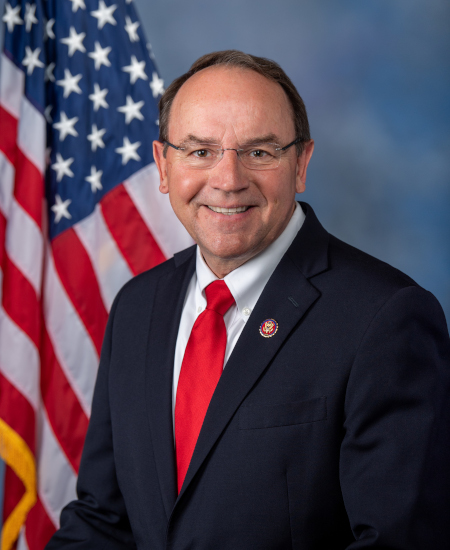
Rep. Thomas P. Tiffany
Sponsored bills
William and James Wonacott Act of 2023 This bill establishes specific criminal penalties for the sale or distribution of illicit fentanyl or a fentanyl-related substance to another person without that person's knowledge. Specifically, the bill prohibits the sale or distribution of any substance that has two milligrams or more of illicit fentanyl or a fentanyl-related substance to another person without that person's knowledge. Violators are subject to a minimum of 20 years of imprisonment (25 years if the violation results in death) and a maximum of life imprisonment.
Maddy summaryHCONRES 28 is a symbolic resolution expressing Congress's view that tax-exempt fraternal benefit societies - organizations providing life, health, and accident benefits to members - have long delivered critical community support. It states these societies, with about 7 million members nationwide, generate significant annual value through charitable work and volunteer activities (estimated at over $3.8 billion yearly). The resolution affirms that their tax-exempt status under Section 501(c)(8) of the tax code is essential for sustaining their volunteer-driven model and relieving pressure on government safety programs. As a non-binding expression of congressional sentiment, it does not alter existing laws or create new obligations.
Maddy summaryH.J. Res. 30 seeks to block a Department of Labor rule that would have required retirement plan managers (like those handling 401(k)s) to follow strict "prudence and loyalty" standards when selecting investments and voting on company matters. The rule, published in December 2022, aimed to protect retirement savings by ensuring fiduciaries prioritize participants' interests. This resolution, if passed, would prevent the rule from taking effect, avoiding new compliance requirements for retirement plan managers and sponsors. It directly affects retirement plan administrators and the millions of participants in these plans.
Maddy summaryThe Kids in Classes Act requires states receiving Title I federal education funds to provide those funds directly to parents and guardians if in-person instruction is unavailable for more than three days during a school year due to public health emergencies or collective bargaining actions. This provision allows families to use the money for educational expenses such as tutoring, curriculum materials, online learning resources, private school tuition, and educational therapies for students with disabilities. The bill is designed to ensure that disadvantaged students, who are disproportionately affected by school closures, continue to receive educational support when regular classroom instruction is not available. By mandating that Title I funds follow eligible children, the legislation aims to prevent widening educational gaps between low-income students and their peers during periods when schools cannot operate normally.
Maddy summaryHR 1703, the SECURE Flights Act, prohibits the use of specific immigration forms (like I-94 arrival records or I-200 warrants) as valid ID at airport security checkpoints. If such a document is presented, TSA must notify U.S. immigration and law enforcement agencies, and the individual may be barred from entering secure airport areas unless traveling for deportation or presenting a valid "covered ID" (e.g., passport, Global Entry card, or driver’s license). The bill also requires TSA to collect biometric data (like fingerprints or facial scans) from travelers who cannot verify U.S. citizenship and lack a covered ID, submitting this to the Homeland Security IDENT system. It directly affects travelers using non-standard immigration documents at airports, aiming to enhance security coordination between TSA and immigration authorities.
Maddy summaryHR 1725, the "End Zuckerbucks Act," amends the Internal Revenue Code to prohibit 501(c)(3) organizations (like charities and nonprofits) from providing direct or indirect funding - including subsidies, scholarships, or below-cost services - to official election organizations, including state or local government election entities. This restriction applies to all funding provided in taxable years beginning after December 31, 2023. The bill directly affects tax-exempt nonprofits that previously could support election-related activities through financial assistance. It does not change existing rules for other types of organizations or public funding.
Maddy summaryHR 1700, the ATF Transparency Act, requires the Bureau of Alcohol, Tobacco, Firearms, and Explosives (ATF) to provide firearm transfer applicants with background check details and appeal options if their application is denied. It sets a 90-day deadline for the ATF to process transfer or manufacturing applications, automatically approving them if no decision is made by then. The bill also mandates that applicants denied based on background checks can appeal and seek reimbursement for attorney fees if successful. Additionally, it requires reports on unresolved background checks from 2010-2021 and a new agreement between the ATF and FBI to improve background check processing.
Maddy summaryHR 1067, the American Energy Act, aims to expedite oil and gas drilling by limiting court interventions in permit and lease processes. It requires federal agencies to process drilling permit applications even if environmental lawsuits are pending, and prevents courts from vacating lease sales or delaying development unless imminent environmental harm is proven with no other legal remedy. Permits would now be valid for four years or until the underlying lease expires, whichever comes first. This primarily affects oil and gas companies seeking drilling rights, federal agencies managing leases (like the Department of the Interior), and environmental groups challenging projects in court.
Maddy summaryH.J. Res. 26 is a congressional disapproval resolution blocking the District of Columbia Council's approval of its Revised Criminal Code Act of 2022 (D.C. Act 24-789). It directly affects the District of Columbia by preventing the new criminal code from taking effect, as Congress disapproved the Council's action under the Home Rule Act. The resolution formally rejects the Council's enactment of the code, which was transmitted to Congress on January 27, 2023. This procedural action stops the District from implementing the revised criminal code without further congressional action.