

Maddy summaryThe Latonya Reeves Freedom Act of 2023 strengthens the Americans with Disabilities Act's requirement that individuals with disabilities receive long-term services and supports in community settings rather than institutions. It defines "community-based" services to include specific housing options where individuals with disabilities can live independently with maximum control over their lives, including access to integrated housing, employment, and community participation. The bill requires states to develop transition plans to move people from institutional settings to community-based services within 12 years, with measurable annual targets for reducing institutionalization. It establishes enforcement mechanisms through the Department of Justice and Department of Health and Human Services to ensure compliance with these requirements.
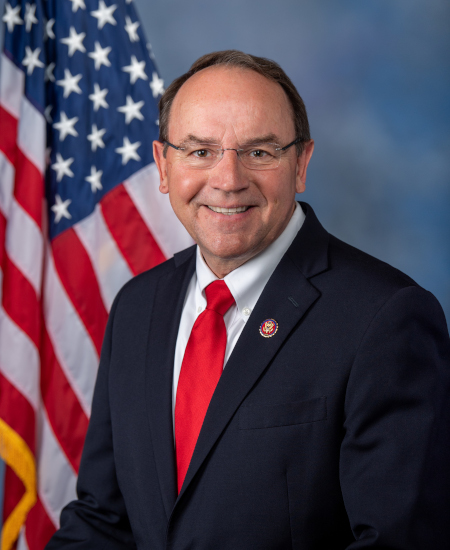
Rep. Thomas P. Tiffany
Sponsored bills
Maddy summaryHJRES 27 is a congressional resolution seeking to block a federal rule that redefined which waterways fall under the Clean Water Act's protections. It targets a rule submitted by the Army Corps of Engineers, Department of Defense, and Environmental Protection Agency (EPA) on January 18, 2023, which aimed to revise the "Waters of the United States" definition. The resolution would formally disapprove this rule under a specific federal procedure (Chapter 8 of Title 5), preventing it from taking effect. This would directly affect how federal agencies regulate pollution and development near water bodies, including wetlands and smaller streams.
Maddy summaryThis bill terminates the national emergency declared by the President on March 13, 2020, under the National Emergencies Act. It ends the executive branch's authority to use emergency powers related to that specific declaration. The resolution passed both chambers in early 2023 and took effect April 10, 2023, without creating new policies or affecting specific groups.
Safe Routes Act of 2023 This bill directs the Department of Transportation to waive vehicle weight limits for covered logging vehicles. The term covered logging vehicle means a vehicle that (1) is transporting raw or unfinished forest products, including logs, pulpwood, biomass, or wood chips; (2) is traveling a distance not greater than 150 air miles from origin to a storage or processing facility; and (3) meets state legal weight tolerances and vehicle configurations for transporting raw or unfinished forest products within the state boundaries in which the vehicle is operating.
Defund China's Allies Act This bill prohibits providing U.S. foreign assistance, including humanitarian assistance and security assistance, to certain countries that do not have full diplomatic relations with Taiwan. The countries barred from foreign assistance by the bill are Honduras, Nicaragua, Dominica, Antigua and Barbuda, Grenada, Cuba, Bahamas, Barbados, Jamaica, Trinidad and Tobago, Panama, Costa Rica, Dominican Republic, El Salvador, Bolivia, Uruguay, Guyana, Suriname, Venezuela, Solomon Islands, and Kiribati. The prohibition shall be lifted the earlier of (1) 30 days after the President certifies to Congress that the country has resumed or established full diplomatic relations with Taiwan, or (2) 10 years after the date of the bill's enactment.
Maddy summaryThe Campus Free Speech Restoration Act amends the Higher Education Act to strengthen student speech protections at colleges and universities receiving federal funding. It requires public institutions to follow strict guidelines for speech restrictions (ensuring they're content-neutral, viewpoint-neutral, and the least restrictive means to achieve a compelling interest), and mandates private institutions to disclose all speech-related policies on their websites in an easily accessible location. The bill defines "expressive activity" broadly to include peaceful assembly, distributing literature, carrying signs, and other First Amendment-protected activities, while prohibiting "free speech zones" and restrictive speech codes. Students can file complaints about speech policy violations, with potential consequences for non-compliant institutions including loss of federal funding after a formal review process. The law aims to ensure campus speech policies align with First Amendment protections without unduly restricting student expression.
Protect American Energy From China Act This bill prohibits federal funds from being used for implementing or administering the memorandum of understanding reached in 2011 between the Department of Energy and the Chinese Academy of Sciences on facilitating cooperation in nuclear energy science and technology.
Maddy summaryHR 2453, the Immigration Parole Reform Act of 2023, amends U.S. immigration law to clarify and expand when the Secretary of Homeland Security may temporarily parole individuals into the U.S. It directly affects aliens seeking entry for urgent humanitarian reasons (like life-threatening medical needs or family emergencies) or significant public benefit (such as assisting law enforcement), as well as specific groups: spouses/children of active-duty military members, Cuban nationals with approved petitions meeting U.S.-Cuba migration agreements, and individuals needing to attend immigration hearings. Key provisions include requiring case-by-case decisions (not class-based eligibility), limiting parole to 1 year (with possible 1-year extensions), mandating annual public reporting on parole usage, and clarifying that parole does not count as admission or allow work authorization except for military family members and Cubans. The bill aims to standardize parole authority while preventing its use for purposes beyond the specified humanitarian or public benefit scenarios.
Maddy summaryHR 2427, the Hmong Congressional Gold Medal Act, authorizes Congress to award a gold medal to honor Hmong veterans who served with U.S. forces during the Vietnam War. The bill directs the Treasury Secretary to strike the medal and present it to the Smithsonian Institution for display, recognizing their combat service, heavy casualties, and displacement after the war. Duplicate bronze medals may be sold to cover costs. This procedural bill commemorates the Hmong people's military contributions and their refugee resettlement in the U.S., affecting the Hmong community as a whole.
Maddy summaryHR 5, the Parents Bill of Rights Act, would require public schools receiving federal funding to provide parents with greater access to educational information. The bill mandates that schools post curricula online or widely distribute it to parents, include school budgets in report cards, and provide specific information about school activities including violent incidents and plans to eliminate gifted programs. It also guarantees parents the right to meet with teachers twice a year, review library materials, and address school boards. These requirements would apply to all local educational agencies and schools covered by the Elementary and Secondary Education Act. The bill amends existing education laws to strengthen parental transparency and involvement in their children's education.