

Processing Revival and Intrastate Meat Exemption Act or the PRIME Act This bill exempts from federal inspection requirements animals and meats that are slaughtered and prepared at custom animal slaughter facilities for distribution within the state. Under current law, a custom slaughter exemption applies if the meat is slaughtered exclusively for personal, household, guest, or employee uses. Specifically, the bill expands the federal inspection exemption to include the slaughter of animals or the preparation of carcasses, meat, and meat food products that are slaughtered and prepared at a custom slaughter facility in accordance with the laws of the state where the facility is located; and prepared exclusively for distribution to household consumers in the state or restaurants, hotels, boarding houses, grocery stores, or other establishments in the state that either prepare meals served directly to consumers or offer meat and food products for sale directly to consumers in the state. The bill does not preempt any state law concerning (1) the slaughter of animals or the preparation of carcasses, meat, and meat food products at a custom slaughter facility; or (2) the sale of meat or meat food products.
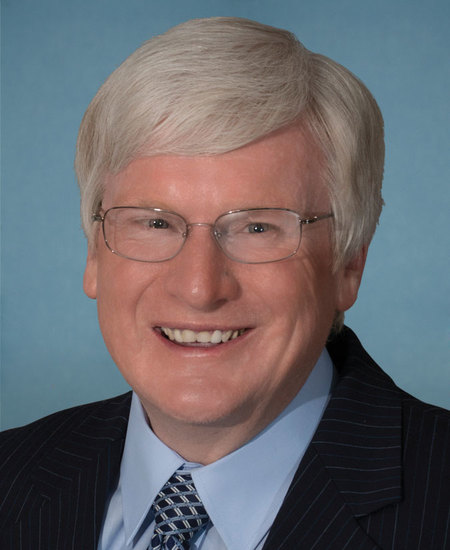
Rep. Glenn Grothman
Sponsored bills
Maddy summaryThe FIGHT Act (HR 2742) amends the Animal Welfare Act to specifically target animal fighting events, such as cockfighting, by defining "rooster" as any male chicken over six months old and banning the live broadcasting (simulcasting) of such events. It prohibits using the postal service or interstate transport to move roosters for animal fighting purposes and adds civil enforcement tools allowing citizens to sue violators after a 60-day notice period. Fines up to $5,000 per violation may be imposed, and property used in animal fighting ventures can be seized. These changes strengthen enforcement against animal fighting by expanding legal remedies for the public and authorities.
Maddy summaryHR 3256, the Preventing Executive Climate Overreach Act, would eliminate the legal effect of Executive Order 14096. This order, issued by the President to advance environmental justice in federal programs, would no longer be enforceable. The bill's key provision directly states that the executive order "shall have no force or effect." As a result, the administration would be unable to implement environmental justice policies based on that order.
Maddy summaryHRES 396 is a non-binding House resolution recognizing motherhood on Mother's Day. It expresses support for the term "mother" and criticizes language alternatives like "pregnant people" or "birthing person," while stating mothers are defined as women. The resolution contains no policy changes or concrete effects - it is purely symbolic, affirming traditional definitions of motherhood without altering laws or impacting any programs. It was introduced by multiple House members and referred to the Education and Workforce Committee.
Maddy summaryHRES 384 is a non-binding congressional resolution expressing support for designating May 2023 as Motorcycle Safety Awareness Month. It highlights that motorcycles are used by approximately 30 million Americans annually and emphasizes the importance of rider safety education, proper licensing, protective gear, and mutual awareness between motorcyclists and other road users. The resolution encourages all road users to share the road safely and recognizes motorcyclists' right to participate in transportation. It does not create new laws or regulations but aims to promote existing safety practices through public awareness. The resolution directly affects motorcyclists, drivers, and the broader public by encouraging safer road behavior during May 2023.
Maddy summaryHR 801, the Securing the Border for Public Health Act of 2023, gives the Secretary of Health and Human Services authority to temporarily ban people and goods from specific countries. This can be done if the Secretary determines a serious risk of introducing communicable diseases or certain controlled substances (like fentanyl, narcotics, or opiates) into the U.S. The ban would apply to persons and property from designated countries for a time deemed necessary to protect public health. It directly affects travelers and importers from countries identified under this provision.
Maddy summaryThe Pay Our Correctional Officers Fairly Act adjusts pay for Bureau of Prisons employees currently assigned to the "Rest of U.S." pay locality. It directs that if an employee's worksite is within 200 miles of another pay locality, they will be paid according to the nearest locality with the highest pay rate - replacing the lower "Rest of U.S." rate. This applies to correctional officers and other Bureau of Prisons staff, but excludes employees whose worksite is more than 200 miles from any other locality. The change takes effect 180 days after the bill is enacted.
Maddy summaryHRES 376 is a non-binding resolution expressing the House of Representatives' view that the U.S. Postal Service (USPS) must maintain door-to-door delivery for all residential and business customers. It cites concerns that ending this service would disproportionately affect elderly and disabled individuals who rely on secure, convenient mail access for essential items like medications. The resolution notes that voluntary shifts to centralized pickup in 2013 affected only 0.8% of businesses, highlighting dependence on in-person delivery for security and revenue. It urges USPS to avoid reducing door delivery or requiring customers to pay for it.
Maddy summary# Summary of the Energy Development and Permitting Bill This document is a comprehensive energy policy bill focused on streamlining permitting processes, accelerating energy development, and reducing regulatory burdens for oil, gas, and geothermal projects on public lands. ## Key Provisions: 1. **Leasing and Permitting Reforms:** - Requires annual oil and gas lease sales in the Gulf of Mexico and Alaska regions - Sets 30-day deadlines for processing permit to drill applications - Mandates annual reports on permit processing status - Establishes 50-year terms for pipeline rights-of-way (replacing previous 30-year terms) 2. **Environmental Review Streamlining:** - Introduces "categorical exclusions" for certain activities that don't require environmental review - Sets page limits for environmental documents (150 pages for EIS, 75 for EA) - Establishes deadlines for completing environmental reviews (1-2 years) - Limits judicial review of environmental decisions - Requires "statement of purpose and need" in environmental impact statements 3. **Special Provisions:** - Allows drilling on non-Federal surface estate without Federal permit (if State permit is provided) - Prohibits Chinese Communist Party ownership interest in Federal leases - Sets royalty rates at not more than 12.5% for onshore Federal oil and gas leases - Exempts certain activities from "major Federal action" definition 4. **Transparency Requirements:** - Requires public posting of pending applications and processing status - Mandates annual reports on permit processing timelines - Requires publication of data on lease sales and permit approvals 5. **Judicial Limitations:** - Bars claims for judicial review of environmental decisions unless filed within 120 days - Limits challenges to environmental reviews to specific issues - Prohibits injunctions against lease sales unless imminent environmental harm is proven This bill represents a significant effort to accelerate energy development on public lands while reducing regulatory complexity and environmental review requirements, with particular emphasis on oil, gas, and geothermal projects.
No Taxpayer Funding for United Nations Green Climate Fund Act This bill requires the Department of State to withhold the same proportion of funds from the mandatory U.S. contribution to the United Nations as the proportion of the U.N. budget made available to the U.N. Green Climate Fund. Such withheld funds must be rescinded and may not be considered arrears to be repaid to the United Nations. The bill also prohibits the State Department from making voluntary contributions to the U.N. Green Climate Fund.