

This resolution expresses support for keeping AM radios in cars. (Several car manufacturers announced plans to remove AM radio options from some or all of their models.)
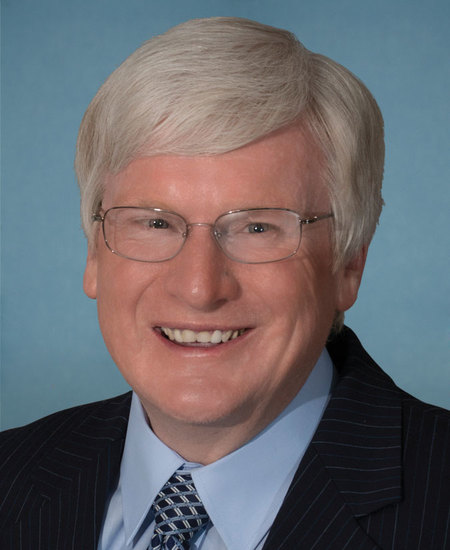
Rep. Glenn Grothman
Sponsored bills
Maddy summaryHR 3910, titled "Dillon’s Law," amends federal public health grants to prioritize states that permit trained individuals to carry and administer epinephrine during severe allergic reactions (anaphylaxis). States receiving these grants must certify they have civil liability protection laws shielding trained individuals who provide emergency aid. The bill defines "trained individual" as someone with approved medical training in epinephrine use and clarifies it does not alter existing liability protections under other laws. This policy change directly affects state governments seeking federal public health funding by linking grant eligibility to specific state-level regulations on emergency epinephrine access.
Maddy summaryThis bill amends the National School Lunch Act to require schools participating in the program to offer flavored milk to students. It directly affects public schools receiving federal funding for lunches, changing the existing provision to mandate flavored milk availability. The key mechanism is adding a new clause (iii) stating schools "shall offer students flavored milk," replacing previous language that allowed discretion. This is a procedural change to program requirements, not a substantive policy shift in nutrition standards.
Maddy summaryHR 3792 extends U.S. security funding for Israel through 2028 (Section 3) and expands energy cooperation to include advanced nuclear technologies and carbon capture (Section 5). It requires annual reports on regional security partnerships involving Israel (Section 6) and ensures countries in the Abraham Accords can access U.S. development programs (Section 8). The bill also mandates reports on diplomatic efforts against ICC investigations targeting the U.S. and Israel (Section 10) and encourages people-to-people programs to strengthen the Abraham Accords (Sections 7, 9). These provisions directly affect Israel’s diplomatic engagement, security partnerships, and economic cooperation in the Middle East.
Maddy summaryHR 3036, the Increased TSP Access Act of 2023, amends conservation program rules to expand access to third-party providers (TSPs) who offer technical assistance to farmers on conservation practices. It creates new pathways for non-Federal entities like agricultural cooperatives or professional associations to certify TSPs, streamlines certification processes (requiring Secretary review within 10 business days), and sets payment rates for TSPs equivalent to government-provided technical assistance. The bill mandates public reporting on certification numbers, payment details, and a target utilization rate for TSPs to improve conservation program delivery. It directly affects farmers participating in USDA conservation programs by increasing options for technical support and requiring transparency in how TSPs are certified and compensated.
Maddy summaryHR 3770, the LIBERTY Act, modifies how federal agencies define "major rules" to include significant guidance documents. It sets a $100 million annual economic impact threshold as a key factor in determining whether a rule or guidance qualifies as "major." Federal agencies must then submit such major rules and significant guidance documents to Congress for review before they take effect. This bill directly affects federal agencies issuing regulations and the businesses or entities subject to those regulations.
Maddy summaryHR 3773, the Stop Anti-Semitism on College Campuses Act, requires colleges and universities receiving federal funding to prohibit any event promoting antisemitism on campus. This includes not hosting, facilitating, funding, or supporting such events. The bill adopts the International Holocaust Remembrance Alliance's 2016 definition of antisemitism - including contemporary examples - as the standard for determining prohibited conduct. The law directly affects all institutions covered by the Higher Education Act of 1965.
Maddy summaryHR 3712, the Digital Dollar Pilot Prevention Act, prohibits the Federal Reserve from testing or implementing a digital dollar without new congressional approval. The bill amends the Federal Reserve Act to explicitly block the Fed and its banks from launching any pilot program for a central bank digital currency (a digital form of U.S. dollars issued directly by the Federal Reserve) or partnering with private entities for such testing. This directly affects the Federal Reserve System, preventing it from moving forward with any digital dollar initiatives until Congress passes a separate law authorizing them. The law aims to halt potential development of a Fed-issued digital currency until lawmakers address its implications through new legislation.
Maddy summaryHR 3612, the "No ESG at TSP Act," prohibits the Thrift Savings Plan (TSP) - the federal retirement plan for government employees - from offering investment funds that use environmental, social, or governance (ESG) criteria in their investment decisions. It specifically bans mutual funds, ETFs, or other vehicles marketed with ESG criteria (such as climate policies, diversity metrics, or gun industry focus) from the TSP's "mutual fund window." The bill requires the TSP Board to remove existing ESG-linked funds within 90 days, notify participants about switching to non-ESG options, and automatically move unselected funds to a government securities fund. This directly affects federal employees and retirees who use the TSP for retirement savings.
Maddy summaryThis bill requires that AM radio receivers be included as standard equipment in all new motor vehicles (such as cars and trucks) sold in the United States, with a rule to be issued by the Department of Transportation within one year. The rule must ensure AM radio is easily accessible on the dashboard and allows manufacturers to use digital AM radio technology instead of traditional AM. During the one-year period between the bill's enactment and the rule's effective date, manufacturers must clearly label vehicles without AM radio. The bill also directs a study to evaluate whether an alternative system could deliver emergency alerts as reliably as AM radio across the country, especially during crises.