

Maddy summaryHR 6768, the Public Health Nursing Act, authorizes $5 billion annually (2024-2033) to expand public health nursing services through federal grants to state and local health departments. The bill requires grantees to use funds for recruiting and training registered nurses in underserved areas, covering wages, medical supplies (like PPE), and administrative costs to improve maternal/infant health and chronic disease management. Priority is given to applicants serving communities with high chronic disease rates, maternal mortality, low-income populations, rural areas, or health professional shortage zones. This directly affects public health departments and their ability to hire nurses providing in-person care, home visits, and mobile clinic services.
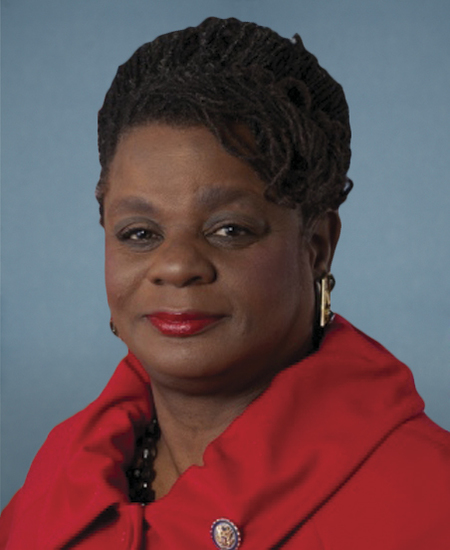
Rep. Gwen Moore
Sponsored bills
Maddy summaryHR 6754, the School Violence Prevention Act, establishes a federal grant program to fund evidence-based violence prevention programs in schools located in communities with high rates of youth gun violence. The bill authorizes $25 million annually for 5-year grants to partnerships between state/local education agencies (meeting specific homicide or violent crime thresholds) and community nonprofits serving youth. Grantees must implement trauma-informed, culturally competent programs for K-12 students, focusing on skills like conflict resolution, mental health support, and community engagement, while collecting data on outcomes like graduation rates. The program requires annual reporting to the Secretary of Education and CDC, with evaluations to assess impacts on reducing youth violence risks.
Maddy summaryThe Restore Honor to Service Members Act of 2023 establishes a Department of Defense "Tiger Team" to improve outreach to veterans with certain discharge statuses (specifically those discharged under "former section 654" before 2011, often related to policies like the "Don't Ask, Don't Tell" era). The team will collaborate with the VA, veterans' groups, and other stakeholders to identify eligible veterans, share contact information, and guide them through the existing review process under Section 527 of the 2020 National Defense Authorization Act. The bill requires the team to submit regular progress reports to Congress and a final report within three years, tracking how many veterans successfully changed their discharge status to "honorable" through the review process. This focuses on streamlining access to an existing review mechanism, not creating new benefits or altering discharge standards.
Maddy summaryHR 6830, the "Books Save Lives Act," requires covered schools (elementary/secondary schools receiving federal funds) and public libraries receiving federal assistance to maintain staffed libraries with diverse book collections. These collections must include books written by, illustrated by, or about individuals from underrepresented communities - defined as racial/ethnic minorities, LGBTQ+ individuals, religious minorities, or people with disabilities. The bill states that excluding such "covered books" could be used as evidence of discrimination under civil rights laws like the Civil Rights Act of 1964. It also mandates a report on the impact of book-banning campaigns on these communities within 180 days of enactment.
Capital Markets Financing and Economic Growth Investments Act of 2023 This bill allows a money market fund, under specified conditions, to elect to operate using a different method of valuation than is otherwise required. A money market fund that elects to do so shall not be subject to requirements related to the imposition of liquidity fees. (A money market fund is a type of mutual fund that invests in liquid, short-term assets.) The Securities and Exchange Commission and securities exchanges are prohibited from enforcing rules or issuing guidance that imposes specified pricing structures or fees on an open-end company. (An open-end company offers securities in pooled investment vehicles such as mutual funds.)
Maddy summaryThe Brittany Clardy Missing and Murdered Black Women and Girls Act establishes a new Office within the Department of Justice to address the disproportionate rates of missing and murdered Black women and girls in the U.S. The Office will collect and analyze data on these cases - including case resolution times, Amber Alert usage, and trafficking links - and create a public dashboard for tracking. It also creates a grant program for community organizations to provide culturally appropriate prevention services, law enforcement training, and victim support. The Office must submit biennial reports to Congress with findings and recommendations to improve the criminal justice response to these cases. This bill directly affects Black women and girls facing violence, law enforcement agencies, and community organizations providing related services.
Maddy summaryThis bill creates a federal grant program to fund electric bicycle sharing services in disadvantaged communities. It provides up to $5 million per grant to states, local governments, or nonprofits for purchasing e-bikes (required to be made in the U.S.), installing charging infrastructure, and offering community outreach and subsidized memberships. Grants must address community transportation needs, improve cyclist safety, and include reporting on usage, emissions reductions, and user demographics. The program, authorized for $100 million annually through 2033, requires services to operate in communities identified by the federal Climate and Economic Justice Screening Tool.
Maddy summaryHRES 904 is a House resolution supporting World AIDS Day goals. It encourages efforts to achieve zero new HIV transmissions, zero discrimination, and zero AIDS-related deaths by 2030, while commending existing programs like PEPFAR and the Ryan White CARE Act. The resolution also supports continued funding for HIV prevention, treatment, and research, with specific focus on communities disproportionately affected by HIV in the U.S. and globally. As a symbolic statement, it does not create new laws or allocate funds.
Maddy summaryThis bill authorizes the posthumous presentation of a Congressional Gold Medal to honor Marshall "Major" Taylor, a pioneering Black cyclist who broke racial barriers in the late 19th and early 20th centuries. It recognizes his athletic achievements, including world records and international championship wins, as well as his advocacy for equality in sports. The medal, designed by the Treasury Secretary, will be presented to Taylor's great-granddaughter, Karen Donovan, following the congressional authorization. As a commemorative act with no policy changes, it serves solely to honor Taylor's legacy as a trailblazer and role model.
Maddy summaryThis bill amends the Equal Credit Opportunity Act to require lenders to collect and report data on loans to LGBTQI-owned businesses. It specifically adds "LGBTQI-owned" to existing categories for data collection, includes sexual orientation, gender identity, and intersex status as protected characteristics in lending data, and defines an "LGBTQI-owned business" as one where over 50% of ownership/control and net profit/loss accrues to self-identifying LGBTQI individuals. The policy change directly affects financial institutions that report lending data to the government, mandating they track and disclose these new categories. This provides concrete data on lending practices for LGBTQI business owners, who face documented barriers in accessing credit.