

Maddy summaryThe provided context does not include sufficient details about HR 7060's specific provisions or policy changes. While the bill's title ("Military Spouse Job Continuity Act") suggests it relates to military spouses' employment, the context only lists a procedural amendment to 37 U.S.C. § 453(g) (striking a paragraph and redesignating another) without explaining the substance of the change. Without the actual bill text or a substantive summary describing how this amendment affects military spouses or job continuity, a factual summary cannot be generated. For accurate information, consult the full bill text or official legislative summaries from Congress.
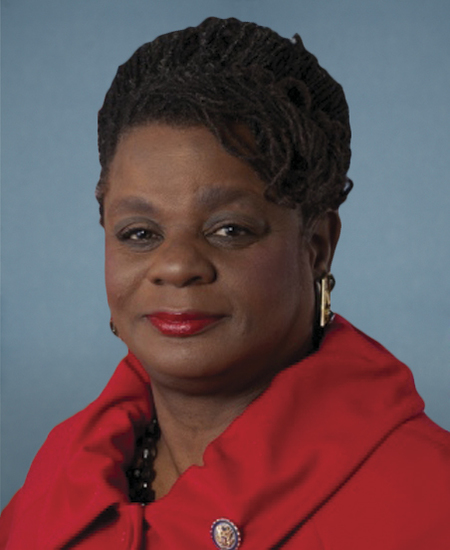
Rep. Gwen Moore
Sponsored bills
Maddy summaryThe Recruiting Families Using Data Act of 2023 requires states to develop annual "family partnership plans" to improve recruitment and retention of foster and adoptive families. These plans must include input from foster/adoptive families, youth with foster care experience, and community providers, and detail how states will use data to address racial disparities, reduce group care placements, and match families to children’s needs. States must annually report on foster family demographics, underutilized placements, challenges faced by caregivers, and progress toward increasing kinship and culturally matched placements. The bill applies to all states receiving federal foster care funding under the Social Security Act, mandating these updates in their annual federal child welfare reports to Congress starting in 2025.
Maddy summaryHR 7056, the Access to Family Building Act, establishes federal rights for individuals to access assisted reproductive technology (ART) like IVF without unreasonable restrictions, directly affecting patients seeking fertility treatments and health care providers offering ART services. The bill prohibits states from imposing limitations on ART that are more burdensome than those for comparable medical procedures, fail to advance safety, or unduly restrict access, while allowing health and safety regulations that are necessary and least restrictive. It creates federal enforcement mechanisms, including lawsuits by the Attorney General or affected individuals to challenge violating state laws, and preempts conflicting state regulations. The bill explicitly preserves state authority over health/safety regulations and does not alter existing state insurance coverage laws for ART.
Maddy summaryThe Stronger Communities through Better Transit Act establishes a new federal grant program to improve public transportation service. It provides funding to urban areas, states, and Indian tribes to cover up to 50% of public transit operating costs (up to 80% in persistent poverty areas and 100% for Indian tribes), with requirements to report on service frequency, access to jobs, and conduct community surveys. The program mandates that a majority of funds must benefit underserved communities and areas of persistent poverty, defined as census tracts with high poverty rates or minority populations. Recipients must maintain their transit funding levels and report on improvements in access to essential services. The bill authorizes $20 billion annually for fiscal years 2024-2027.
Maddy summaryThis resolution commemorates the 60th anniversary of President Johnson's 1964 War on Poverty declaration and acknowledges its historical achievements, such as creating Medicare, Medicaid, and SNAP, alongside its shortcomings. It specifically notes the War on Poverty's failure to adequately address fair employment, workforce preparation, and racial disparities in poverty, while recognizing that current antipoverty policies have not adapted to today's challenges. The resolution is purely symbolic, with no new policy requirements, and urges continued efforts to address poverty through existing frameworks.
Maddy summaryHR 7007, the BEST Act, provides federal grants to states to establish or improve Seal of Biliteracy programs recognizing students proficient in English and one additional language. It requires states to include Native American languages as a base language (allowing proficiency in them to substitute for English) and ensures equitable access for English learners, students with disabilities, and heritage language learners. The $10 million annual funding (2024-2028) supports program administration, public outreach, and subsidizing testing for low-income students. States must award students a permanent seal on diplomas or transcripts upon meeting state-set proficiency criteria for speaking and writing in both languages.
Maddy summaryThis bill restores visa eligibility for immigrants who had diversity visas allocated for fiscal years 2017-2022 but were denied entry due to specific travel restrictions (like Executive Orders 13769/13780 or related proclamations) or pandemic-related delays. The State Department must notify affected individuals within 90 days of the bill’s enactment, giving them one year to confirm they wish to proceed with their visa applications. Unused visas from those years can be reallocated without counting against current annual limits, and applicants who fail to respond or are denied for standard reasons (like education requirements) lose eligibility. The policy directly affects individuals impacted by these specific past barriers to immigration.
Maddy summaryHRES 962 is a ceremonial resolution honoring Reverend Dr. Martin Luther King, Jr.'s legacy, specifically celebrating his 95th birthday on January 15, 2024. It symbolically affirms his teachings by condemning hate, discrimination, and prejudice against Black Americans, Indigenous people, Jewish, Asian-American/Pacific Islander, Muslim, Hispanic/Latino communities, and LGBTQ+ individuals. The resolution does not create new laws or affect any policies - it solely expresses the House's support for Dr. King's values of diversity, tolerance, and equality through non-binding statements. As a symbolic gesture, it has no legal effect or direct impact on any group or individual.
Maddy summaryThe Affordable Connectivity Program Extension Act of 2024 allocates $7 billion in funding for the Affordable Connectivity Program (ACP) during fiscal year 2024. The ACP provides subsidies to low-income households to help cover the cost of internet service and connected devices like laptops or tablets. This funding ensures the program can continue supporting eligible households throughout the year, with the money remaining available until fully spent. The bill extends existing program funding without changing eligibility criteria or service requirements.
Maddy summaryThe Menopause Research and Equity Act of 2023 requires the National Institutes of Health (NIH) to evaluate existing and ongoing research on menopause, perimenopause, and mid-life women’s health, identifying gaps in knowledge and funding over the past five years. The NIH must then develop a strategic plan with health professionals (including specialists like gynecologists and endocrinologists) to address these gaps and guide future research on treatments for menopause symptoms. The bill also mandates new NIH research on causes, symptoms, and treatments for menopause-related health issues, including a study on hormonal treatments. All activities must be funded using existing NIH resources, with no new appropriations authorized. This aims to improve scientific understanding of women’s mid-life health needs.