

Maddy summaryThis bill prohibits Medicaid from covering conversion therapy for any enrollee. It amends federal law to block Medicaid payments for any therapy aimed at changing a person's sexual orientation or gender identity (defined as "conversion therapy" in the bill), starting in the first full quarter after the law takes effect. The prohibition applies to all Medicaid providers who offer such therapy for compensation, but explicitly excludes support for gender transition, acceptance-based care, and interventions focused on safety or unlawful conduct. It directly affects Medicaid recipients seeking therapy and providers who previously billed for conversion therapy services.
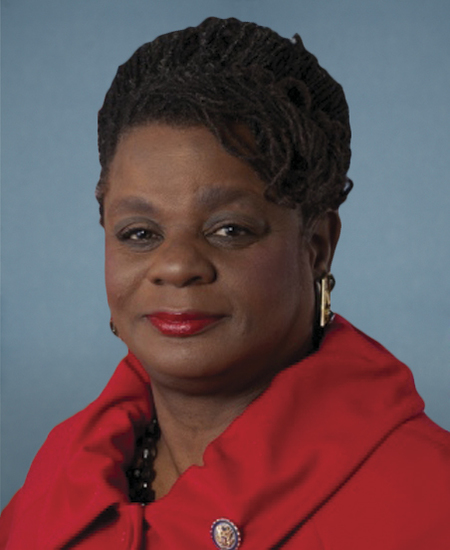
Rep. Gwen Moore
Sponsored bills
Maddy summaryThis bill extends the operating period for the African American Civil Rights Network program from 7 years to 10 years after the act's enactment. It directly affects the existing program, which supports organizations preserving civil rights history and promoting education, by allowing it to continue operating for a longer duration without needing new congressional approval. The change is a straightforward extension of an existing authorization period under federal law.
Maddy summaryHRES 1577 is a resolution expressing congressional support for National Adoption Day (November 23, 2024) and National Adoption Month (November 2024). It highlights that over 108,000 children in U.S. foster care are waiting for adoption and encourages Americans to consider adoption to help provide safety, permanency, and well-being for children. The resolution does not create new laws but formally recognizes the importance of adoption and urges the public to support efforts to place children in permanent families. It directly affects public awareness and encourages citizen engagement during these designated observances.
Maddy summaryThe Half-Century Update for Water Access and Affordability Act establishes a federal program to provide financial assistance to low-income households struggling to pay water bills. It requires states and water utilities to implement programs that offer direct bill discounts, debt relief, water efficiency upgrades, and crisis assistance to households earning up to 200% of the poverty level or 80% of local median income. The bill prohibits disconnections for non-payment, allows automatic enrollment for households already receiving other federal assistance, and mandates data collection to track program impacts on water service access. The legislation authorizes $20 billion annually from 2025-2035 to fund this assistance, with specific requirements to ensure universal access and prevent discrimination in program implementation.
Maddy summaryThis resolution (HRES 1558) is a symbolic House of Representatives measure supporting October as "National Domestic Violence Awareness Month." It does not create new laws or allocate funding but formally expresses the House's support for raising awareness about domestic violence and its impacts, and urges continued backing for existing programs that address domestic violence. The resolution cites statistics on domestic violence prevalence (e.g., 24 people per minute affected by intimate partner violence) to underscore the importance of the observance. It directly affects public awareness efforts but does not change policies or directly impact individuals.
Maddy summaryThis bill amends the tax code to exclude non-punitive damages from gross income for survivors who receive compensation related to sexual acts or contact. It directly affects survivors of sexual violence who receive court-ordered or agreed-upon compensation (excluding punitive damages) for physical injuries stemming from such acts. The key provision removes the requirement for medical records to prove the connection between the damages and the sexual violence, allowing compensation to be accepted if the legal agreement or judgment states it is for that purpose. The tax exclusion applies to judgments made or agreements entered into after the bill's enactment, with special rules for payment timing. The bill also requires the Treasury to promote public awareness of this tax exclusion.
Maddy summaryThe VA Employee Fairness Act of 2024 modifies collective bargaining rules for employees of the Veterans Health Administration (VHA). It removes existing subsections (b), (c), and (d) from the law governing VHA employee bargaining and renumbers the remaining provision. This change streamlines the collective bargaining framework but does not alter the Secretary of Veterans Affairs' existing authorities over incentive pay and expedited hiring. The bill directly affects VHA employees by changing how their collective bargaining rights are structured under federal law. The law remains neutral, focusing solely on procedural adjustments to the existing bargaining framework.
Maddy summaryThis bill establishes minimum safety standards for railroad bridges and requires railroad carriers to provide detailed inspection reports classifying bridges as poor, fair, or good condition, including repair timelines and costs for bridges in poor condition. It mandates railroad carriers to post visible signs identifying bridge ownership and a contact number for public safety concerns, and creates a public database showing basic bridge condition information without detailed technical specifications. The bill also establishes a safety concern reporting system for the public and authorities, and requires the Department of Transportation to conduct randomized bridge inspections to verify reported conditions. Railroad carriers that fail to meet safety requirements face civil penalties, including weekly fines for continued operation of unsafe bridges.
Maddy summaryThe COINTELPRO Full Disclosure Act requires federal agencies to publicly disclose COINTELPRO records within 6 months, with exceptions for records that would cause harm to national security or privacy. It establishes a 4-year Review Board to assess records that might be withheld, and sets a 25-year deadline for full disclosure of all COINTELPRO records not already publicly available. The bill creates a COINTELPRO Records Collection at the National Archives, requires agencies to notify victims or their families before disclosure, and aims to provide transparency about the FBI's historical COINTELPRO program that surveilled domestic organizations from 1956.
Maddy summaryHRES 1541 is a non-binding House resolution expressing the House's recognition of the connection between firearm violence, misogyny, and violence against women, particularly in domestic contexts. It cites statistics showing domestic abusers with firearm access are five times more likely to kill their partners and that firearm-related domestic violence is 12 times more likely to be fatal than other assaults. The resolution reaffirms the importance of preventing individuals with a history of violence against women from accessing firearms and supports further research into these connections. As a statement of policy position - not a law - it aims to inform future legislative efforts without creating new legal requirements.