

Assuring Medicare’s Promise Act This bill increases net investment income tax revenues by applying such tax to the trade or business income of certain high income taxpayers and includes the increased tax revenues in the Federal Hospital Insurance Trust Fund.
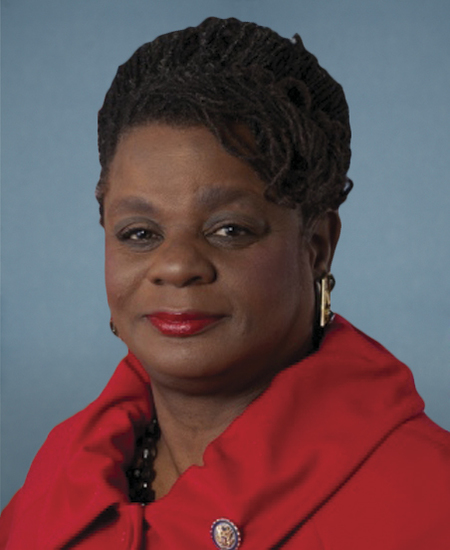
Rep. Gwen Moore
Sponsored bills
LGBTQ I+ Data Inclusion Act This bill addresses federal data collection of voluntary, self-disclosed information on sexual orientation, gender identity, and variations in sex characteristics. Specifically, the bill requires federal agencies that collect information through a survey for statistical purposes that includes demographic data (where subjects self-report information or a proxy provides information about the subject or responds for all persons in a household) to review existing data sets to determine which data sets do not include information about sexual orientation, gender identity, and variations in sex characteristics. Such agencies must assess needed changes in survey methods related to asking questions on such matters. Agencies that publish reports relying on survey demographic data must include information on sexual orientation, gender identity, and variations in sex characteristics. Agencies may waive this publication requirement on a case-by-case basis if the confidentiality of the information cannot be maintained or if adding such information to the survey would impair the agency's ability to preserve the utility, accuracy, or objectivity of the survey while also generating relevant evidence about the LGBTQI+ community. The Government Accountability Office must report to Congress on the implementation of this bill's requirements by agencies.
Health Equity and Accountability Act of 2022 This bill directs the Department of Health and Human Services (HHS) and others to undertake efforts to reduce health disparities. For example, the bill (1) requires more detailed reporting of demographic and health disparities data, including related to public health emergencies; (2) directs certain components of HHS to support health workforce diversity; and (3) increases access to culturally and linguistically appropriate health care. The bill also modifies eligibility and other requirements for Medicare, Medicaid, private health insurance, nutrition assistance, and other programs to reduce health disparities among vulnerable populations. The bill includes specific provisions with respect to noncitizens; maternal, infant, and child health; mental and behavioral health; specified conditions that disproportionately affect racial and ethnic minority groups, such as certain cancers, HIV/AIDS, kidney disease, and diabetes; investments in communities facing health and other inequities; and nondiscrimination in the provision of services in federally supported health programs. Additionally, the bill (1) revises health information technology programs to address health disparities, and (2) supports health impact assessments and other efforts pertaining to environmental justice and social determinants of health (i.e., nonmedical factors that influence health outcomes, such as income and educational attainment). The bill also requires various studies and reports on issues related to health care and health disparities, including a report by the Government Accountability Office on health workforce diversity.
Court Improvement Equity Act This bill allows the Northern Mariana Islands to access state grant funds for child welfare court improvements in foster care and adoption proceedings under the Court Improvement Program (CIP). Under current law, the Northern Mariana Islands may not receive a CIP grant because the CIP program requires that a participating state or U.S. territory be eligible to operate a Title IV-E program (i.e., be eligible to receive federal payments for the provision of foster care and adoption assistance). This bill allows the Northern Mariana Islands, the only U.S. territory not currently eligible for the Title IV-E program, to participate in the CIP program.
Stop Anti-Abortion Disinformation Act or the SAD Act This bill prohibits advertisements that use deceptive or misleading statements related to the provision of abortion services. Abortion services include (1) surgical and non-surgical procedures to terminate a pregnancy, or (2) providing referrals for such procedures. The Federal Trade Commission must promulgate rules to implement the prohibition, and the bill provides for enforcement by the commission.
My Body, My Data Act of 2022 This bill establishes protections, subject to certain limits, for personal reproductive or sexual health information. This includes information relating to past, present, or future surgeries or procedures, such as the termination of a pregnancy. Specifically, commercial entities, including individuals, nonprofits, and common carriers, may not collect, retain, use, or disclose personal reproductive or sexual health information except (1) with the express written consent of the individual to whom such information relates, or (2) as is strictly necessary to provide a requested product or service. Commercial entities also must provide individuals with access to, and a reasonable mechanism to delete, any of their reproductive or sexual health information upon request. Further, commercial entities must maintain and publish a privacy policy describing their practices with respect to such information. The bill's provisions do not apply to entities that are subject to certain existing health-related privacy regulations, such as the privacy regulations issued under the Health Insurance Portability and Accountability Act of 1996. Additionally, the provisions do not apply to the disclosure of personal reproductive or sexual health information for the publication of newsworthy information of legitimate public concern. The bill provides for enforcement by the Federal Trade Commission and by private civil actions.
Save America’s Forgotten Equines Act of 2021 or the SAFE Act of 2021 This bill prohibits the transporting, receiving, possessing, purchasing, selling, or donation by a person of an equine (e.g., horse) that the person has reason to believe will be slaughtered for human consumption.
James Weldon Johnson Commemorative Coin Act This bill directs the Department of the Treasury to mint and issue 400,000 $1 silver coins emblematic of James Weldon Johnson, an influential writer, diplomat, educator, lawyer, and civil rights activist. All surcharges received by Treasury from the sale of such coins must be paid to Historic Stanton, Inc. and the James Weldon Johnson Foundation.
Affordable Housing Bond Enhancement Act This bill modifies the Mortgage Revenue Bond (MRB) and the Mortgage Credit Certificate (MCC) programs of state housing finance agencies to expand the supply of affordable homes and homeownership for low- and moderate-income homebuyers. The bill requires the Internal Revenue Service to annually report to the congressional banking and tax committees on the use by states of their private activity bond authority for housing investment. It also increases the MRB home improvement loan limit from $15,000 to $50,000. The bill permits states to redesignate their carryforward authority and use it for housing investment and permits MRBs to be used to refinance home loans for borrowers who have incomes below 115% of median family income. The bill modifies the recapture requirement for homeowners who receive a MRB-financed mortgage or an MCC and sell their residences within the first nine years of ownership and reduces the time in which a recapture tax may be assessed from nine to five years. The bill revises the MCC benefit calculation to a simple percentage of the original loan balance. It also extends the MCC revocation period from two to four years. The bill reduces the public notice requirement for MCC issuers from 90 days to 30 days and eliminates certain MCC reporting requirements.
National Scenic Trails Parity Act This bill requires the North Country, Ice Age, and New England national scenic trails to be administered as units of the National Park System.