

Maddy summaryThis bill terminates all federal funding for FEMA's Shelter and Services Program effective upon enactment. It prohibits new appropriations for this program or any similar successor program. Any remaining funds from the program as of the enactment date will be transferred to support disaster relief efforts under the Robert T. Stafford Disaster Relief Act. The change directly affects FEMA's budget operations but redirects existing resources to broader disaster assistance.
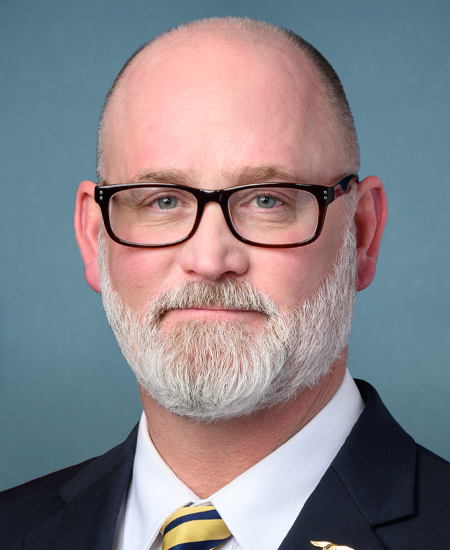
Rep. Derrick Van Orden
Sponsored bills
Maddy summaryThis bill amends the Clean Air Act to modify ethanol waiver processes and fuel volatility standards. It adds a new provision allowing fuel to enter commerce if it meets Reid Vapor Pressure requirements through similarity to certified vehicles or existing waivers, and adjusts vapor pressure limits from 10% to 10-15% in several sections. Small refineries that retired credits for 2016-2018 compliance years may now have those credits returned or applied to future years if their petitions remained pending as of December 1, 2022. The changes directly affect fuel retailers, ethanol producers, and small refineries by altering compliance pathways for fuel standards and credit management under the renewable fuel program.
Maddy summaryThis bill amends the budget baseline calculation method under the Balanced Budget and Emergency Deficit Control Act. It adds a specific exclusion for emergency funding and supplemental appropriations when determining the baseline deficit figure. This change directly affects how federal budget deficits are measured and reported under current law. The key provision prevents emergency and supplemental funds from being counted toward the baseline, altering the calculation used for deficit targets. The bill makes a technical adjustment to budget scoring rules without creating new spending or policy requirements.
Maddy summaryHR 7323, the Montgomery GI Bill Selected Reserves Tuition Fairness Act of 2024, ensures Selected Reserve service members (like National Guard and Reserve members) using Chapter 1606 benefits receive in-state tuition rates at public colleges. It amends existing law to require public institutions to charge these veterans the same in-state tuition rate as state residents, rather than higher out-of-state rates. This change applies to academic periods starting August 1, 2024, directly affecting Selected Reserve members pursuing education through the Chapter 1606 program. The bill expands a long-standing tuition fairness provision previously limited to other GI Bill programs (like Chapter 30) to cover Chapter 1606 recipients.
Maddy summaryThis bill amends VA regulations to require the Department of Veterans Affairs to cover both the purchase price and shipping costs for adaptive vehicles delivered to veterans. It directly affects veterans who receive VA-funded adaptive vehicles under Section 3902 of Title 38, U.S. Code. The key change updates the payment mechanism so veterans no longer bear the cost of shipping the vehicle to their location. This policy change simplifies the process by ensuring full delivery costs are covered in a single VA payment.
Maddy summaryHR 9745, the Lifesaving Gear for Police Act of 2024, removes barriers for state and local law enforcement agencies to access existing federal equipment. It prohibits federal agencies from enforcing any regulations (since May 15, 2015) that limit the transfer of Department of Defense or other federal equipment to police departments, unless Congress passes those rules into law. The bill also requires agencies to return or replace equipment recalled since 2015 under those regulations, provided the agency requests it, meets existing eligibility rules, and the equipment is available. This directly affects police departments that previously had equipment seized or denied under the blocked regulations. The law focuses on restoring access to current equipment-sharing programs, not creating new funding or gear.
Maddy summaryHR 9715, the "Strengthening our Servicemembers with Milk Act," requires the Secretary of Defense to provide various types of milk - including unflavored, organic, lactose-free, and fat-free options - at military dining facilities for active-duty members of the Armed Forces. The bill mandates that milk must be available in multiple varieties to accommodate dietary preferences and needs. It also prohibits purchasing milk from entities owned or controlled by foreign adversaries, as defined by existing regulations. This policy change directly affects military personnel dining at installations nationwide, ensuring broader milk access while restricting certain procurement sources.
Maddy summaryHR 9699, the Pay Our Troops Act, ensures military personnel and key support staff continue receiving pay during government funding gaps in fiscal year 2025. It appropriates funds to cover pay and allowances for active-duty troops, Department of Defense civilians, and qualifying contractors supporting military operations, if regular appropriations aren't enacted. The funding remains in effect until the earliest of: a new appropriations law, a funding resolution without such funding, or January 1, 2026. This bill does not change pay rates or create new policies - it guarantees existing pay continuity during budget transitions.
Maddy summaryThis bill (HJRES 163) is a congressional disapproval resolution targeting an Environmental Protection Agency (EPA) rule finalized on May 9, 2024. The EPA rule established new emissions standards for greenhouse gases from fossil fuel power plants (both new and existing) and repealed a previous rule called the Affordable Clean Energy Rule. The resolution would block this EPA rule from taking effect by invoking the Congressional Review Act (Chapter 8 of Title 5, U.S. Code). If passed, it would prevent the EPA rule from being enforced, directly affecting fossil fuel power plant operators and the EPA’s regulatory authority over emissions.
Maddy summaryH.J. Res. 139 is a congressional resolution seeking to disapprove a rule issued by the Centers for Medicare & Medicaid Services (CMS) on May 10, 2024. The rule would have established minimum staffing requirements for long-term care facilities and required transparency in Medicaid payment reporting. If passed, this resolution would block the rule from taking effect, preventing these new staffing and reporting requirements from being implemented. The bill directly affects long-term care facilities and Medicaid programs by halting the enforcement of these specific standards.