

Maddy summaryThe Workers POWER Act (HR 6634) strengthens federal labor enforcement by expanding staffing and resources for the Department of Labor's Wage and Hour Division and Occupational Safety and Health Administration (OSHA). It creates new paid student positions (5 in Washington, DC, plus 2 per regional office), establishes child labor fellowships (5 per agency), and increases student loan repayment benefits for eligible employees. The bill also authorizes performance-based bonuses, retention incentives, and $250 million annually in grants to states to improve their labor enforcement capacity. These changes directly affect Department of Labor enforcement staff and state/local labor agencies working to address wage theft, child labor, and workplace safety violations.
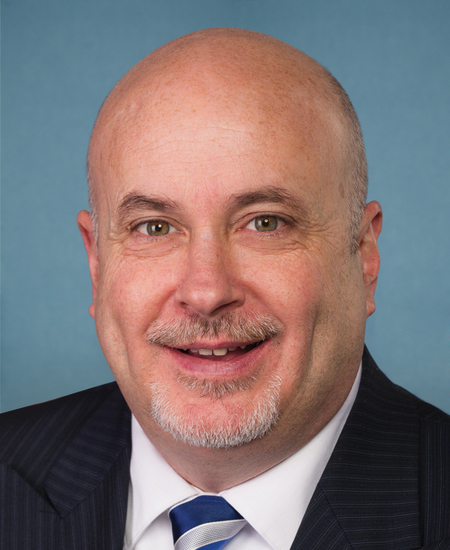
Rep. Mark Pocan
Sponsored bills
Maddy summaryHR 6592, the Fight Book Bans Act, provides federal grants to reimburse public school districts for legal costs when they choose to keep instructional or library materials after parental objections. It directly affects school districts (covered local educational agencies) that select materials for students and handle challenges to their removal. The bill authorizes up to $100,000 per case in grants to cover attorney fees and court costs, provided the district didn’t remove the materials and wasn’t reimbursed by the state. Funding of $15 million is authorized for fiscal years 2024-2028. The grants are strictly for legal challenges to decisions not to remove materials, not for the content of the materials themselves.
Billionaire Minimum Income Tax Act This bill imposes a minimum tax on individual taxpayers whose net worth for the taxable year exceeds $100 million. The tax is equal to 25% of the sum of a taxpayer's taxable income, plus net unrealized gains for the taxable year. The tax may not exceed 40% of the amount by which the taxpayer's net worth exceeds $100 million.
Maddy summaryHRES 114 is a resolution proposing to expel Representative George Santos from the U.S. House of Representatives, citing constitutional authority under Article I, Section 5, Clause 2. It directly targets Santos, who was a sitting member of the House at the time of introduction. The resolution follows the House's constitutional power to expel members for misconduct, though it does not specify the alleged violations. This procedural resolution was referred to the Committee on Ethics for review.
Maddy summaryHR 6451, the Mental Health Justice Act of 2023, provides $250 million in federal grants to states, tribes, and localities to hire mental health professionals as first responders for specific emergencies. It directs these professionals to replace police in situations involving mental health crises, substance use, or intellectual/developmental disabilities - such as when a 911 caller describes a mental health emergency or a first responder identifies someone needing mental health support. The bill requires grantees to train responders in de-escalation techniques, link individuals to community-based services (not incarceration), and report on outcomes like reduced arrests or use of force. It also mandates data collection on demographics and prevents funneling people into institutional settings, with annual reports to Congress on program effectiveness.
Maddy summaryHRES 884 is a non-binding House resolution honoring the six victims killed and 62 injured in the November 21, 2021, Waukesha, Wisconsin, Christmas parade attack. It specifically recognizes Wilhelm Hospel, Virginia Sorenson, LeAnna Owen, Tamara Durand, Jane Kulich, and Jackson Sparks, while acknowledging their community roles and the Waukesha community's healing efforts. The resolution offers condolences to families, applauds first responders, and recognizes the community's resilience through memorials like a 2023 parade memorial and blue-light tributes. As a commemorative resolution, it has no legislative effect but formally honors the victims and community response.
Maddy summaryHRES 886 is a non-binding House resolution supporting Transgender Day of Remembrance (TDoR) by recognizing the epidemic of violence against transgender people and memorializing those lost in the year ending September 30, 2023. It specifically acknowledges the disproportionate impact of violence on transgender women of color, citing 33 documented deaths in the U.S. during that period (with estimates suggesting the actual number is higher due to underreporting). The resolution calls for Congress to prioritize studying and preventing such violence while affirming that all transgender people deserve dignity and respect. As a symbolic resolution, it does not create new laws or allocate funding but serves to raise awareness and honor victims.
Health Share Transparency Act of 2023 This bill requires a health care sharing ministry (HCSM) to disclose specific information to individuals enrolling in the HCSM and to designated government agencies. (An HCSM is a faith-based organization with members who share a common set of ethical or religious beliefs and who contribute regular payments to cover the medical expenses of other members.) The bill requires an HCSM to disclose to an enrolling individual information such as (1) the average out-of-pocket expenses an enrollee incurs, (2) how to file a complaint or appeal a coverage determination, and (3) a list of the HCSM's non-reimbursable items and services. The bill also requires that an HCSM submit annual financial disclosures and program information to the Department of Health and Human Services (HHS), the Internal Revenue Service, and the Consumer Financial Protection Bureau. HHS is required to publicly post this information. Additionally, health insurance brokers contracting with an HCSM are required to provide an enrolling individual with information about health insurance coverage that is available through Medicare, Medicaid, or a health insurance exchange, as appropriate. HHS may apply civil monetary penalties to an HCSM that fails to comply with the bill's requirements. Further, the bill requires the Federal Trade Commission to publicly disclose information about consumer complaints regarding HCSMs.
Maddy summaryHR 6293, the Fair Wages for Incarcerated Workers Act of 2023, would extend the Fair Labor Standards Act (FLSA) to require that incarcerated workers in public or privately operated correctional facilities receive fair wages. The bill directly affects individuals working in prisons or related programs (like UNICOR or work release) by prohibiting deductions for board, lodging, or court-imposed fees from their wages. Key provisions amend the FLSA to define "incarcerated worker" and explicitly state that such workers must be paid at least the minimum wage, with costs for facilities and court fees excluded from their earnings. This would ensure incarcerated workers keep more of their earnings from prison labor programs.
Maddy summaryThis resolution expresses the U.S. House of Representatives' support for designating October 2023 as "National Co-Op Month" to commend the cooperative business model. It highlights how member-owned cooperatives - spanning agriculture, utilities, credit unions, housing, and food systems - create jobs, strengthen rural communities, and provide economic benefits like lower costs and democratic member control. The resolution specifically acknowledges cooperatives' role in supporting farmers, rural infrastructure (like electricity and broadband), and affordable housing. It does not create new laws or funding but formally recognizes cooperatives' positive societal impact.