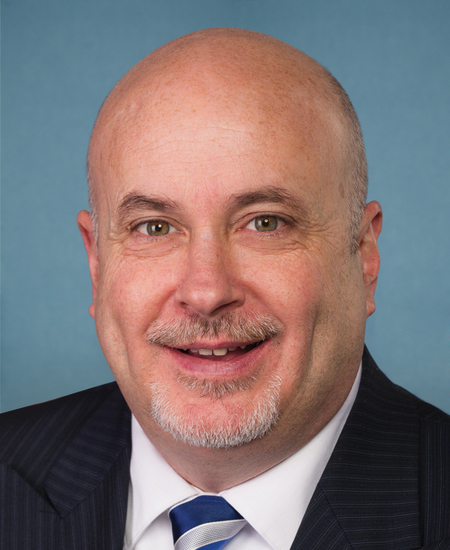
Photo of Mark Pocan
D United States House · District 2 · Wisconsin On the 2026 ballot

Rep. Mark Pocan

Compare
Total votes
2,837
all sessions
Attendance
97%
76 missed
Near the chamber average
With party
97%
of cast votes
Near the chamber average
Bipartisan score
2%
crosses aisle rarely
Near the chamber average
Sponsored
1,992
bills & resolutions
Higher than 88% of chamber peers
Committees
4
assignments
1,992 bills and resolutions

Sponsored bills

Total
1,992
Primary
74
Co-sponsor
1,918
This page
1,992
matching current filters
Co-sponsor HR 1638
In committee · United States House · Co-sponsor
Improving Access to Mental Health Act of 2023

Maddy summaryThis bill increases Medicare reimbursement for clinical social workers from 75% to 85% of the payment rate for psychologists under Part B. It also removes an exclusion that previously prevented skilled nursing facilities from billing Medicare for social worker services provided to residents. The bill expands covered services to include specific mental health assessments and interventions identified by HCPCS codes (like 96156, 96158-96161, etc.) for Medicare beneficiaries. These changes take effect for services provided on or after January 1, 2024, directly affecting Medicare patients and clinical social workers.

In committee Dec 17, 2024 1 co-sponsor
Co-sponsor HR 1617
In committee · United States House · Co-sponsor
Prevent Interruptions in Physical Therapy Act of 2023

Maddy summaryThe Prevent Interruptions in Physical Therapy Act of 2023 amends Medicare rules to allow physical therapists to use temporary replacement providers (locum tenens) for outpatient physical therapy services, aligning with existing provisions for physicians. This directly affects Medicare beneficiaries receiving physical therapy and physical therapy practices needing temporary staffing solutions during provider shortages. The bill updates the Social Security Act to extend the current physician locum tenens rule to physical therapists, ensuring continuity of care without requiring separate approval for temporary coverage. It applies to services furnished after the bill's enactment date.

In committee Dec 17, 2024 1 co-sponsor
Co-sponsor HR 1634
In committee · United States House · Co-sponsor
HELLPP Act

Maddy summaryThe HELLPP Act (HR 1634) amends Medicaid to recognize doctors of podiatric medicine (podiatrists) as physicians, enabling them to be reimbursed for services under Medicaid starting January 1, 2024. It also clarifies Medicare’s documentation requirements for therapeutic shoes for people with diabetes, mandating specific written certifications from a managing physician and a podiatrist to confirm medical necessity. These changes directly affect patients with foot conditions, especially those with diabetes, by improving access to podiatrist-provided care and coverage for therapeutic shoes. The bill includes a separate provision strengthening Medicaid program integrity through continuous levies on provider payments, but this does not alter patient coverage. All key provisions take effect on January 1, 2024.

In committee Dec 17, 2024 1 co-sponsor
Co-sponsor HR 1610
In committee · United States House · Co-sponsor
Chiropractic Medicare Coverage Modernization Act of 2023

Maddy summaryHR 1610 would modernize Medicare coverage for chiropractic care by removing the current restriction that limited beneficiaries to one chiropractic service per visit. It expands coverage to include all services provided by licensed chiropractors within their state-authorized scope, aligning Medicare with VA, military, and private insurance practices. The bill requires chiropractors to complete a Secretary-approved educational webinar to cover non-spinal services, while still allowing payment for spinal manipulation treatments without this requirement. This directly affects Medicare beneficiaries seeking chiropractic care and chiropractors seeking Medicare reimbursement for their services.

In committee Dec 17, 2024 1 co-sponsor
Co-sponsor HR 1536
In committee · United States House · Co-sponsor
LEAP Act

Maddy summaryThe LEAP Act creates a new tax credit for employers with registered apprenticeship programs, offering $1,500 per qualifying apprentice employee above a threshold based on the employer's average apprenticeship hires over the previous three years, limited to two years per employee. It excludes most construction industry employers (NAICS 23) unless they hire pre-apprenticeship graduates and sponsor apprenticeships. The bill also requires federal agencies to develop a plan to reduce printing costs by increasing online document availability and to disclose printing costs for government publications. This applies to apprenticeship programs registered with the Department of Labor.

In committee Dec 17, 2024 1 co-sponsor
Co-sponsor HR 1046
In committee · United States House · Co-sponsor
Social Security Expansion Act

Maddy summaryThe Social Security Expansion Act would increase benefits for many Social Security recipients, extend eligibility for certain groups, and introduce new tax provisions. It raises the calculation method for benefits (increasing the first bend point from 90% to 95%), increases minimum benefits for low earners based on years worked (with higher minimums for those with more work history), and extends benefit eligibility for children who are full-time students until age 22. The bill also introduces a new tax on income between the Social Security wage base and $250,000, and increases the tax on investment income from 3.8% to 16.2%. These changes would primarily affect Social Security beneficiaries, high-income earners, and those with investment income, with the new tax revenues funding the Social Security Trust Fund.

In committee Dec 17, 2024 1 co-sponsor
Co-sponsor HR 883
In committee · United States House · Co-sponsor
Stop the Wait Act of 2023

Maddy summaryThe Stop the Wait Act of 2023 eliminates the current 5-month waiting period for Social Security Disability Insurance (SSDI) benefits by phasing it out: applications filed in 2023-2025 would face a 3-month wait, 2026 a 2-month wait, and 2027 a 1-month wait, with full elimination by January 2028. It also changes Medicare rules to allow individuals without minimum essential health coverage to receive Medicare benefits retroactively from the first month of SSDI eligibility, rather than waiting 24 months. This directly affects people under 65 applying for SSDI who lack other health insurance, ensuring they have coverage during the waiting period. The bill amends the Social Security Act to implement these changes, effective January 1, 2028.

In committee Dec 17, 2024 1 co-sponsor
Co-sponsor HR 11
In committee · United States House · Co-sponsor
Freedom to Vote Act

Maddy summary# Summary of Proposed Election Reform Legislation This document outlines a comprehensive federal election reform bill with multiple titles addressing various aspects of voting rights, election administration, and election integrity. ## Key Provisions: ### 1. Democracy Restoration (Title I) - Restores voting rights to citizens with felony convictions who are not serving a felony sentence in a correctional institution - Requires states to notify individuals of restored voting rights upon release from prison, completion of probation, or sentencing - Prohibits states from conditioning voting rights on payment of fines or fees - Requires states to provide notification of voting rights to citizens with criminal convictions ### 2. Voter Identification Requirements (Title II) - Establishes a broad definition of acceptable identification documents (including utility bills, bank statements, student IDs, etc.) - Requires states to provide free identification to voters who lack one - Authorizes $5 million annually for 5 years to cover costs of providing identification - Sets procedures for provisional voting when identification is not presented ### 3. Voter List Maintenance (Title III) - Prohibits "voter caging" (using undeliverable mail to challenge voter registration) - Bans use of unverified match lists to remove voters from registration lists - Sets strict conditions for removing voters from registration lists - Requires states to provide notice to voters removed from registration lists ### 4. Election Integrity Measures (Title V) - Prohibits hindering or interfering with voter registration (Section 2001) - Restricts removal of local election administrators (Section 3001) - Prohibits harassment of election workers (Section 3101) - Bans deceptive practices in elections (Section 3201), including false statements about voting locations, eligibility, or endorsements ### 5. Additional Provisions - Requires states to provide notice of voting rights restoration to citizens - Establishes private rights of action for violations of the law - Sets criminal penalties for violations (up to $100,000 fines and 5 years imprisonment) - Includes provisions for federal funding to be contingent on compliance with voting rights restoration This legislation represents a significant overhaul of voting rights and election administration procedures across the United States, with a focus on expanding voting access, protecting voter rights, and ensuring fair election administration.


In committee Dec 17, 2024 1 co-sponsor
Primary HR 732
In committee · United States House · Lead sponsor
Save Medicare Act

Maddy summaryHR 732, the "Save Medicare Act," renames the Medicare Advantage program to "Alternative Private Health Plan" in all federal references. This change directly affects private health plans sold under Medicare Part C, requiring all future materials to use the new name by plan years starting October 15, 2023. The bill also imposes a $100,000 civil penalty for any entity using "Medicare" in a plan's title after enactment. The transition period allows both terms to be used until the deadline to prevent confusion for beneficiaries and providers. The law focuses solely on terminology, not program benefits or funding.

In committee Dec 17, 2024 0 co-sponsors
Co-sponsor HR 716
In committee · United States House · Co-sponsor
Fair COLA for Seniors Act of 2023

Maddy summaryHR 716, the Fair COLA for Seniors Act of 2023, changes how cost-of-living adjustments (COLAs) are calculated for Social Security and related benefits by using the Consumer Price Index for Elderly Consumers (CPI-E) instead of the standard Consumer Price Index. This affects Social Security beneficiaries, veterans receiving disability compensation or survivor benefits, and federal retirees under the Civil Service and Military Retirement Systems. The bill requires that any COLA increase for Social Security also applies to these other benefits using the CPI-E, which better reflects inflation experienced by seniors. The change takes effect for benefit determinations starting September 2023.

In committee Dec 17, 2024 1 co-sponsor
Showing 661 to 670 of 1,992 bills
Previous 1 … 66 67 68 … 200 Next