

Maddy summaryHR 609, the Assuring Medicare's Promise Act of 2025, directs revenue from the net investment income tax (currently applied to investment income) into the Medicare Hospital Insurance Trust Fund. It expands the tax base to include certain business income for high-income individuals with modified adjusted gross income exceeding $400,000 ($500,000 for joint filers), with a phase-in to limit the tax increase. The bill ensures this tax revenue directly supports Medicare's hospital insurance program, applying to taxable years beginning after December 31, 2025. The changes do not alter the tax rate but broaden the income types subject to the tax for high earners.
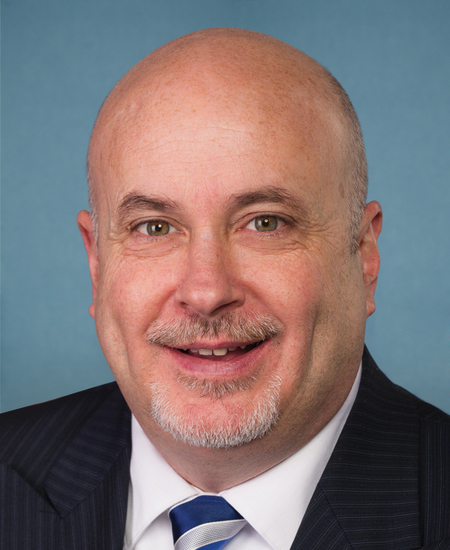
Rep. Mark Pocan
Sponsored bills
Neighbors Not Enemies Act This bill repeals provisions authorizing the President to apprehend and remove from the United States the citizens of a particular nation, if the United States has declared war against that nation or that nation has threatened an invasion against the United States.
Maddy summaryThe Close the Medigap Act of 2025 would prohibit Medigap insurance issuers from denying coverage or charging higher premiums based on health status, pre-existing conditions, genetic information, or other factors. It requires insurers to spend a minimum percentage of premiums on health care claims and improves the Medicare Plan Finder website to provide clearer information about coverage options, out-of-pocket costs, and guaranteed issue requirements. The bill applies to Medigap policies effective January 1, 2026, with full implementation by 2031, and requires Medigap brokers to disclose payments they receive from insurers. These changes would directly affect Medicare beneficiaries, particularly those with pre-existing conditions who have historically faced barriers to obtaining affordable supplemental coverage.
Supporting Accurate Views of Emergency Services Act of 2025 or the 911 SAVES Act This bill requires the Office of Management and Budget to categorize public safety telecommunicators as a protective service occupation under the Standard Occupational Classification system no later than 30 days after the enactment of this bill. (The Standard Occupational Classification system is a federal statistical standard used by federal agencies to classify workers into occupational categories for the purpose of collecting, calculating, or disseminating data.)
Boundary Waters Wilderness Protection and Pollution Prevention Act This bill protects and preserves approximately 225,504 acres of federal land and waters in a specified area in the Rainy River Watershed of Superior National Forest in Minnesota from certain mining, such as sulfide-ore copper mining. (The area is upstream from the Boundary Waters Canoe Area Wilderness.) Specifically, the bill withdraws those acres from entry, appropriation, and disposal under the public land laws; location, entry, and patent under the mining laws; and operation of the mineral leasing, mineral materials, and geothermal leasing laws. However, the Forest Service is authorized to permit the removal of sand, granite, iron ore, and taconite from national forest system lands within such area if the removal is not detrimental to the water quality, air quality, and health of forest habitat within the Rainy River Watershed. Land or interest in land within such area that is acquired by the United States must be immediately withdrawn in accordance with this bill.
Maddy summaryHRES 48 is a ceremonial resolution honoring Dr. Martin Luther King, Jr., by commemorating his 96th birthday on January 20, 2025. The resolution affirms his teachings on diversity, equality, and nonviolence, and specifically condemns hate, discrimination, and harassment targeting Black Americans, Indigenous peoples, Jewish communities, Asian-American/Pacific Islander groups, Muslim communities, Hispanic/Latino communities, LGBTQ+ individuals, and others. It calls on all people to uphold Dr. King’s values of justice, tolerance, and peace. As a symbolic gesture, this resolution has no legal effect but expresses the House’s commitment to these principles.
Chiropractic Medicare Coverage Modernization Act of 2025 This bill expands Medicare coverage of chiropractic services to include all services provided by chiropractors, rather than only subluxation corrections through manual manipulation of the spine.
This bill increases the annual limit on the tax credit for qualified railroad track maintenance expenses (also referred to as the short line railroad tax credit) and expands eligibility for claiming the credit. Under current law, the tax credit is limited each tax year to $3,500 multiplied by the sum of the number of miles of railroad track owned or leased by the taxpayer (miles owned or leased) and the number of railroad track miles assigned to the taxpayer by a Class II or III railroad (miles assigned). This bill increases the annual limit to $6,100 multiplied by the sum of miles owned or leased and miles assigned. The $6,100 amount used in the calculation of the tax credit limit is adjusted for inflation for tax years beginning after 2025. The bill also expands eligibility for the tax credit to include gross expenses for maintaining railroad tracks owned or leased as of January 1, 2024. Under current law, the tax credit is limited to gross expenses for maintaining railroad tracks owned or leased as of January 1, 2015.
Maddy summaryThis bill prohibits discrimination based on gender identity, sexual orientation, or sex characteristics in military service. It requires that eligibility for military service and all personnel policies consider only an individual's ability to meet job-specific military standards, banning the use of race, color, national origin, religion, or gender-related factors. The law directly affects all current and prospective members of the Armed Forces by mandating that military occupational standards apply equally to everyone. It amends Title 10 of the U.S. Code to establish these protections as a formal requirement for all military personnel policies.
Maddy summaryHR 500, the Medicare Hearing Aid Coverage Act of 2025, removes Medicare's longstanding exclusion of hearing aids and related examinations from coverage. This change would directly affect Medicare beneficiaries with hearing loss by allowing them to receive coverage for hearing aids starting January 1, 2026. The bill amends the Social Security Act to eliminate the specific exclusion, making hearing aid coverage a standard Medicare benefit. Additionally, it requires the Government Accountability Office (GAO) to study existing hearing aid programs and submit a report with recommendations to Congress within 18 months of the effective date.