

Fire Ready Nation Act of 2022 This bill establishes fire weather programs and activities to improve fire forecasting and readiness. The National Oceanic and Atmospheric Administration (NOAA) shall establish a coordinated fire weather services program within NOAA to support readiness, responsiveness, and overall resilience of the United States to wildfires, fire weather, smoke, and other associated conditions, hazards, and impacts in built and natural environments (including at the wildland-urban interface); develop a comprehensive, centralized, and publicly accessible digital presence designed to promote usability of the services, tools, data, and information produced by the program; develop services that provide public access to digital fire weather data and information; seek to acquire sufficient high-performance computing resources and capacity for research, operations, and data storage in support of the program; establish a fire weather testbed to evaluate the accuracy and usability of technology, models, fire weather products and services, and other research to accelerate the implementation and use of new capabilities by NOAA, federal and land management agencies, and other relevant stakeholders; conduct annual post-fire-weather season surveys and assessments; establish an Incident Meteorologist Service within the National Weather Service (NWS); assess resources, personnel, procedures, and activities necessary to maximize the functionality and utility of the automated surface observing system and implement a plan that addresses the findings of the assessment; and conduct a workforce support services assessment of NWS employees engaged in emergency response.
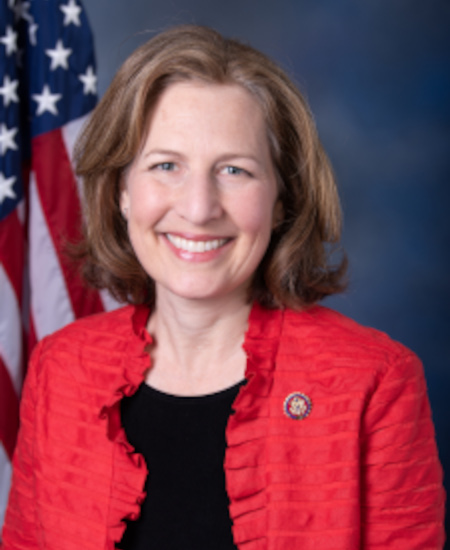
Rep. Kim Schrier
Sponsored bills
Summer Meals Act of 2021 This bill revises provisions related to the Summer Food Service Program (SFSP) of the Department of Agriculture (USDA), which provides meals to children and teens in low-income areas during the summer months when school is not in session. The bill redefines areas in which poor economic conditions exist , where the SFSP may operate, as areas in which at least 40% (currently, 50%) of the children have been determined to be eligible for free or reduced price school meals under the school lunch and breakfast programs. The bill reimburses service institutions (other than school food authorities) for up to one meal and one snack per child each day during after-school hours, weekends, and school holidays during the regular school calendar. Currently, such institutions are reimbursed for meals and snacks served to children over the summer months or to children who are on vacation under a continuous school calendar. USDA may award competitive grants to service institutions to increase participation in the summer food service program for children at congregate feeding sites through innovative approaches to limited transportation and mobile meal trucks. Service institutions that are participating in the summer food service program for children may serve up to three meals, or two meals and one snack, during each day of operation. Currently, this option is reserved for camps and service institutions that serve meals primarily to migrant children.
Spectrum Innovation Act of 2022 This bill addresses auctions of, and other matters related to, portions of the electromagnetic spectrum allocated for federal use. The bill also establishes grants for and otherwise modifies provisions concerning next generation 9-1-1 systems (i.e., interoperable Internet Protocol-based systems for receiving 9-1-1 calls). The bill extends to March 31, 2024, the authority of the Federal Communications Commission (FCC) to auction and license electromagnetic spectrum. (Under current law, the authority expires on September 30, 2022.) Additionally, the bill establishes a process for auctioning specified parts of the spectrum currently allocated for federal use. The Office of Management and Budget must transfer certain funding to federal entities for planning activities related to reallocating and auctioning spectrum while the National Telecommunications and Information Administration (NTIA) and the Executive Office of the President must oversee the planning. The Department of Commerce must, informed by the planning, identify the spectrum to auction. Further, the bill addresses shared use of spectrum bands by federal and nonfederal users. For example, the NTIA must implement an incumbent informing capability system to manage harmful interference when nonfederal users and incumbent federal entities share spectrum. The bill also establishes the Public Safety and Secure Networks Fund and directs a portion of spectrum auction proceeds to the fund for, among other purposes, reimbursing telecommunications providers for replacing equipment that poses risks to national security and safety.
Securing and Enabling Commerce Using Remote and Electronic Notarization Act of 2022 or the SECURE Notarization Act of 2022 This bill allows a notary public commissioned under state law to remotely notarize electronic records and perform notarizations for remotely located individuals. The bill provides technical requirements for such notarizations, including the creation and retention of video and audio recordings and the use of communication technologies (i.e., video chat). Additionally, the bill requires U.S. courts and states to recognize notarizations—including remote notarizations of electronic records and notarizations of remotely-located individuals—that occur in or affect interstate commerce and are performed by a notary public commissioned under the laws of other states. The bill also allows a notary public to remotely notarize electronic records involving an individual located outside of the United States, subject to certain requirements.
Gabriella Miller Kids First Research Act 2.0 This bill reauthorizes through FY2027 a pediatric disease research initiative within the National Institutes of Health (NIH) and requires the NIH to coordinate pediatric research activities to avoid duplicative efforts. Additionally, the Department of Health and Human Services must report, within five years, to Congress about research funded through the initiative.
Rural Physician Workforce Production Act of 2022 This bill allows certain hospitals to receive additional payment under Medicare for full-time equivalent residents who receive training in rural areas. Specifically, hospitals, critical access hospitals, sole community hospitals, and rural emergency hospitals may elect to receive payment for time spent by a resident in a rural training location if the resident trains for at least eight weeks in the location and the hospital pays the salary and benefits of the resident during this time. Additionally, hospitals may receive payment for all time spent by residents in a residency program in which 50% of all training is in rural locations, regardless of where the training occurs or specialty. Payments are based on the difference between the total amount of eligible payments (as determined by the Centers for Medicare & Medicaid Services) and the amount of graduate medical education payments received (if applicable).
Right to Contraception Act This bill sets out statutory protections for an individual's right to access and a health care provider's right to provide contraception and related information. Contraception refers to an action taken to prevent pregnancy, including the use of contraceptives (i.e., a device or medication used to prevent pregnancy), fertility-awareness based methods, and sterilization procedures. Generally, the bill prohibits measures that single out and impede access to contraception and related information. However, a party may defend against a claim that a measure violates the bill's prohibitions by demonstrating, through clear and convincing evidence, that the measure significantly advances access to contraception and cannot be achieved through less restrictive means. The Department of Justice, individuals, or health care providers may bring a lawsuit to enforce this bill, and states are not immune from suits for violations.
Ensuring Women's Right to Reproductive Freedom Act This bill prohibits anyone acting under state law from interfering with a person's ability to access out-of-state abortion services. ( Abortion services includes the use of any drugs that are approved to terminate pregnancies and any health care services related to an abortion, whether or not provided at the same time or on the same day.) Specifically, the bill prohibits any person acting under state law from preventing, restricting, impeding, or retaliating against health care providers who provide legal abortion services to out-of-state residents, any person or entity who helps health care providers to provide such services, any person who travels to another state to obtain such services, any person or entity who helps another person travel to another state to obtain such services, or the movement in interstate commerce of drugs that are approved to terminate pregnancies. The Department of Justice may enforce this bill through civil actions; the bill also establishes a private right of action for violations.
Break Free From Plastic Pollution Act of 2021 This bill sets forth requirements and incentives to reduce the production of a variety of products and materials, including plastics, and increase efforts to collect, recycle, or compost products and materials. The bill makes certain producers of products (e.g., packaging, paper, single-use products, beverage containers, or food service products) fiscally responsible for collecting, managing, and recycling or composting the products after consumer use. In addition, the bill establishes (1) minimum percentages of products that must be reused, recycled, or composted; and (2) an increasing percentage of recycled content that must be contained in beverage containers. Beginning on January 1, 2023, the bill phases out a variety of single-use products, such as plastic utensils. The bill also sets forth provisions to encourage the reduction of single-use products, including by establishing programs to refund consumers for returning beverage containers and by establishing a tax on carryout bags. The bill creates a temporary moratorium on new or expanded permits for certain facilities that manufacture plastics until regulations are updated to address pollution from the facilities. The Environmental Protection Agency (EPA) must publish guidelines for a national standardized labeling system for recycling and composting receptacles. Producers must include labels on their products that are easy to read and indicate whether the products are recyclable, compostable, or reusable. The EPA must also ensure that certain clothes washers have filtration units as required by this bill. Finally, the bill establishes limitations on the export of plastic waste to other countries.
Climate Leadership and Environmental Action for our Nation’s Future Act or the CLEAN Future Act This bill creates requirements and incentives to reduce emissions of greenhouse gases. The bill establishes an interim goal to reduce greenhouse gas emissions to at least 50% below 2005 levels by 2030 as well as a national goal to achieve net-zero greenhouse gas emissions by 2050. Each federal agency must develop a plan to achieve the goals. Beginning in 2023, retail electricity suppliers must provide an increasing percentage of electricity that is generated without the release of greenhouse gases into the atmosphere (zero-emission electricity). By 2035, the suppliers must provide 100% zero-emission electricity or demonstrate alternative means of compliance. For example, the suppliers may buy credits under a trading program that allows entities to buy, sell, and trade credits to demonstrate compliance. The bill also establishes a variety of requirements, programs, and incentives to reduce or eliminate greenhouse gas emissions by modernizing the electric grid and supporting clean energy microgrids; increasing the use of renewable energy and advanced nuclear power technologies; increasing energy efficiency in buildings, homes, and appliances; supporting clean transportation, including electric vehicles and related charging infrastructure; issuing greenhouse gas standards for certain vehicles, engines, and aircraft; promoting manufacturing and industrial decarbonization, including through buy-clean programs; supporting environmental justice efforts; and reducing methane, plastics, and super pollutants.