

Maddy summary# Summary of the Agriculture Resilience Act of 2023 This comprehensive legislation aims to enhance agricultural sustainability, reduce greenhouse gas emissions, and decrease food waste across the food system. Key provisions include: 1. **Conservation Programs**: - Expanded Conservation Reserve Program with increased acreage limits through 2028 - New Grassland 30 pilot program for 30-year conservation contracts - Conservation of Private Grazing Land program focused on advanced grazing management - Alternative Manure Management Program to reduce methane emissions from livestock operations 2. **Renewable Energy**: - Enhanced Rural Energy For America Program with carbon accounting requirements - New agrivoltaic systems research and demonstration program - Continued support for the AgSTAR program (anaerobic digestion) 3. **Food Waste Reduction**: - Standardized quality date labeling ("BEST If Used By") and discard date labeling ("USE By") - Amendments to the Federal Food Donation Act requiring donation of excess food - School food waste reduction grant program for local educational agencies - Grants for composting and anaerobic digestion food waste-to-energy projects 4. **Additional Key Provisions**: - Composting recognized as a conservation practice - Technical assistance programs for sustainable agriculture - Support for beginning, socially disadvantaged, and small-scale farmers - Funding commitments for multiple programs through fiscal year 2028 The legislation emphasizes climate change adaptation and mitigation, environmental protection, food system resilience, and equitable support for diverse farm operations while reducing food waste across the supply chain.
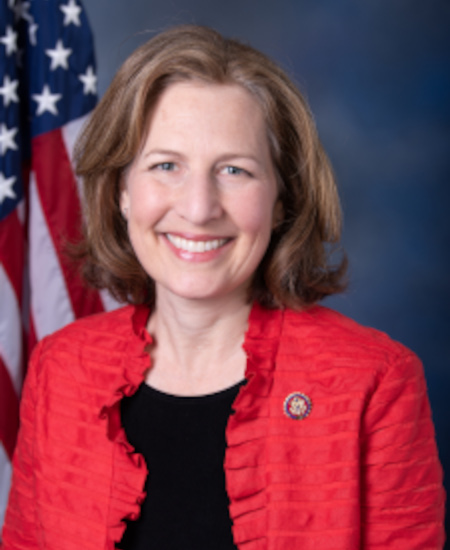
Rep. Kim Schrier
Sponsored bills
Maddy summaryThis bill establishes a special "Ski Area Fee Retention Account" to manage fees collected from ski areas operating on National Forest System land. It requires 80% of these fees to stay at the specific forest unit where the ski area is located (75% for program administration and visitor services, 25% for facility maintenance), with 20% available for broader Forest Service recreation projects. Funds can be used for activities like trail maintenance, visitor signage, avalanche education, and facility repairs but cannot cover wildfire suppression or land acquisition. The bill ensures these fees supplement, not replace, existing funding for forest units.
Maddy summaryThis bill creates a new visa category for temporary workers in mobile entertainment, such as carnival and circus staff who travel across the U.S. It directly affects carnival operators, seasonal workers, and food/concession vendors at fairs and festivals. The key provision requires Department of Labor certification to ensure U.S. workers are not displaced and that hiring foreign workers won’t lower wages or working conditions. It defines "mobile entertainment provider" to include traveling carnivals, circuses, and affiliated seasonal services like food concessions at local events.
Maddy summaryThis bill amends the federal School Lunch Act to require school food authorities (like school districts) participating in the program to maintain a negative balance in their nonprofit school food service account by June 30th of the year preceding the previous school year. It directly affects public schools receiving federal funding for lunch programs. The key provision changes the financial requirement for these schools, mandating a specific negative balance in their accounts by a set deadline. This is a procedural financial adjustment to the program's eligibility rules, not a new benefit or funding change.
Maddy summaryThe Pell Grant Sustainability Act adjusts Federal Pell Grants to keep pace with rising college costs by indexing them annually to inflation. It directly affects low-income undergraduate students who receive Pell Grants, ensuring the maximum award amount increases each academic year based on the Consumer Price Index. The bill replaces previous fixed amounts with a new formula: starting in 2023-2024, grants will be set at $6,895 (or the prior year's amount if higher), then adjusted yearly by the inflation rate. This change aims to restore the grant's purchasing power, which covered 80% of costs in 1974-75 but only 30% by 2020-21.
Maddy summaryThe Office of Gun Violence Prevention Act of 2023 establishes a new office within the Department of Justice to coordinate federal efforts on gun violence prevention. The office, led by a Director appointed by the Attorney General, will evaluate existing programs, identify data gaps, and make evidence-based policy recommendations to Congress and the President. It will work with an advisory council including DOJ officials and external members like gun violence survivors, community service providers, and public health experts. The office must produce an annual report to Congress on gun violence trends and policy recommendations, and the bill authorizes funding to support these activities.
Maddy summaryHR 1723, the Abortion is Health Care Everywhere Act of 2023, amends the Foreign Assistance Act to remove restrictions on using U.S. foreign aid funds for abortion services. It explicitly allows U.S. foreign assistance programs to fund comprehensive reproductive health care, including abortion services, training, and equipment. This change directly affects U.S. international health programs and recipient countries, enabling them to integrate safe abortion care into broader reproductive health services. The bill aims to align U.S. policy with global health guidelines by making abortion services a standard part of reproductive health care funded through foreign assistance.
Maddy summaryThe Outdoors for All Act establishes a federal grant program to fund outdoor recreation projects in underserved communities. It authorizes the Secretary of the Interior to award grants to eligible entities (like states, cities, tribal organizations, or nonprofits) for acquiring land, developing parks, or renovating outdoor facilities in qualifying urban areas (population 25,000+ or tribal lands) or low-income communities (where 30%+ of residents have incomes at or below 80% of local median income or 200% of the federal poverty line). Grants require a 100% cash or in-kind match (with limited waivers), prohibit funding for indoor facilities or maintenance, and prioritize projects enhancing park access, engaging youth, creating jobs, or improving environmental benefits like reducing urban heat islands. The program mandates annual reporting and focuses on concrete community outcomes rather than speculative results.
Establishing Accreditation Grants for Law Enforcement Act of 2023 or the EAGLE Act of 2023 This bill requires the Department of Justice to provide grants to eligible local law enforcement agencies for activities related to obtaining qualified accreditation or recertification. Such accreditation or recertification shall be provided by a professional law enforcement organization involved in developing standards for law enforcement at the national, state, regional, or tribal level, such as the Commission on Accreditation for Law Enforcement Agencies.
Better Interoperability for Devices Act of 2023 or the BID Act of 2023 This bill requires the Food and Drug Administration to report on the interoperability of medical devices, including associated standards, data, and costs.