

Maddy summaryThe Pell Plus Act of 2023 establishes a new program that doubles Federal Pell Grants for eligible undergraduate students starting in the 2025-2026 award year. Students enrolled in their first bachelor’s degree program at participating colleges who maintain progress toward completion within four academic years will receive an additional grant equal to their standard Pell Grant amount, matched by their institution using non-federal funds (e.g., institutional scholarships or tuition waivers). The combined total of the Pell Grant, Pell Plus Grant, and institutional funds cannot exceed the college’s cost of attendance. Participating institutions must provide students with progress updates and support resources to help them complete their degrees on time. This affects undergraduate students at colleges that choose to join the program and directly increases financial aid for low-income students pursuing bachelor’s degrees.
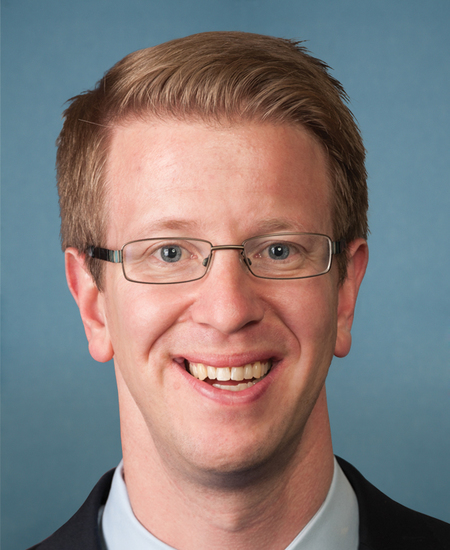
Rep. Derek Kilmer
Sponsored bills
Maddy summaryHR 3152, the "Fight CRIME Act," aims to maintain international restrictions on Iran's missile-related activities by requiring diplomatic efforts to extend these restrictions before they expire in October 2023. The bill mandates annual reports detailing U.S. diplomatic strategies, potential impacts of expiration, and measures to deter missile technology transfers to Iran. It establishes sanctions against foreign individuals or entities that knowingly support Iran's missile or drone programs, including asset freezes and visa restrictions. These sanctions apply regardless of whether UN restrictions remain in effect after their expiration, directly affecting foreign entities involved in these activities.
Maddy summaryHCONRES 49 establishes a 12-member Commission on Evidence-Based Policymaking to study how Congress can better use federal data for decision-making. The Commission, with balanced appointments from both parties and chambers, will analyze ways to improve access to government data, incorporate evidence into lawmaking, and recommend changes like creating a congressional Chief Data Officer. It must gain two-thirds approval for any recommendations and will report to Congress by the end of the 118th Congress. This resolution directly affects Congress by creating a formal body to evaluate data practices for future legislation.
Maddy summaryHRES 679 is a symbolic House resolution supporting the designation of September 10-16, 2023, as "Celebrate Community Week." It recognizes four international service organizations - Kiwanis International, Lions Clubs International, Optimist International, and Rotary International - for their community service efforts. The resolution encourages these groups to continue promoting community service, especially for youth, and applauds their annual projects addressing needs like youth development, health, education, and humanitarian challenges. It has no funding or policy changes; it simply expresses congressional support for their volunteer work.
Maddy summaryHRES 492 is a congressional resolution condemning the Iranian government's systematic persecution of the Baha'i minority, which directly affects Baha'is in Iran facing arrests, property confiscation, and imprisonment. The resolution specifically calls for Iran to immediately release Baha'is detained for their faith, end state-sponsored hate propaganda against them, and reverse discriminatory policies denying equal access to education, employment, and religious freedom. It urges the U.S. President and Secretary of State to demand Iran’s compliance with international human rights treaties and to use existing sanctions authorities (under the 2010 and 2012 Iran sanctions laws) against officials responsible for these abuses. The resolution does not impose new legal requirements but serves as a formal U.S. government statement of condemnation and a call for diplomatic and sanctions action.
Maddy summaryHR 3585, the PUMP Technical Correction Act, amends the Congressional Accountability Act of 1995 to update references related to breastfeeding accommodations for congressional employees. It corrects two specific section citations in the law by adding "section 18D" and "218d" to ensure accurate coverage under existing provisions. This technical change directly affects congressional employees by clarifying the legal framework for workplace breastfeeding accommodations. The bill makes no new policy changes but ensures the law’s references align with current statutory language.
Maddy summaryThe Jobs in the Woods Act creates a federal grant program to train workers for forestry jobs in rural communities. It provides competitive grants (ranging from $500,000 to $2 million) to eligible groups like states, tribes, nonprofits, or schools for career training programs in forestry operations and products. Priority is given to projects addressing aging workforces, youth engagement through school partnerships, and job placement. The program is funded at $10 million annually from 2024 through 2028, targeting low-income rural areas with populations under 50,000.
Maddy summaryHRES 668, the BUDS Resolution, amends House rules to allow bipartisan joint sponsorship of public bills and resolutions by one majority-party and one minority-party member. This change directly affects House members seeking to co-sponsor legislation with cross-party support, updating the existing rules for naming cosponsors and submitting constitutional authority statements. The key mechanism requires that for joint sponsorship, one sponsor must represent the majority party and the other the minority party, with both sponsors sharing responsibility for related procedural steps. This procedural adjustment streamlines the process for bipartisan co-sponsorship without altering legislative policy.
Maddy summaryHR 5295, the Expanding the VOTE Act, modifies Section 203 of the Voting Rights Act to expand language access for voters. It requires states and localities to provide voting materials (including ballots and instructions) in the language of covered language minority groups, with new provisions for American Indian and Alaska Native languages requiring tribal government consultation for unwritten languages. The bill creates $15 million in grants to help jurisdictions provide voting materials in languages that don’t currently trigger Section 203 coverage, while mandating continued provision for those groups in future elections. It also directs a study to evaluate lowering population thresholds for language protections and expanding the definition of covered languages.
Rural Hospital Technical Assistance Program Act This bill provides statutory authority for the Rural Hospital Technical Assistance Program within the Department of Agriculture (USDA). Under the bill, USDA must establish and maintain (directly or by grant, contract, or cooperative agreement) a program to help eligible hospital facilities in rural areas with a population of 50,000 inhabitants or less. The program must provide tailored technical assistance and training to hospital facilities to identify development needs for maintaining essential health care services and support action plans for financial, operational, and quality improvement projects to meet these needs. Development needs include (1) constructing, expanding, and modernizing health care facilities; (2) increasing telehealth capabilities; and (3) acquiring or upgrading health care information systems (e.g., electronic health records). The program must also provide technical assistance and training to help hospital facilities to better manage their financial and business strategies and identify, and apply for assistance from, USDA loan and grant programs. In selecting eligible hospital facilities to participate in the program, USDA must give priority to borrowers and grantees of certain USDA rural assistance programs. USDA must also submit an annual report to Congress on the progress and results of the program.