

Maddy summaryThis bill directs the Attorney General to set up an official office for the United States attorney representing the Western District of Washington in Clark County. The primary mechanism is a direct order to establish this physical station within the specified county. The legislation affects the Department of Justice by mandating a new operational location for federal legal proceedings in that area.
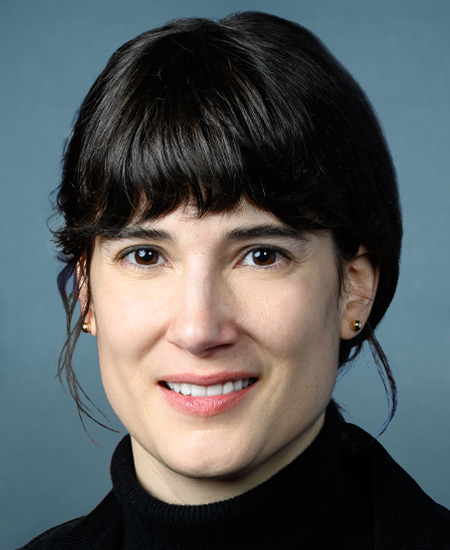
Rep. Marie Gluesenkamp Perez
Sponsored bills
Maddy summaryThis bill authorizes the federal government to provide up to $70 million annually from 2027 to 2031 to help local law enforcement agencies combat the trafficking of fentanyl and other opioids. The funds are intended for eligible entities such as states, local governments, and tribal organizations to hire and train officers, purchase necessary equipment, and establish or expand multi-jurisdictional task forces that cross city or state lines. A specific requirement of the program is that at least 20 percent of the money must be set aside for direct grants to Indian Tribes and multi-jurisdictional task forces. To receive these funds, applicants must submit detailed plans explaining how they will use the money and agree to report on their progress, while the Attorney General is tasked with streamlining the application process to reduce paperwork. The legislation also mandates that the Office of Community Oriented Policing Services provide training and technical assistance to support these efforts and submit annual reports to Congress on the program's effectiveness.
Maddy summaryThe Stop Scamming Truckers Act aims to protect motor carriers, particularly small businesses and owner-operators, from deceptive communications regarding United States Department of Transportation number registration. It requires private companies sending such messages to clearly state they are not government agencies and prohibits the use of logos or claims that imply federal affiliation or mandatory payments. The law also establishes a private right of action allowing individuals to sue for violations, with courts able to award actual damages, statutory penalties, and legal fees without requiring proof of actual confusion.
This resolution expresses support for police officers and other law enforcement personnel. The resolution further recognizes law enforcement officers across the United States in the pursuit of preserving safe and secure communities; the need to ensure that such officers have the equipment, training, and resources necessary to protect their health and safety while they are protecting the public; and the law enforcement community for acts of sacrifice and heroism. The resolution expresses condolences and appreciation to the loved ones of each law enforcement officer who has made the ultimate sacrifice in the line of duty.
Maddy summaryThis bill would amend federal law to strengthen penalties for organized retail crime by expanding definitions of theft to include digital goods, gift cards, and setting a $5,000 aggregate value threshold for charges over a 12-month period. It would establish a new "Organized Retail and Supply Chain Crime Coordination Center" under Homeland Security to coordinate Federal, State, local, and Tribal law enforcement efforts against cross-jurisdictional theft groups. The Center would share information with retailers, transportation companies, and law enforcement agencies, track crime trends, and produce annual reports on organized retail crime. This legislation directly affects retailers, supply chain businesses, and law enforcement agencies, while targeting organized crime groups responsible for a 93% increase in larceny incidents and rising safety concerns for retail employees. The bill aims to address significant financial losses and supply chain disruptions noted in the National Retail Federation's 2023 data.
Maddy summaryThis bill, titled the No Capital Gains Tax on Family Farms Act, would allow farmers to sell their land to immediate family members without paying capital gains tax on the profit. To qualify, the property must have been used as a farm for at least two years within the eight years prior to the sale, and the buyer must be a spouse, lineal descendant, or their spouse. If the new owner keeps the farm for ten years, the property's tax basis will be adjusted upward to reflect its fair market value at the time of the sale. The law applies to sales occurring after its enactment and requires the IRS to issue regulations to guide its implementation.
Maddy summaryThis bill, known as the Know Your Labor Rights Act, requires employers to post notices about employee labor rights in both physical and digital formats where employee notices are typically displayed. It mandates that employers inform new employees about these rights and provides the National Labor Relations Board with the authority to enforce compliance through orders and civil penalties. The maximum penalty for each violation is set at $500, and the Board must publicly share the notice forms and texts at no cost to employers. These changes directly affect employers and employees by increasing transparency around labor rights and establishing clearer enforcement mechanisms.
Maddy summaryThis House Resolution recognizes the efforts and public safety contributions of linemen and the important role they play in maintaining the nation's energy infrastructure. It expresses support for designating April 18, 2026, as "National Lineman Appreciation Day" and acknowledges linemen as first responders.
Maddy summaryThis bill amends two conservation programs to provide upfront payments for emergency repairs. Agricultural producers can receive up to 50% of fencing repair costs or up to 75% for other farmland rehabilitation work before starting repairs. Forest landowners may get up to 75% of emergency restoration costs before implementing measures, with funds needing to be spent within 180 days or returned. It also clarifies that federally-caused wildfires (if spread by natural causes) qualify for payments under the program.
Maddy summaryThis resolution establishes an annual Congressional Quilt Show to honor American quilters and their 250-year tradition of craftsmanship. The program would select winners through a lottery system among constituents who have received recognition at county fairs or similar events within their congressional districts. Winning quilts would be displayed outside Members of Congress offices by the Architect of the Capitol, with rules set by the House Administration Committee. The measure expresses support for the cultural and community value of quilting without mandating funding or creating new federal programs.