

CHampioning Apprenticeships for New Careers and Employees in TECHnology Act or the CHANCE in TECH Act This bill requires the Department of Labor to enter into contracts with industry intermediaries to promote the development of and access to apprenticeships in the technology sector. The Department of Education (ED) may issue CHANCE in TECH Awards for 21st Century Schools to secondary schools or junior or community colleges that demonstrate high achievement in providing students necessary skills to compete in the 21st century workforce. In making an award, ED must consider the availability of science, technology, engineering, and mathematics (STEM), career and technical education, and computer technology courses at the schools.
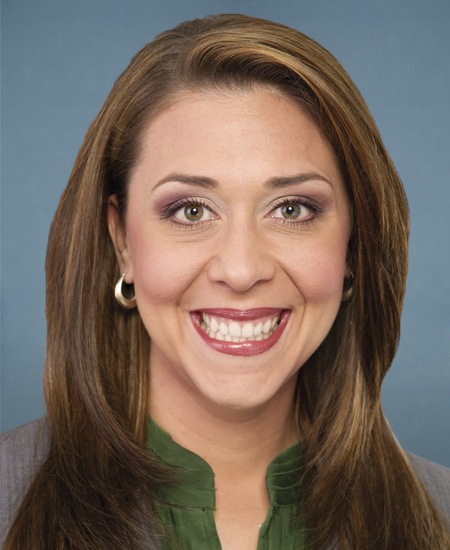
Rep. Jaime Herrera Beutler
Sponsored bills
Protecting Americans from Unnecessary Spread upon Entry from COVID-19 Act of 2021 or the PAUSE Act of 2021 This bill maintains immigration restrictions put in place under public health emergency authorities to prevent the introduction of COVID-19 (i.e., coronavirus disease 2019) from foreign countries. Specifically, the bill prohibits the Department of Health and Human Services from rescinding or reducing the stringency of the restrictions. It also prohibits the Department of Homeland Security from stopping or reducing enforcement of the restrictions. These prohibitions remain in effect until (1) federal and state COVID-19 emergency orders are lifted, and (2) the risk of introducing COVID-19 in or from Canada and Mexico is minimal.
Medicare Economic Security Solutions Act This bill modifies provisions relating to enrollment periods for Medicare medical services. Among other things, the bill establishes a late enrollment penalty of 15% of monthly premiums and applies the penalty for a period equal to twice the number of months in each 12-month period during which the individual was not enrolled. Currently, the late enrollment penalty is 10% of monthly premiums for each 12-month period during which the individual was not enrolled, and the penalty continues to apply for as long as the individual is enrolled in Medicare medical services. The bill also expands the special enrollment periods to individuals who have health insurance coverage other than through their employer.
Protecting Access to Post-COVID-19 Telehealth Act of 2021 This bill makes permanent several telehealth flexibilities that were initially authorized during the public health emergency relating to COVID-19 (i.e., coronavirus disease 2019), particularly with respect to Medicare coverage of telehealth services. For example, the bill permanently allows federally qualified health centers and rural health clinics to serve as the distant site (i.e., the location of the health care practitioner) for telehealth services under Medicare. Payment must be made in the same manner as for non-telehealth services, rather than in accordance with a separate methodology determined by the Centers for Medicare & Medicaid Services (CMS). The bill also permanently allows beneficiaries to receive Medicare telehealth services at any site, regardless of type or location, and grants the CMS general authority to waive any other requirements during any emergency period.
Child Care Workforce and Facilities Act of 2021 This bill requires the Department of Health and Human Services to provide states and tribal entities with grants to increase access to licensed child care services. The grants may be used to develop and expand the child care workforce or child care facilities in locations with insufficient available child care. Specifically, grants cover 50% of the cost of programs to support the education and training of caregivers or projects to build, expand, or renovate child care facilities in these areas.
American Food for American Schools Act of 20 21 This bill requires school food authorities (SFAs) to request a waiver from the Department of Agriculture (USDA) to purchase foreign commodities or products for the National School Lunch Program (NSLP). SFAs may purchase foreign commodities or products without a waiver if the commodities or products are not produced or available domestically. Under current law, Buy American provisions require SFAs to purchase, to the maximum extent practicable, domestic commodities or products for the NSLP. There are limited exceptions which permit the purchase of foreign products in circumstances when using domestic products is truly not practicable. If an SFA uses an exception, there is no requirement to request a waiver to purchase a foreign product or commodity, but the SFA must keep documentation justifying the exception. USDA may not provide a waiver for an SFA to purchase foreign commodities or products unless (1) the commodities or products are not produced domestically in sufficient amounts or of satisfactory quality, (2) the domestic commodities or products would be significantly higher in price than foreign commodities or products, and (3) the SFA agrees to make the waiver publicly available on its website and email a notification of the waiver to parents or guardians of students who will be served the foreign commodity or product purchased pursuant to the waiver.
Access Technology Affordability Act of 2021 This bill allows a refundable tax credit equal to the amounts paid for qualified access technology for use by a blind individual who is the taxpayer, the taxpayer's spouse, or a dependent of the taxpayer. Qualified access technology is hardware, software, or other information technology with the primary function of converting or adapting information that is visually represented into forms or formats useable by blind individuals. The credit is limited to (1) costs that are not compensated by insurance or otherwise, and (2) an aggregate amount of $2,000 per blind individual in any period of three consecutive taxable years. The credit must be adjusted for inflation after 2021 and terminates after 2026.
This resolution expresses the sense of the House of Representatives that Congress should ensure that the U.S. Postal Service is not privatized and remains an independent establishment of the federal government.
This bill establishes in the legislative branch the National Commission on the Domestic Terrorist Attack Upon the United States Capitol. The commission shall (1) conduct an investigation of the relevant facts and circumstances relating to the attacks on the Capitol of January 6, 2021; (2) identify, review, and evaluate the causes of and the lessons learned from the attacks, relative to detecting, preventing, and responding to such kinds of attacks; and (3) report to Congress and the President.
This resolution recognizes National Mentoring Month.