

This concurrent resolution urges the United States to protect existing hydropower resources and increase substantially the capacity and generation of clean, renewable hydropower resources. In addition, it expresses the sense of Congress that hydropower is a renewable resource for purposes of all federal programs.
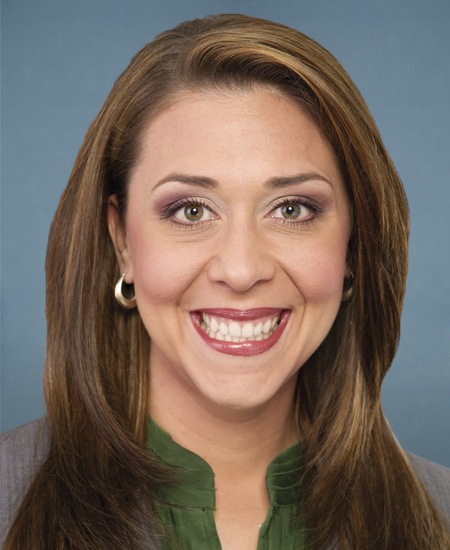
Rep. Jaime Herrera Beutler
Sponsored bills
This resolution expresses the sense of the House of Representatives that the U.S. Postal Service should continue door delivery for all customers.
Safe and Affordable Drugs from Canada Act of 2021 This bill requires the Food and Drug Administration (FDA) to allow for the personal importation of prescription drugs from Canada in certain instances. Such a drug must (1) be purchased from an approved Canadian pharmacy and dispensed by a pharmacist licensed in Canada; (2) be purchased by an individual for personal use only and in quantities not to exceed a 90-day supply; (3) be filled using a valid prescription from a physician licensed in a U.S. state; and (4) have the same active ingredients, route of administration, dosage form, and strength as an FDA-approved drug. Certain types of drugs may not be imported under this program, such as controlled substances, biological products, or intravenously injected drugs. An approved pharmacy under this program must be located and licensed in Canada and meet additional requirements, such as participation in ongoing and comprehensive quality assurance programs. The FDA shall publish a list of approved Canadian pharmacies on a website.
United States-Israel PTSD Collaborative Research Act This bill establishes a grant program for collaborative efforts between the United States and Israel to advance research on post-traumatic stress disorders. The Department of Defense, in coordination with the Department of Veterans Affairs and the Department of State, shall award grants to eligible academic institutions or nonprofit entities in the United States. Work shall be conducted by the eligible entity and an entity in Israel under a joint research agreement.
Family Savings for Kids and Seniors Act This bill provides an annual inflation adjustment after 2021 to the $5,000 tax exclusion for employer-provided dependent care assistance.
Rural Maternal and Obstetric Modernization of Services Act or the Rural MOMS Act This bill expands initiatives to address maternal health in rural areas. The bill provides funding through FY2026 for the Health Resources and Services Administration (HRSA) to establish rural obstetric networks. These networks must foster collaboration to improve birth outcomes and reduce maternal morbidity in rural areas. HRSA also must award demonstration grants to medical schools and other health professional training programs to support education and training on maternal health in rural areas. In addition, the bill incorporates maternal health services in certain telehealth grant programs. It also revises various research and other activities of the Department of Health and Human Services that pertain to maternal health. Furthermore, the Government Accountability Office must report on maternal health topics, including health inequities and data issues.
This resolution identifies women's cardiovascular health as an important health care issue and supports gender-specific cardiovascular health research, prevention, and treatment.
Marriage Access for People with Special Abilities Act or the MAPSA Act This bill excludes a spouse's income and resources when determining eligibility for Supplemental Security Income (SSI), and disregards marital status when calculating the SSI benefit amount, for an adult who has a diagnosed intellectual or developmental disability. SSI is a federal income supplement program designed to help aged, blind, and disabled individuals with limited income and resources meet basic needs.
Remote Seafood Employee Meals Tax Parity Act This bill provides that the 50% limitation on the tax deduction for business meals shall not apply to meals provided on certain fishing vessels or at certain fish processing facilities.
Temporary Reciprocity to Ensure Access to Treatment Act or the TREAT Act This bill temporarily authorizes the interstate provision of in-person and telehealth services. This authorization applies during, and for at least 180 days after, the COVID-19 (i.e., coronavirus disease 2019) emergency. Specifically, subject to scope of practice and other requirements, a health care professional may provide health services in any U.S. jurisdiction based on that individual's authorization to practice in any one state or territory. The bill also provides certain related powers to health care professional regulatory bodies, such as medical boards. Specifically, a regulatory body may investigate and take disciplinary actions against a professional who provides services pursuant to this bill to a patient in that body's jurisdiction.