

Manufacturing Jobs for Veterans Act of 2022 This bill requires the Department of Labor, as part of the Veteran's Workforce Investment Program, to implement the Veterans Manufacturing Employment Program to award competitive grants to three states for the establishment and administration of a State Manufacturing Employment Program. Such program must provide grants to manufacturing employers and joint-labor management organizations that provide eligible veterans with training, on-the-job training, apprenticeships, and training that leads to a recognized postsecondary credential. Eligible veterans are those who are employed by a manufacturing employer and enrolled or participating in a specified training, on-the-job training, apprenticeship, or certification class.
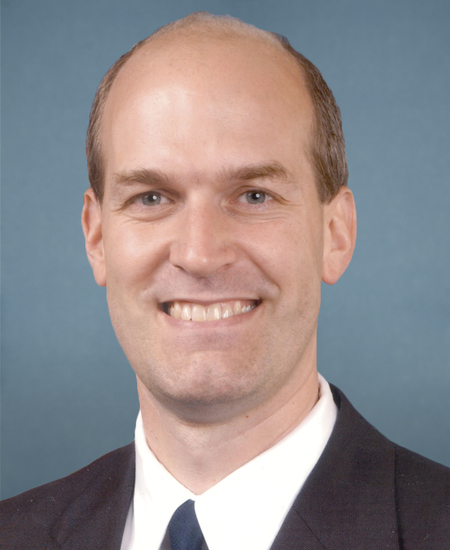
Rep. Rick Larsen
Sponsored bills
Keep Americans Safe Act This bill establishes a new criminal offense for the import, sale, manufacture, transfer, or possession of a large capacity ammunition feeding device (LCAFD). The bill does not prohibit certain conduct with respect to an LCAFD, including the following: importation, sale, manufacture, transfer, or possession related to certain law enforcement efforts, or authorized tests or experiments; importation, sale, transfer, or possession related to securing nuclear materials; and possession by a retired law enforcement officer. The bill permits continued possession of, but prohibits sale or transfer of, a grandfathered LCAFD. Newly manufactured LCAFDs must display serial number identification and the date of manufacture. Additionally, the bill allows a state or local government to use Edward Byrne Memorial Justice Assistance Grant Program funds to compensate individuals who surrender an LCAFD under a buy-back program.
Global Malnutrition Prevention and Treatment Act of 2021 This act sets out programs and otherwise directs the U.S. Agency for International Development (USAID) to carry out activities to prevent and treat malnutrition globally. Specifically, USAID may leverage resources to address malnutrition through the Global Nutrition Coordination Plan (an interagency effort to strengthen the impact of U.S. investments in nutrition) and its role on the board of directors of the U.S. International Development Finance Corporation. USAID must also select countries based on specified malnutrition-related indicators for purposes of targeting malnutrition prevention and treatment programs and update the selection within five years. Additionally, USAID may establish the Nutrition Leadership Council to coordinate federal government activities to prevent and treat malnutrition; and target resources and nutrition interventions to the populations most susceptible to severe malnutrition and otherwise support efforts to prevent and treat malnutrition globally. The act also requires USAID to provide to Congress an implementation plan and annual reports concerning its programs for treating and preventing malnutrition. The act's provisions terminate seven years after its enactment.
This concurrent resolution commemorates the 50th anniversary of the enactment of the Federal Water Pollution Control Act Amendments of 1972, commonly known as the Clean Water Act.
Visit America Act This bill implements measures to support the U.S. travel and tourism industry and to address the declining percentage of international visitors to the United States. Specifically, the bill requires the Department of Commerce to develop a 10-year travel and tourism strategy with annual goals for the number of international visitors to the United States and for tourism commerce. The bill also establishes the role of Assistant Secretary of Commerce for Travel and Tourism, whose responsibilities shall include setting an annual goal for the number of international visitors to the United States and facilitating international business travel to the United States. Further, the assistant secretary must develop and implement a COVID-19 pandemic recovery strategy to assist the recovery of the U.S. travel and tourism industry. The bill also provides statutory authority for the United States Travel and Tourism Advisory Board, which shall aid the assistant secretary in developing and implementing the COVID-19 pandemic recovery strategy.
Credit Union Board Modernization Act This bill revises the frequency of meetings required to be held by a credit union's board of directors. Specifically, the bill requires monthly meetings for new credit unions during their first five years and for credit unions with a low soundness rating. All other credit unions must hold at least six meetings annually, with at least one meeting held during each fiscal quarter. Currently, all credit union boards must meet at least once a month.
Bulk Infant Formula to Retail Shelves Act This act provides through December 31, 2022, duty-free treatment to certain infant formula base powder used in the manufacturing of infant formula in the United States, subject to quantity limitations. Infant formula base powder means a dry mixture of protein, fat, and carbohydrates that requires only the addition of vitamins and minerals in order to meet the definition of the term infant formula in the Federal Food, Drug, and Cosmetic Act. During this time period, articles of infant formula base powder shall not be subject to any additional safeguard duties that may be imposed under subchapter IV of chapter 99 of the Harmonized Tariff Schedule.
This bill designates the facility of the United States Postal Service located at 3900 Crown Road Southwest in Atlanta, Georgia, as the John R. Lewis Post Office Building.
National Center for the Advancement of Aviation Act of 202 2 This bill establishes the National Center for the Advancement of Aviation to (1) develop a skilled and robust U.S. aviation and aerospace workforce; (2) serve as a national independent forum to support collaboration and cooperation between aviation and aerospace stakeholders regarding the advancement of the U.S. aviation and aerospace workforce; and (3) serve as a repository for research conducted by institutions of higher education, research institutions, or other stakeholders regarding the aviation and aerospace workforce, or related technical and skill development. The center must perform the following duties improve access to aviation and aerospace education and related skills training to help grow the U.S. aviation and aerospace workforce; support Armed Forces personnel and veterans seeking to transition to a career in civil aviation or an aerospace-related field through outreach, training, apprenticeships, or other means; and amplify and support the research and development efforts conducted as part of the National Aviation Research Plan and work done at the Federal Aviation Administration Technical Centers regarding the aviation and aerospace workforce. Additionally, the center may issue grants to certain entities to create, develop, deliver, or update middle and high school aviation curricula and aviation curricula used at institutions of higher education, secondary educations institutions, or by technical training and vocational schools; support the professional development of educators using the curricula; establish new education programs that teach technical skills used in aviation maintenance; establish scholarships, internships or apprenticeships for individuals pursuing employment in the aviation maintenance industry; support outreach about educational opportunities and careers in the aviation maintenance industry; and support the transition to career in aviation maintenance, including for members of the Armed Forces.
Veterans Medical Mileage Adjustment Act of 2022 This bill increases the rate for beneficiary travel allowances based on mileage (from 41.5 cents to 45.5 cents per mile) for beneficiary travel to or from Department of Veterans Affairs facilities in connection with vocational rehabilitation, required counseling, or for the purpose of examination, treatment, or care.