

Bringing an End to Harassment by Enhancing Accountability and Rejecting Discrimination in the Workplace Act or the BE HEARD in the Workplace Act This bill expands protections against discrimination and harassment in the workplace and raises the minimum wage for tipped employees. Specifically, the bill (1) makes it an unlawful employment practice to discriminate against an individual in the workplace based on sexual orientation, gender identity, pregnancy, childbirth, a medical condition related to pregnancy or childbirth, or a sex stereotype; and (2) provides a statutory definition for what constitutes workplace harassment. Further, these protections apply to all workplaces, regardless of size, and to all workers, including independent contractors, interns, volunteers, and trainees. The bill prohibits employers from entering into contracts or agreements with workers that contain certain nondisparagement or nondisclosure clauses and prohibits certain predispute arbitration agreements and postdispute agreements. It also establishes grant programs to (1) prevent and respond to workplace discrimination and harassment, (2) provide legal assistance for low-income workers, and (3) establish a system of legal advocacy in states to protect the rights of workers. The bill further provides employees the right to retain their tips and it increases, in specified annual increments, the minimum wage for tipped employees to match the federal minimum wage for nontipped employees. Additionally, the bill requires the Equal Employment Opportunity Commission to provide specified training and resource materials, establish and convene a harassment prevention task force, and establish an Office of Education and Outreach with regard to prohibited discrimination and harassment in employment. The bill also requires specified studies, reports, and research on prohibited workplace harassment.
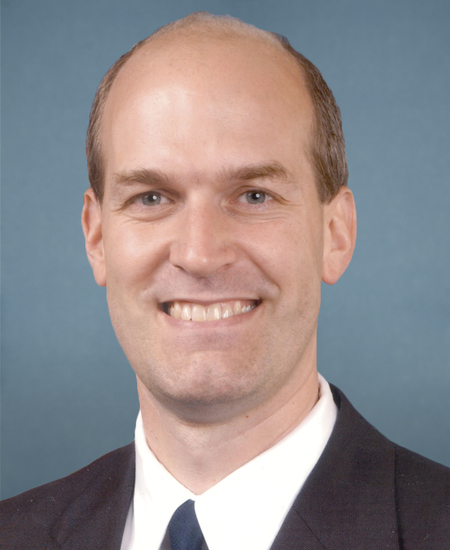
Rep. Rick Larsen
Sponsored bills
Stop Wall Street Looting Act This bill generally revises provisions related to the regulation of private equity funds. Among other things, the bill increases financial and legal liability for these funds in the event of certain violations of law, gives employee compensation higher priority in bankruptcies, and generally prohibits the payment of dividends for two years from an acquired asset firm to a private equity fund. The bill modifies the tax treatment of carried interest—compensation that is typically received by a partner of a private equity fund and is based on a share of the fund's profits. (Under current law, carried interest is taxed as investment income rather than at ordinary income tax rates.) Among other things, the bill treats as ordinary income the net capital gain with respect to a private equity fund.
Frank Harrison, Elizabeth Peratrovich, and Miguel Trujillo Native American Voting Rights Act of 2021 This bill addresses the voting rights of Native American and Alaska Native voters and voting access on tribal lands. The bill includes provisions expanding the types of facilities that can be used as voter registration agencies; increasing polling site accessibility, including by expanding early in-person voting and providing ballot drop boxes; providing enforcement power to citizens and attorneys general; requiring approval for actions like moving a polling place; validating certain tribal identification for voting or registering to vote; permitting voters to designate another individual to return a ballot on their behalf; and expanding requirements for bilingual voting accessibility. In addition, the bill establishes a Native American voting task force grant program for the purpose of increasing voter outreach, education, registration, turnout, and accessibility for Native American communities. The bill also directs the Government Accountability Office to study and report on (1) the prevalence of nontraditional or nonexistent mailing addresses among Indians, members of tribes, and individuals residing on Indian lands; and (2) the alternatives for removing barriers to voter registration, receipt of voter information and materials, and receipt of ballots.
Supreme Court Ethics Act This bill establishes a new statutory requirement for the Judicial Conference of the United States to issue a judicial code of conduct for judges and justices of U.S. courts, including Justices of the Supreme Court. Currently, the Judicial Conference issues a code of conduct for judges of U.S. courts (but not for Justices of the Supreme Court).
Improving Access for Afghan Refugees Act This bill requires the Department of State to provide priority refugee status to eligible habitual residents of Afghanistan. To be eligible for such priority status, a habitual resident of Afghanistan must also be a national of Afghanistan or stateless. Such an individual shall receive priority refugee status if the individual (1) has suffered persecution or has a well-founded fear of persecution and worked in a specified field that makes the individual a target of persecution on account of race, religion, or other characteristics; (2) was employed for at least one year in Afghanistan by U.S.-based media or nongovernmental entities or an entity that received a contract or grant from the U.S. government; or (3) is the beneficiary of a visa petition sponsored by a relative who is a U.S. citizen or permanent resident. The State Department may also provide priority status to other groups of individuals who are nationals and residents of Afghanistan. Certain annual numerical limits on refugee admissions shall not apply to individuals who receive priority status under this bill. For refugee applications under this bill, the State Department and the Department of Homeland Security shall ensure that all steps in the approval process in the U.S. government's control are completed within six months of an application's submission, with exceptions for cases that need more time to address national security concerns.
Fair and Equal Housing Act of 2021 This bill prohibits discrimination, in the context of various housing practices, against individuals based on their sexual orientation or gender identity.
Menstrual Equity For All Act of 2021 This bill expands access to free sanitary napkins and tampons (i.e., menstrual products) in certain locations and for particular groups. It also requires Medicaid to cover menstrual products, as well as liners, cups, and similar items used by individuals with respect to menstruation. Specifically, the bill imposes requirements to make free menstrual products available in federal and state correctional facilities (including facilities that house aliens detained by the Department of Homeland Security) and restrooms in federal buildings that are open to the public. It also establishes a demonstration grant program to support the provision of free menstrual products on campuses of institutions of higher education and permits elementary and secondary schools to use certain grants to provide menstrual products to students. Furthermore, the bill requires employers with at least 100 employees to provide free menstrual products for employees. It also permits the use of certain grants for emergency food and shelter to provide menstrual products to homeless individuals.
Keeping Our Promise Act This bill authorizes issuing visas to certain individuals who were previously refused a diversity immigrant visa or admission into the United States because of certain executive orders or the COVID-19 public health emergency. (Diversity immigrant visas are available to eligible immigrants from countries with relatively low rates of immigration to the United States.) Specifically, this bill applies to individuals who were refused such a visa solely due to certain executive orders from 2017 to 2020, including orders which suspended the entry of individuals from certain countries. The bill also applies to diversity visa applicants who, because of the COVID-19 emergency, were (1) unable to receive a visa interview despite requesting one, or (2) unable to be admitted into the United States despite being approved for a visa. The Department of State must notify each individual covered under this bill of the individual's visa eligibility. To retain eligibility, an individual must respond to the State Department's notice within one year of the notice. An individual may also lose eligibility if the State Department determines that the applicant fails to meet certain requirements. The bill also relaxes certain annual numerical limits for individuals obtaining a visa under this bill. An individual who was a child when initially selected for a visa shall be treated as a child for the purposes of a visa application under this bill.
Extreme Risk Protection Order Act of 2021 This bill establishes grants to support the implementation of extreme risk protection order laws at the state and local levels, extends federal firearms restrictions to individuals who are subject to extreme risk protection orders, and expands related data collection. Extreme risk protection order laws, or red flag laws, generally allow certain individuals (e.g., law enforcement officers or family members) to petition a court for a temporary order that prohibits an at-risk individual from purchasing and possessing firearms. Among its provisions, the bill directs the Office of Community Oriented Policing Services within the Department of Justice to establish a grant program to help states, local governments, Indian tribes, and other entities implement extreme risk protection order laws; extends federal restrictions on the receipt, possession, shipment, and transportation of firearms and ammunition to individuals who are subject to extreme risk protection orders; and requires the Federal Bureau of Investigation to compile (and later destroy) records from federal, tribal, and state courts and other agencies that identify individuals who are subject to extreme risk protection orders.
Original National Domestic Violence Awareness Month Resolution of 2022 This resolution supports the goals and ideals of National Domestic Violence Awareness Month. Further, it expresses the sense of the House of Representatives that Congress should continue to raise awareness of and support programs to end domestic violence.