

Maddy summaryHR 3772, the Aviation WORKS Act, expands federal funding for aviation workforce development by creating four new grant programs under the FAA Reauthorization Act. It allocates $20 million annually (2024-2028) for grants targeting aviation manufacturing education, workforce partnerships, and career pathways. The bill directly affects U.S. aircraft manufacturers, higher education institutions with aviation programs, and industry partnerships (including flight schools and air carriers) by funding scholarships, internships, technical training, and outreach to underrepresented communities. Key provisions require projects to support skills development for manufacturing components, career transitions (e.g., for veterans), and local workforce planning. The law aims to strengthen the domestic aviation workforce supply chain through concrete grant mechanisms, not speculative outcomes.
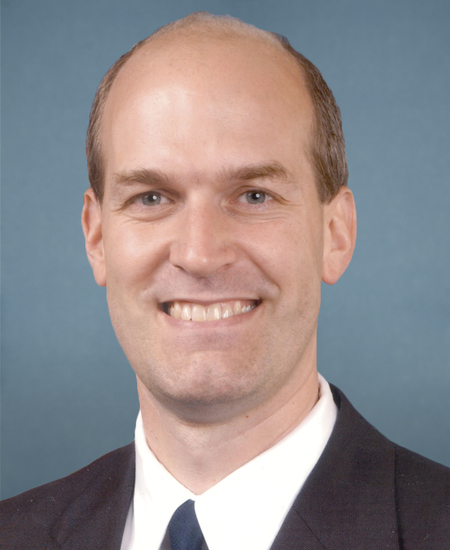
Rep. Rick Larsen
Sponsored bills
Maddy summaryThis bill removes a barrier for college students seeking food assistance by amending the SNAP program rules. It directly affects students enrolled at least half-time in recognized colleges or training programs, who were previously automatically ineligible unless they met separate requirements. The key change eliminates the prior restriction (in section 6(e)) that barred most higher education students from SNAP, allowing them to qualify under the new provision in section 3(m)(5)(F). The changes take effect January 2, 2024.
Maddy summaryHR 3713 creates federal grants to fund comprehensive school-based mental health programs for students in grades K-12, including those in Bureau of Indian Education schools. It requires partnerships between schools and community mental health providers to deliver trauma-informed, culturally appropriate services addressing suicide risk, grief, violence, and trauma exposure. The bill authorizes $300 million annually (2024-2027) for these programs, mandating privacy protections under HIPAA and FERPA, and requires annual reporting on program effectiveness.
Maddy summaryThe Real Education and Access for Healthy Youth Act of 2023 would provide federal grants to support comprehensive sex education and sexual health services for young people ages 10-29, with specific focus on marginalized communities including Black, Indigenous, Latine, Asian American, Native Hawaiian, Pacific Islander, and LGBTQ+ youth. The bill authorizes $100 million annually for 2024-2029 to fund programs through grants for elementary/secondary schools (section 4), colleges (section 5), educator training (section 6), and youth-friendly sexual health services for marginalized young people (section 7). These programs must be evidence-informed, medically accurate, culturally responsive, age-appropriate, and trauma-informed, while addressing racial and gender inequities in current sex education approaches. The bill also repeals the "abstinence-only-until-marriage" program and redirects its funding to support this comprehensive approach, requiring grantees to report on implementation and impact.
Maddy summaryThis bill creates a new tax credit for expenses related to "qualified access technology for the blind" under the Internal Revenue Code. It allows taxpayers to claim a credit of up to $2,000 per year (adjusted for inflation) for costs paid for hardware, software, or IT that converts visual information into formats usable by blind individuals, covering the taxpayer, their spouse, or a dependent who is blind. The credit is limited to $2,000 over any three consecutive tax years per blind individual and expires after 2028. It directly affects blind individuals and their families who purchase qualifying assistive technology. The credit cannot be claimed for expenses already covered by other tax deductions or credits.
Maddy summaryThis bill creates a new Department of Homeland Security (DHS) joint task force specifically focused on stopping opioid trafficking at the border, particularly fentanyl and synthetic opioids. It allows DHS to partner directly with private sector organizations (like pharmaceutical or logistics companies) to temporarily assign their employees to the task force, with the private companies covering all costs - without requiring standard federal advisory committee processes. The bill also requires DHS to collaborate with other federal, state, local, tribal, and international agencies on this effort and to report annually on resource gaps and how well the task force is coordinating with others. The primary effect is to enhance DHS's border security operations targeting opioid smuggling through new private-sector partnerships and interagency coordination.
Maddy summaryHR 3610, the Neighbors Not Enemies Act, repeals specific sections (4067-4070) of the Alien Enemies Act of 1798 from U.S. law. This bill removes the legal authority allowing the president to detain or deport non-citizens during wartime based on that historical statute. The repeal directly affects the federal legal framework governing emergency powers over non-citizens, eliminating a provision dating to the Quasi-War with France. The bill makes no new policy changes but formally removes this outdated legal mechanism from the U.S. Code.
Maddy summaryHR 3592, the Donut Dollies Congressional Gold Medal Act, would award a Congressional Gold Medal to the 627 women who served as "Donut Dollies" in the Red Cross Supplemental Recreation Activities Overseas (SRAO) program during the Vietnam War (1962-1973). The bill directs the Treasury to design and strike the medal, which would be presented by congressional leaders and then given to the Smithsonian Institution for public display and research. It also authorizes the sale of bronze duplicates at cost to cover production expenses. This commemorative measure recognizes the service of these women, who provided recreational support to U.S. troops across 28 locations in Vietnam while facing war-zone dangers.
Historic Preservation Fund Reauthorization Act This bill extends through FY2033 and increases funding for the National Park Service's Historic Preservation Fund. The funding is provided from revenues from Outer Continental Shelf oil and gas leases, and awards from the fund are made to states and other entities, including tribes and nonprofits.
Maddy summaryThis bill would designate approximately 1.7 million acres of public land in Utah's Colorado Plateau and Great Basin regions as wilderness areas, protecting them from development while preserving traditional uses by Indigenous communities. It establishes specific wilderness areas across Utah's red rock canyons, including the Great Basin Wilderness Areas, Grand Staircase-Escalante Wilderness Areas, and others, with detailed acreage for each designated zone. The bill includes administrative provisions for managing these areas, such as maintaining existing livestock grazing rights, setting road setbacks to protect wilderness character, and reserving water rights for the wilderness areas. This legislation directly affects how the Bureau of Land Management administers public lands in Utah and defines the boundaries for public use of these designated wilderness areas.