

Maddy summaryThe American Dream and Promise Act of 2023 would create two pathways to permanent residency for certain immigrants. The "Dream Act" portion would provide conditional permanent resident status to individuals who entered the U.S. as children, have lived continuously in the U.S. since January 1, 2021, and meet educational requirements (such as completing high school, earning a degree, or enrolling in education programs). The "American Promise Act" portion would provide permanent residency to individuals eligible for Temporary Protected Status (TPS) or Deferred Enforced Departure (DED) as of specific dates (January 1, 2017, or January 20, 2021). The bill includes provisions for background checks, fee exemptions for low-income applicants, and processes for removing conditional status after meeting specific criteria like completing higher education or earning income.
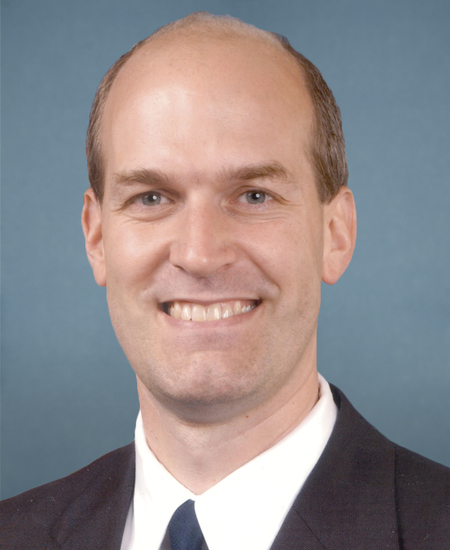
Rep. Rick Larsen
Sponsored bills
Maddy summaryHJRES 72 proposes a constitutional amendment to remove the exception in the Thirteenth Amendment that allows slavery and involuntary servitude as punishment for a crime. If ratified, this amendment would ban the use of forced labor in prisons as a criminal penalty, directly affecting how the U.S. criminal justice system handles sentencing. The resolution clarifies it does not interfere with voluntary work programs in correctional facilities, existing employment protections for incarcerated people, or community service alternatives. This change aims to eliminate a historical loophole that has disproportionately impacted Black Americans since the 1860s.
Maddy summaryThis bill requires all high schools operated by the Department of Defense Education Activity (DoDEA) to make a financial literacy course mandatory for graduation. It applies specifically to students in DoDEA high schools, beginning with those entering ninth grade one year after the bill's enactment. The law mandates that students complete this dedicated course before graduating, replacing any existing requirements for this subject. The course aims to teach practical money management skills to military-connected students as part of their high school curriculum.
Maddy summaryThis bill increases per diem payments for homeless veterans receiving VA services. It raises the daily payment rate from $115 to $200 for certain housing-related services, including emergency responses. The change directly affects homeless veterans who qualify for these VA-funded housing supports. The key provision adjusts the payment rate in Section 2012(a)(2)(B) of the U.S. Code to provide higher funding for services assisting homeless veterans.
Maddy summaryThis bill requires federal agencies collecting demographic survey data to begin including questions on sexual orientation, gender identity, and variations in sex characteristics (intersex traits) within 360 days of enactment. Agencies must review existing surveys to identify gaps, develop privacy-protective methods for collecting this data (including anonymization and data destruction protocols), and incorporate it into relevant reports within three years. The law applies to all federal surveys that collect standard demographic data (like race, ethnicity, and age), such as the census or health surveys, but does not compel individuals to disclose their status. It emphasizes maintaining confidentiality, allows limited agency waivers if standards can't be met, and mandates a congressional report on implementation within two years.
Iceland Commercial and Economic Leadership for Arctic and National Development Act or the ICELAND Act This bill establishes that a national of Iceland shall be eligible for an E visa (for an investor or trader who is a national of a foreign country with a treaty of commerce and navigation with the United States) if Iceland provides a similar nonimmigrant status to U.S. nationals.
Maddy summaryHR 3850, the Pride In Mental Health Act of 2023, establishes a federal grant program to improve mental health and substance abuse services for LGBTQ+ youth (including nonbinary, intersex, and Two Spirit individuals). The bill directs the Health and Human Services Secretary to fund eligible organizations to provide trauma-informed care, cultural competency training for caregivers, school bullying prevention guidelines, and family support resources. It explicitly prohibits grant funds from being used for conversion therapy or advertising related to such therapy. The bill also requires data collection on LGBTQ+ youth mental health and a federal survey to measure psychological distress.
Maddy summaryThe American Family Act establishes a monthly child tax credit of $250 per month for each child under age 6 and $300 per month for each child aged 6-18, with income limits of $150,000 for joint filers and $112,500 for other filers. The credit is refundable, meaning it can be paid even if the taxpayer owes no income tax, and will be adjusted annually for inflation. The bill includes detailed rules for determining eligibility, including requirements that the child resides with the taxpayer for more than half the month and provisions to prevent fraud through recapture of improperly received payments. The credit will be paid monthly in advance rather than as a single annual payment, with specific mechanisms for calculating and distributing the payments.
Maddy summaryHR 698, the Assault Weapons Ban of 2023, prohibits the sale, manufacture, transfer, and possession of specific firearms and ammunition devices commonly referred to as "assault weapons" and "large capacity magazines" in interstate commerce. The bill defines "semiautomatic assault weapons" to include rifles like AR-15s and AK-47s, as well as firearms with specific features such as folding stocks, pistol grips, threaded barrels, and detachable magazines holding more than 15 rounds. It exempts law enforcement, military, antique firearms, and weapons already lawfully owned before the law's enactment (known as "grandfathered" weapons). The bill also requires new identification markings on these weapons and large capacity magazines, and adds background check requirements for transfers of grandfathered weapons.
Maddy summaryHR 3772, the Aviation WORKS Act, expands federal funding for aviation workforce development by creating four new grant programs under the FAA Reauthorization Act. It allocates $20 million annually (2024-2028) for grants targeting aviation manufacturing education, workforce partnerships, and career pathways. The bill directly affects U.S. aircraft manufacturers, higher education institutions with aviation programs, and industry partnerships (including flight schools and air carriers) by funding scholarships, internships, technical training, and outreach to underrepresented communities. Key provisions require projects to support skills development for manufacturing components, career transitions (e.g., for veterans), and local workforce planning. The law aims to strengthen the domestic aviation workforce supply chain through concrete grant mechanisms, not speculative outcomes.