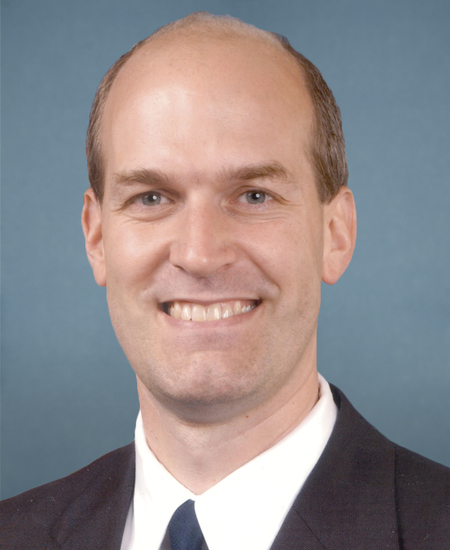
Photo of Rick Larsen
D United States House · District 2 · Washington On the 2026 ballot

Rep. Rick Larsen

Compare
Total votes
2,837
all sessions
Attendance
96%
101 missed
Near the chamber average
With party
98%
of cast votes
Near the chamber average
Bipartisan score
1%
crosses aisle rarely
Near the chamber average
Sponsored
972
bills & resolutions
Near the chamber average
Committees
1
assignment
972 bills and resolutions

Sponsored bills

Total
972
Primary
47
Co-sponsor
925
This page
972
matching current filters
Co-sponsor HRES 1308
In committee · United States House · Co-sponsor
Recognizing June 19, 2024, as this year's observance of the historical significance of Juneteenth Independence Day.

Maddy summaryThis resolution recognizes June 19, 2024, as Juneteenth Independence Day, acknowledging its historical significance as the anniversary of the end of slavery in the U.S. (specifically referencing Union soldiers' announcement in Galveston, Texas, on June 19, 1865). It does not create new policy but formally encourages all Americans to observe the day through ceremonies and educational activities. The resolution emphasizes Juneteenth's role in honoring African American freedom and its importance to U.S. history and cultural heritage. It follows the 2022 law that established Juneteenth as a federal holiday, focusing solely on symbolic recognition and annual observance.

In committee Jun 18, 2024 1 co-sponsor
Primary HR 8783
In committee · United States House · Lead sponsor
Northwest Straits Marine Conservation Initiative Reauthorization Act of 2024

Maddy summaryThis bill reauthorizes the Northwest Straits Marine Conservation Initiative, which focuses on protecting and restoring the marine ecosystem in Puget Sound's Northwest Straits region (from the Canadian border to Snohomish County, Washington). It maintains a 14-member Commission composed of county representatives, tribal governments, and state-appointed members to guide science-based projects, monitor ecosystem health, and coordinate with NOAA and local communities. The Commission must annually report on progress toward specific benchmarks, including habitat restoration, water quality improvement, and community outreach. The bill provides funding authorization for the Commission's work through NOAA, without granting regulatory authority or altering existing tribal treaty rights.

In committee Jun 18, 2024 0 co-sponsors
Co-sponsor HRES 1286
In committee · United States House · Co-sponsor
Supporting the role of the United States in helping save the lives of children and protecting the health of people in low-income countries with vaccines and immunization through Gavi, the Vaccine Alliance ("Gavi").

Maddy summaryThis resolution (HRES 1286) supports continued U.S. funding for Gavi, the Vaccine Alliance, to expand access to vaccines in low-income countries. It directly aids children and communities in these nations by enabling immunization against preventable diseases like measles, malaria, and polio, which has averted an estimated 17.3 million deaths since 2000. Key provisions highlight Gavi's role in reducing child mortality from vaccine-preventable diseases by 70%, achieving a $54 economic return for every $1 invested, and strengthening health systems through cold-chain infrastructure. The resolution urges sustained U.S. financial commitments to maintain Gavi's market-shaping impact, support malaria vaccine rollout, and ensure global health security.

In committee Jun 11, 2024 1 co-sponsor
Co-sponsor HR 8668
In committee · United States House · Co-sponsor
AI Transparency in Elections Act of 2024

Maddy summaryThe AI Transparency in Elections Act of 2024 requires political advertisements containing AI-generated images, audio, or video to include a clear, conspicuous disclaimer stating the content was created or materially altered using artificial intelligence. This applies to ads advocating for or against candidates, referring to candidates during the 120 days before a primary or general election, or soliciting campaign contributions. The bill specifies how disclaimers must appear - such as visible text for images or a spoken statement for audio - and sets penalties of up to $50,000 per violation for non-compliance. The Federal Election Commission must issue implementing regulations within 90 days and report biannually to Congress on enforcement.

In committee Jun 7, 2024 1 co-sponsor
Co-sponsor HR 8525
In committee · United States House · Co-sponsor
George Floyd Justice in Policing Act of 2024

Maddy summaryThe George Floyd Justice in Policing Act of 2024 establishes a National Police Misconduct Registry to track complaints and disciplinary actions against officers, requiring all federal, state, and local law enforcement agencies to report use-of-force incidents with racial, gender, and age data. It bans chokeholds and carotid holds in police encounters, prohibits no-knock warrants in drug cases, and reforms qualified immunity to make it harder for officers to avoid accountability for misconduct. The bill mandates body cameras for federal officers, requires independent investigations of officer-involved shootings, and creates new data collection systems to monitor racial profiling and use-of-force patterns. It also includes provisions for civilian oversight boards, improved officer training on de-escalation and implicit bias, and restrictions on military equipment transfers to local police departments. This law affects all law enforcement agencies receiving federal funding under programs like Byrne and COPS grants.

In committee May 31, 2024 1 co-sponsor
Co-sponsor HR 895
In committee · United States House · Co-sponsor
Combating Organized Retail Crime Act of 2023

Maddy summaryHR 895, the Combating Organized Retail Crime Act of 2023, expands federal law to better prosecute organized retail theft by amending sections 2314 and 2315 of Title 18. It clarifies that crimes involving stolen goods valued at $5,000 or more over 12 months - including retail theft - can be prosecuted under existing federal statutes, and broadens definitions to include goods taken via "any facility of interstate or foreign commerce." The bill also creates a new Organized Retail Crime Coordination Center within Homeland Security, requiring it to coordinate federal, state, and local law enforcement efforts, share threat information with retailers, and produce annual public reports on trends. This directly affects law enforcement agencies, retailers, and criminal justice systems by standardizing prosecution thresholds and enhancing interagency collaboration.

In committee May 23, 2024 1 co-sponsor
Co-sponsor HR 8469
In committee · United States House · Co-sponsor
Diverse Cybersecurity Workforce Act of 2024

Maddy summaryHR 8469, the Diverse Cybersecurity Workforce Act of 2024, requires the Cybersecurity and Infrastructure Security Agency (CISA) to establish a new program within its existing education initiative. The program targets underrepresented groups in cybersecurity, including racial and ethnic minorities, women, veterans, people with disabilities, older individuals (40+), those from low-income backgrounds, and people with nontraditional educational paths (like community colleges or HBCUs). CISA must tailor outreach to schools, unions, community colleges, and local workforce offices to promote cybersecurity careers in these communities. The bill authorizes $20 million annually (2025-2030) and mandates annual reports to Congress on the program's impact on workforce diversity.

In committee May 21, 2024 1 co-sponsor
Co-sponsor HR 8426
In committee · United States House · Co-sponsor
Public Service Freedom to Negotiate Act of 2024

Maddy summaryThe Public Service Freedom to Negotiate Act of 2024 establishes federal minimum standards for collective bargaining rights for public employees and supervisory employees. The Federal Labor Relations Authority will determine if each state's laws "substantially provide" for these rights, and if not, federal standards will apply to that state. These standards include the right to self-organization, collective bargaining, recognition of labor organizations, and procedures for resolving disputes. The bill preserves existing collective bargaining agreements and excludes certain employee categories like emergency services workers from some provisions.

In committee May 16, 2024 1 co-sponsor
Co-sponsor HR 3935
Signed into law · United States House · Co-sponsor
FAA Reauthorization Act of 2024

Maddy summary# Summary of FAA Reauthorization Act (49 USC 40101 note) This comprehensive aviation safety and regulation bill reauthorizes and updates numerous FAA programs and requirements through 2028. Key provisions include: 1. **Safety Management Systems**: Requires implementation across all certificate holders (including commuter, on-demand, and air tour operators) with a focus on scalability for small entities. 2. **International Oversight**: Strengthens oversight of repair stations outside the US, requiring minimum qualifications for mechanics and prohibiting new contracts with Category 2 countries (those with safety concerns). 3. **Organization Designation Authorization (ODA)**: Mandates ethics training for ODA unit members, requiring annual training on professional obligations, safety reporting procedures, and conflict resolution. 4. **Type Certification Modernization**: Requires an independent study on future type certification processes, focusing on digital tools, risk-based models, and international best practices. 5. **Fire Protection Standards**: Directs an internal review comparing foreign and domestic fire protection standards, with potential updates to the Significant Standards List. 6. **Data Management**: Mandates a comprehensive review of FAA data collection, analysis, and use, with a third-party evaluation to improve data accessibility and analytics capabilities. 7. **Weather Systems**: Requires studies on weather reporting systems' supply chain, age, maintenance challenges, and the feasibility of expanding the FAA Weather Camera Program. 8. **Digital Transformation**: Requires digitization of at least 3 paper-based FAA processes (e.g., aircraft certification, registration, and airmen certification) within 180 days. 9. **Workforce Policies**: Establishes telework policies that maintain safety and efficiency while optimizing office footprint and costs. The bill extends numerous existing programs through 2028 (replacing earlier expiration dates), emphasizes international cooperation, and focuses on modernizing FAA processes through digital transformation while maintaining the highest safety standards.


Signed into law May 16, 2024 1 co-sponsor
Co-sponsor HR 681
In committee · United States House · Co-sponsor
READ Act Reauthorization Act of 2023

Maddy summaryThe READ Act Reauthorization Act of 2023 extends the authorization period for the Reinforcing Education Accountability in Development Act (commonly known as the READ Act) from five to ten fiscal years. This change allows U.S. international education programs, administered by agencies like USAID, to operate without annual reauthorization for a longer period. The bill directly affects programs providing educational support in developing countries, such as teacher training and literacy initiatives. The key mechanism is amending Section 4(a) of the existing law to adjust the funding duration, ensuring continued program stability.

In committee May 16, 2024 1 co-sponsor
Showing 341 to 350 of 972 bills
Previous 1 … 34 35 36 … 98 Next