Maddy summaryThis resolution (HRES 1405) is a ceremonial recognition of the 165th anniversary (in 2024) of the peaceful resolution to the 1859 Pig War crisis. It commemorates the diplomatic settlement following a dispute over San Juan Island, where a U.S. farmer killed a British-owned pig, nearly sparking conflict between U.S. and British forces. The resolution honors the peaceful resolution through negotiation and arbitration, which established the U.S.-Canada border along the 49th parallel. As a commemorative resolution, it has no policy impact or direct effect on any individuals or groups.
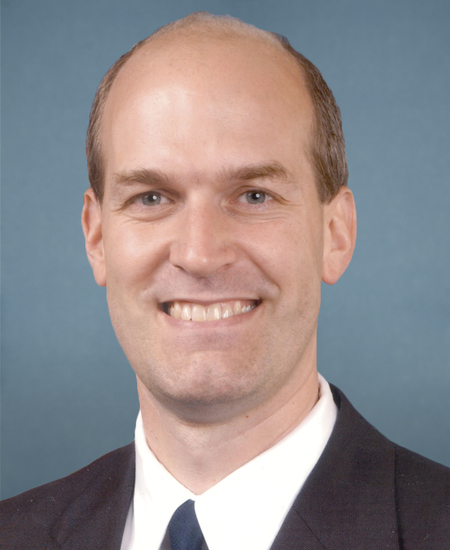
Rep. Rick Larsen
Sponsored bills
Maddy summaryThe Workforce Opportunities for Communities in Recovery Act creates a federal grant program to address economic and workforce challenges linked to substance use disorder in affected communities. It provides two-year grants to state and local workforce boards to form partnerships with treatment providers, employers, education institutions, and community organizations. These partnerships will offer job training, supportive services (including mental health and recovery support), and employer engagement to help individuals with substance use disorder find and maintain employment. The program is funded at $25 million in fiscal year 2025, increasing to $37.5 million by 2030, with requirements for performance reporting and independent evaluation.
Maddy summaryH.J. Res. 193 proposes a constitutional amendment to eliminate legal immunity for federal officials, including the President, from criminal prosecution for actions taken while performing official duties. It also prohibits the President from granting a pardon to themselves. The amendment would apply to all federal officers (such as the President, Vice President, and members of Congress) except for Congress members acting in their legislative role as defined in the Constitution. If ratified by 38 states, this change would become part of the U.S. Constitution, requiring no further congressional action.
Maddy summary# Summary of Water Resources Development Act This comprehensive legislation authorizes numerous water infrastructure projects across the United States, with a focus on flood control, water supply, wastewater management, environmental restoration, and shoreline protection. Key elements include: 1. **Project Authorizations**: The act authorizes funding for hundreds of specific water infrastructure projects across all 50 states, with significant allocations for: - Water and wastewater infrastructure ($200 million for San Diego County, $100 million for Kings County NY, $100 million for Mohawk River area) - Flood control and stormwater management (particularly in coastal and riverine areas) - Environmental restoration projects 2. **Key Amendments**: - Increased funding for the Upper Mississippi River restoration program ($15 million for FY 2024, $20 million annually thereafter) - Modified the Santa Ana River Mainstem project to treat Santiago Creek as a separable element - Reduced navigation as an authorized purpose for the Upper St. Anthony Falls Lock and Dam - Increased funding for the Missouri River levee system ($65 million) 3. **Specific Project Highlights**: - $100 million for water infrastructure in Kings County, New York (addressing combined sewer overflows) - $50 million for environmental infrastructure in Broward County, Florida - $25 million for water infrastructure in Delaware's coastal communities - $20 million for water infrastructure in the Lake Tahoe Basin - $30 million for Oakland-Alameda Estuary water infrastructure 4. **Program Changes**: - Established a Western Washington State environmental assistance program - Modified the New York and New Jersey Harbor study to maximize public benefits - Added new projects to the lakes program (East Lake Tohopekaliga, Dillon Lake, etc.) - Authorized conveyances of property to local governments (e.g., Los Angeles fire station facility) 5. **Funding Details**: - The legislation contains numerous specific funding allocations ranging from $100,000 to $200 million for various water infrastructure projects - Includes provisions for cost-sharing arrangements, with Federal shares typically at 75% for new projects The legislation represents a significant investment in water infrastructure, with a focus on addressing aging infrastructure, improving water quality, reducing flood risks, and enhancing environmental protection across diverse geographic regions in the United States.

Maddy summaryThis bill authorizes the award of a single Congressional Gold Medal to Jens Stoltenberg, former Secretary General of NATO, recognizing his leadership of the Alliance. The medal, to be struck by the U.S. Mint, commemorates his role in strengthening NATO's defense capabilities, promoting burden sharing among members, overseeing NATO expansion (including Finland and Sweden), and coordinating support for Ukraine after Russia's 2022 invasion. It does not create new policy or funding but formally honors Stoltenberg's service through a ceremonial medal. The bill specifies the medal's design, allows for bronze duplicates to be sold to cover costs, and directs proceeds to the U.S. Mint's fund.
Maddy summaryThis bill (HR 2365, Public Law 118-66) directs the U.S. Department of Health and Human Services (HHS) to establish the National Parkinson’s Project. It requires HHS to create and update a coordinated national plan for preventing, diagnosing, treating, and researching Parkinson’s disease and related disorders (including multiple system atrophy and progressive supranuclear palsy), while coordinating federal research and care efforts across agencies like the NIH, CDC, and VA. The law mandates annual progress assessments, an advisory council with patient advocates and diverse experts, and annual reports to Congress on federal Parkinson’s programs and recommendations for improvement. It affects federal agencies managing Parkinson’s-related programs and aims to improve care coordination and research efficiency for patients and caregivers, with the law sunsetting in 2035.
Maddy summaryHRES 1332 is a symbolic resolution recognizing June as LGBTQIA+ Pride Month. It encourages the celebration of Pride Month to honor the historical struggles and achievements of LGBTQIA+ people in the United States, while acknowledging the ongoing challenges they face. This resolution does not create new laws or policies, but serves as a formal recognition of LGBTQIA+ rights as human rights and highlights their integral role in American history. The resolution was introduced by multiple members of Congress and passed by the House of Representatives.
Maddy summaryHR 8514, the Veteran Education Assistance Adjustment Act, increases the annual stipend for books and educational supplies under the Post-9/11 GI Bill from $1,000 to $1,400 for veterans using these benefits. It also establishes an automatic annual cost-of-living adjustment starting in fiscal year 2025, tying future increases to the difference between two 12-month Consumer Price Index (CPI) periods. This adjustment applies to stipends for books, supplies, equipment, and other educational costs covered under the VA's Post-9/11 Educational Assistance Program. The bill directly affects veterans enrolled in degree or certificate programs who receive education benefits through the VA. The key mechanism ensures the stipend grows with inflation, reducing the financial burden of educational expenses over time.
Maddy summaryHR 6841 creates a new Coastal and Estuarine Resilience and Restoration Program under the Coastal Zone Management Act, authorizing the Secretary of Commerce to protect and restore coastal and estuarine areas. The program prioritizes lands with ecological, recreational, or community value that face development threats or climate impacts, with special focus on low-income communities and climate mitigation. It requires non-governmental organizations applying for grants to demonstrate public access or ecological protection, and includes $47 million annually (2024-2028) for these efforts. This directly affects coastal states, local communities, and conservation groups managing vulnerable coastal lands.
Maddy summaryThis resolution (HRES 1318) is a symbolic congressional recognition designating the Museum of Pop Culture in Seattle, Washington, as the "National Museum of Pop Culture." It does not create new laws, allocate funding, or alter the museum's operations - it solely affirms the institution's role in preserving pop culture history through its collections and scholarship. The resolution cites the museum's work in documenting pop culture's impact on society, including its holdings on hip-hop, science fiction, Jimi Hendrix, and Star Trek. As a procedural resolution, it has no direct effect on individuals, policies, or government programs.