

Maddy summaryThis bill prohibits the U.S. military from discriminating against service members or applicants based on gender identity. It bans policies that would deny service, involuntarily separate members, deny medically necessary healthcare, or require service in a gender different from one's identity. The law defines "gender identity" broadly to include a person's internal sense of gender, appearance, and mannerisms, regardless of sex assigned at birth. It directly affects transgender and gender-diverse individuals currently serving or seeking to serve in the Armed Forces.
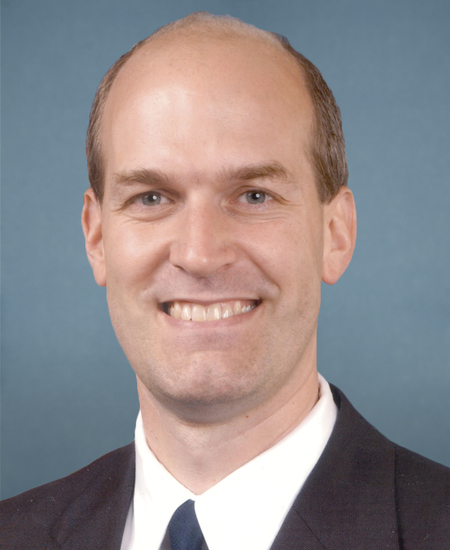
Rep. Rick Larsen
Sponsored bills
Maddy summaryThis bill would establish 18-year fixed terms for all Supreme Court justices, replacing lifetime appointments. It requires the President to nominate one justice every two years (during first and third years after presidential elections), with Senate confirmation within 90 days, and prohibits reappointments after a single term. Current justices would be phased out in order of seniority as new justices are appointed under this schedule. The bill directly affects all sitting and future Supreme Court justices by mandating term limits and a structured appointment process.
Maddy summaryThis bill establishes a code of conduct for Supreme Court justices, requiring them to disclose gifts, income, and potential conflicts of interest. It creates a formal process for handling complaints about justices, including a judicial investigation panel to review allegations. The bill adds specific circumstances requiring recusal, such as when a justice or family member has financial ties to a party in a case. Additionally, it mandates that parties and amicus briefs disclose any gifts given to justices and lobbying activities related to their nomination. These provisions aim to increase transparency and accountability in the Supreme Court's operations.
Maddy summaryHR 3328 establishes a new U.S. Ambassador-at-Large for Arctic Affairs within the State Department, appointed by the President with Senate approval. The position coordinates U.S. foreign policy across federal agencies on Arctic issues including environmental protection, indigenous engagement, resource management, security, and scientific research. The ambassador reports directly to the Secretary of State and oversees efforts related to the eight Arctic Council nations and the defined Arctic region (including northern U.S. territories and Arctic waters). This bill creates a dedicated diplomatic role to streamline U.S. coordination on Arctic matters rather than changing existing laws or affecting specific constituencies directly.
Maddy summaryHR 3368, the "Born in the USA Act of 2025," prohibits federal funding for Executive Order 14160 (which aimed to restrict birthright citizenship for children born in the U.S.). The bill directly affects federal agencies that might implement the executive order by blocking their use of funds for that purpose. Its key provision is a funding ban targeting the executive order and any similar future policies, without changing citizenship law. The bill does not alter birthright citizenship rights but prevents federal resources from being used to enforce the controversial executive order. It is a procedural measure focused on funding, not a substantive policy change to citizenship rules.
Maddy summaryHR 3332, the Pacific Partnership Act, requires the U.S. President to develop a formal strategy for engagement with Pacific Island nations by 2026 and again by 2030. The strategy must outline U.S. diplomatic, defense, and economic goals; assess regional threats like natural disasters and foreign military activity; and detail resource plans for addressing these challenges. It mandates consultation with Pacific Island governments, regional organizations like the Pacific Islands Forum, and U.S. allies such as Australia and Japan. The bill does not create new programs but establishes a structured framework for U.S. policy coordination in the region, directly affecting U.S. government agencies and indirectly shaping U.S. relations with Pacific Island nations.
Maddy summaryHR 3290 designates the Museum of Pop Culture in Seattle, Washington, as the National Museum of Pop Culture. The bill clarifies that this designation does not make the museum part of the National Park System and explicitly states it does not require or permit federal funding for the museum. This is a purely procedural bill with no new funding, regulatory changes, or policy impacts. The museum remains a privately operated institution under its current structure.
Maddy summaryHR 3243, the Therapeutic Fraud Prevention Act of 2025, bans the provision of paid conversion therapy aimed at changing a person's sexual orientation or gender identity, and prohibits advertising such therapy as effective, safe, or without risk. It directly affects LGBTQ+ individuals and their families who might be targeted by these practices, as professionals have determined conversion therapy is ineffective and harmful. The law treats violations as deceptive acts under consumer protection laws, empowering the Federal Trade Commission and state attorneys general to enforce it through civil actions. It explicitly excludes legitimate gender transition support and non-discriminatory counseling from the ban.
Maddy summaryThis bill (HR 3221) is a procedural amendment to U.S. immigration law. It would add Iceland to the list of foreign states eligible for certain nonimmigrant business visas (E-1/E-2 categories), but only if Iceland provides equivalent visa status to U.S. citizens. The change would directly affect U.S. citizens seeking to do business in Iceland under these visa categories. The bill does not create new programs but adjusts existing visa classifications based on reciprocity.
Maddy summaryHR 3184, the PFAS Alternatives Act, funds research to develop turnout gear (firefighter safety clothing) without harmful PFAS chemicals, directly affecting firefighters who wear this gear. It authorizes $25 million annually (2025-2029) for grants to eligible organizations to research and test PFAS-free gear, requiring partnerships with firefighting groups to translate findings into practice. The bill also allocates $2 million yearly (2027-2031) for training programs on safe gear use and decontamination. Its goal is to reduce firefighters' exposure to chemicals linked to occupational illnesses during operations.