

Maddy summaryThe Parity for Tribal Law Enforcement Act enables tribal law enforcement officers who have contracted federal law enforcement duties under the Indian Self-Determination Act to enforce federal law on tribal lands. To qualify, officers must complete training comparable to Bureau of Justice Services employees, pass a background check, and receive certification from the Bureau. The bill also designates these officers as federal law enforcement officers for legal protections under the Federal Tort Claims Act and retirement benefits. Additionally, it requires the Attorney General to coordinate Department of Justice efforts to improve public safety in tribal communities through better data collection, training, and reporting.
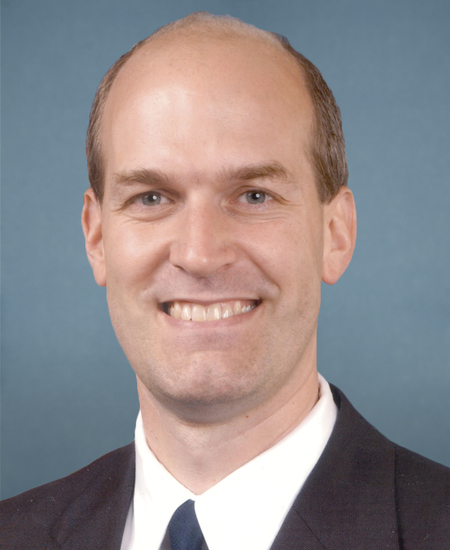
Rep. Rick Larsen
Sponsored bills
Maddy summaryThis is not a driver's license exam question. The text you've provided is a complete draft of the "Coast Guard Authorization Act of 2025" - a U.S. federal law that would authorize funding and set policies for the U.S. Coast Guard. The document contains numerous legal provisions related to: - Merchant mariner credentialing requirements - Vessel safety regulations - Coast Guard Academy operations - Search and rescue operations - Crew training standards - Reporting requirements for various Coast Guard activities It's a lengthy legislative document with sections amending existing laws (like Title 46 of the U.S. Code) and adding new requirements for the Coast Guard. This is not related to driver's license exams or questions at all. The document contains detailed legal language about maritime operations, vessel inspections, crew certification, and Coast Guard procedures - none of which relate to standard driver's license testing.
Maddy summaryH.J. Res. 108 proposes a constitutional amendment to remove legal immunity for federal officials, including the President, from criminal prosecution for actions taken while performing official duties. It would prohibit the President from granting pardons to themselves and eliminate the defense that "official authority" excuses violations of federal or state law (with limited exceptions for certain congressional actions). If ratified, this amendment would require Congress to pass implementing laws to enforce these changes. The proposal is currently in the House Judiciary Committee and requires approval by three-fourths of state legislatures to become part of the Constitution.
Maddy summaryHR 1522, the Federal Retirement Fairness Act, changes federal retirement rules to include temporary employees' service after January 1, 1988, in retirement benefit calculations. It directly affects temporary federal employees (including U.S. Postal Service workers) and Members of Congress who served after that date. The bill removes a previous cutoff date in retirement law, allowing their temporary service to count toward retirement eligibility. This means eligible temporary workers can now have their full service period considered when calculating retirement benefits.
Maddy summaryThis bill establishes federal worker heat protection standards to prevent heat-related illness and injury. It requires employers to provide a workplace free from heat stress hazards, including access to cool water, scheduled rest breaks, shaded cooling areas, and training on heat illness symptoms. The Secretary of Labor must create these standards within one year, incorporating evidence-based practices like engineering controls (e.g., ventilation), administrative measures (e.g., adjusted schedules), and employer-paid personal protective equipment. The law directly affects all employers in high-heat work environments - such as construction, agriculture, and manufacturing - and strengthens whistleblower protections for workers reporting safety violations.
Maddy summaryThe Child Care for Working Families Act creates a federal program to provide affordable, high-quality child care for working families with children under age 6. It would provide direct child care assistance through certificates or grants to parents, with no copayment required for families at or below 85% of state median income. The program requires states to implement quality standards for child care providers, including a tiered quality system and minimum wage requirements for staff (at least a living wage equivalent to elementary educators). The bill appropriates $20 billion for the program over five years, with additional funding for quality improvement initiatives and universal preschool services.
Maddy summaryHR 4382 authorizes the U.S. Mint to produce commemorative coins for the 2028 Los Angeles Olympics/Paralympics and 2034 Salt Lake City Winter Olympics/Paralympics. It specifies gold, silver, and half-dollar coin designs with defined mintage limits (e.g., up to 100,000 $5 gold coins for each event), all bearing inscriptions like "2028" or "2034" and standard coin features. A surcharge ($5-$50 per coin) is added to sales, with all funds directed to the respective Olympic committees to support event hosting and legacy programs like youth sports. The bill ensures no net cost to the government by requiring surcharge revenues to cover all design, production, and marketing expenses before funds are disbursed.
Maddy summaryHRES 575 is a symbolic resolution designating July 10th as "Journeyman Lineworkers Recognition Day." It honors lineworkers who face significant risks daily - working at heights near live wires and responding to disasters like hurricanes and wildfires. The resolution specifically references Henry Miller, an early leader of the International Brotherhood of Electrical Workers, who died on July 10, 1896, while troubleshooting an outage. It encourages the public to recognize these workers' contributions but does not create new laws or allocate funding.
Maddy summaryHRES 564 is a non-binding House resolution calling on the U.S. government to prioritize the return of Ukrainian children abducted by Russia before any peace agreement is finalized. It cites 19,546 confirmed reports of unlawful child deportations to Russia or occupied territories as of April 2025, noting only 1,274 have been returned. The resolution condemns Russia's actions as violations of the Geneva Convention and Genocide Convention, including forced adoptions and Russification policies. It urges that all abducted children be returned prior to concluding peace talks, emphasizing this as a necessary condition for a just resolution to the war. The resolution does not create new law but expresses congressional position on a key issue in U.S. diplomatic efforts.
Maddy summaryHRES 550 is a non-binding House resolution recognizing June 2025 as LGBTQIA+ Pride Month. It formally encourages all U.S. citizens to celebrate Pride Month to learn about LGBTQIA+ history, including the Stonewall Inn and Compton's Cafeteria uprisings. The resolution affirms that LGBTQIA+ rights are human rights and emphasizes the ongoing struggle for equality. It has no legal effect but serves as a symbolic statement of support for the LGBTQIA+ community and its history.