

Saving the Civil Service Act This bill generally prohibits changes to the classification of positions in the competitive service and excepted service unless certain conditions are met. (Competitive service positions are subject to competitive examination while excepted service positions are appointed under one of five schedules. Competitive service positions have notice and appeal requirements for adverse actions that are not applicable to most excepted positions, including those of a confidential, policy-determining, policy-making, or policy-advocating character under Schedule C.) On October 21, 2020, President Donald Trump issued an executive order that placed executive agency positions that are of a confidential, policy-determining, policy-making, or policy-advocating character, and that are not normally subject to change as a result of a presidential transition, under a new Schedule F in the excepted service. The order was subsequently revoked by President Joe Biden. The bill prohibits executive agency positions in the competitive service from being placed in the excepted service, unless such positions are placed in a schedule in the excepted service as in effect on September 30, 2020. The bill also prohibits positions in the excepted service from being placed in any schedule other than the aforementioned schedules. Additionally, agencies may not (1) transfer occupied positions from the competitive or excepted service into Schedule C without the consent of the Office of Personnel Management, or (2) transfer employees in the excepted service to another schedule or transfer employees in the competitive service to the excepted service without employee consent.
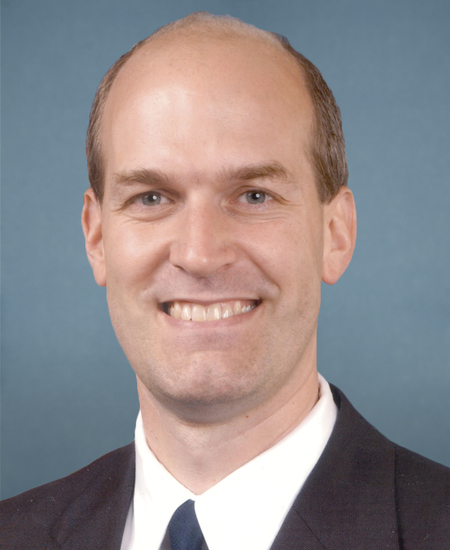
Rep. Rick Larsen
Sponsored bills
Maddy summaryThe George Floyd Justice in Policing Act of 2025 would establish a National Police Misconduct Registry to track officer complaints, disciplinary actions, and misconduct records across all law enforcement agencies. It would require law enforcement agencies to implement body-worn camera programs with specific recording and retention policies, ban chokeholds and no-knock warrants in drug cases, and reform qualified immunity to make it easier to hold officers accountable for misconduct. The bill mandates comprehensive data collection on use of force incidents, requiring agencies to report detailed information about stops, searches, and force used, disaggregated by race, ethnicity, gender, and other demographics. These provisions would directly affect all Federal, State, and local law enforcement agencies that receive federal grant funding, with requirements for policy changes, training, and data reporting.
Maddy summaryThis resolution recognizes Singapore's 60th anniversary of independence (marking August 9, 1965) and reaffirms U.S. support for strengthening the bilateral relationship with Singapore. It highlights existing economic ties, including over 5,800 U.S. companies operating in Singapore and a $27 billion U.S. trade surplus with Singapore in 2024. The resolution focuses on advancing cooperation in trade, security collaboration (such as military rotations and counterterrorism efforts), and people-to-people exchanges, without creating new laws or funding. It directly affects U.S.-Singapore diplomatic engagement and serves as a symbolic gesture of partnership.
Maddy summaryThe Mental Health in Aviation Act of 2025 requires the Federal Aviation Administration (FAA) to update regulations within two years to encourage pilots and air traffic controllers to seek mental health care and disclose conditions without fear of losing medical clearance. It mandates annual reviews to improve the medical clearance process for mental health conditions - such as approving additional safe medications, enhancing examiner training, and reducing backlogs - and allocates $13.74 million yearly (2026-2029) to hire more aviation medical examiners. The bill also directs the FAA to implement recommendations from a mental health rulemaking committee and fund a public campaign to reduce stigma around mental health care in aviation. These provisions aim to support aviation workers' well-being while streamlining safety-related medical evaluations.
Maddy summaryThis bill increases federal funding for Impact Aid, which supports school districts that serve students on federal property (like military bases) or have high numbers of children with disabilities. It authorizes specific annual funding amounts for four key areas: payments for federal property acquisition, basic support for heavily impacted districts, aid for children with disabilities, and school construction. The funding grows incrementally each year from 2026 through 2031, with total annual amounts rising from $85 million to $250 million for property payments, and from $1.49 billion to $2.35 billion for basic district support. This directly affects school districts in communities with significant federal land or federal facility presence.
Maddy summaryHR 5061 establishes new authority for federal and local agencies to detect, identify, monitor, and mitigate unmanned aircraft systems (drones) that pose security threats to critical infrastructure, airports, and public events. The bill requires counter-UAS systems to meet minimum performance standards that ensure aviation safety and minimize interference with communications, with a list of approved systems maintained by the Secretary of Homeland Security. It creates a pilot program for state and local law enforcement to use authorized counter-UAS systems at covered sites (like critical infrastructure, oil refineries, and amusement parks) and covered events, with requirements for training, coordination, and privacy protections. The law includes annual reporting requirements and expires on October 1, 2030.
Maddy summary# Summary of Proposed FEMA Reform Legislation (FEMA Act of 2025) This comprehensive legislative document proposes significant reforms to the Robert T. Stafford Disaster Relief and Emergency Assistance Act, with four main sections addressing: ## 1. Disaster Assistance Reforms - **Expanded eligibility** for assistance, including clarifying that absence of a fixed address doesn't disqualify individuals from sheltering assistance - **Improved rental assistance** with consideration of local post-disaster rent increases - **Direct assistance** for those unable to use financial assistance, with no requirement to show other assistance can cover costs (except insurance) - **Enhanced notices** for applicants, including documentation of denial decisions - **Clarification of displacement assistance** eligibility, stating insurance shouldn't be considered a duplication of benefits ## 2. Mitigation Program Enhancements - **Preapproved project mitigation plans** requiring states to develop plans with peer review processes - **Improved allocation of funds** with formulas prioritizing vulnerable communities, high-risk areas, and rural/economically distressed communities - **Resilient buildings** requirements for housing retrofits using the latest building codes - **Streamlined application processes** for hazard mitigation funds across multiple programs - **Study on mitigation benefits** to evaluate cost savings and effectiveness ## 3. Transparency and Accountability Measures - **Public dashboards** for both individual assistance (431) and public assistance (432) showing application status, approvals, denials, and funding - **Transparency requirements** for disaster declarations with detailed justifications for approvals/denials - **GAO studies** on numerous topics including: - Identity theft in disaster assistance (409) - Insurance utilization for public assistance facilities (410) - Wildfire management plans (411) - Effectiveness of alerting systems (412) - Cost savings of repair/rebuilding reforms (415) - **Prohibition on political discrimination** in assistance distribution ## 4. Workforce and Operational Improvements - **Study on workforce retention** in noncontiguous communities - **Pilot program** for preliminary damage assessments in remote communities - **Fast-moving disasters working group** to develop best practices for rapid response The legislation focuses on improving efficiency, transparency, and effectiveness of disaster relief programs while prioritizing vulnerable populations and communities with higher risk of disasters. It also emphasizes data-driven decision making through required studies and reports to continuously improve disaster management policies.
Maddy summaryThis bill adjusts health insurance subsidies by modifying the premium tax credit structure under the Internal Revenue Code. It replaces previous income thresholds with a sliding-scale formula, increasing subsidies for households earning between 150% and 400% of the federal poverty level - reducing their required premium payments as income rises within these tiers. The changes apply to tax years beginning after December 31, 2025, directly affecting middle-income individuals and families purchasing coverage through health insurance marketplaces. It also repeals specific provisions from a prior reconciliation law related to health care.
Maddy summaryThe Protect Our Hospitals Act (HR 4807) repeals a specific provision (Section 71115 of Public Law 119-21) that altered Medicaid provider tax rules. This bill restores the prior tax structure for Medicaid providers, including hospitals and clinics that accept Medicaid, returning them to the tax treatment that existed before the change. As a result, these providers will no longer be subject to the modified tax rules enacted by the repealed provision. The bill does not affect Medicaid eligibility, benefits, or coverage - it solely reverts a tax policy change without introducing new requirements.
Maddy summaryThis bill updates the TRICARE Young Adult Program to make healthcare coverage more accessible for military dependents. It directly affects young adults (ages 21-26) who are children of active-duty service members, by eliminating a separate premium they previously paid for coverage. Key changes include removing an extra cost for young adults and adjusting eligibility rules to simplify enrollment. These amendments aim to reduce out-of-pocket expenses and streamline access to health insurance under the program.