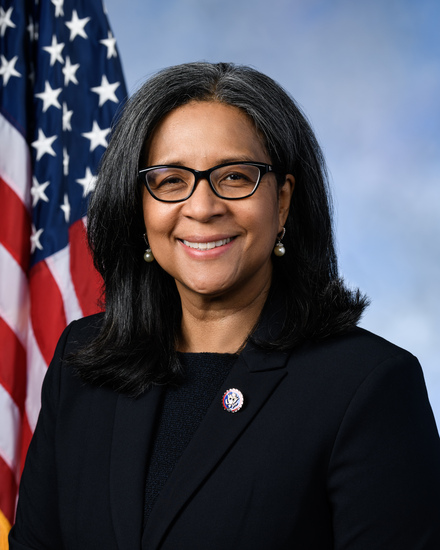
Photo of Marilyn Strickland
D United States House · District 10 · Washington On the 2026 ballot

Rep. Marilyn Strickland

Compare
Total votes
2,837
all sessions
Attendance
98%
62 missed
Near the chamber average
With party
98%
of cast votes
Near the chamber average
Bipartisan score
1%
crosses aisle rarely
Near the chamber average
Sponsored
1,361
bills & resolutions
Near the chamber average
Committees
6
assignments
1,361 bills and resolutions

Sponsored bills

Total
1,361
Primary
58
Co-sponsor
1,303
This page
1,361
matching current filters
Co-sponsor HR 3387
In committee · United States House · Co-sponsor
No Surprise Bills for New Moms Act

Maddy summaryHR 3387, the No Surprise Bills for New Moms Act, requires health insurance plans and employers to automatically cover newborns for 30 days after birth for any services the plan normally covers, without requiring prior enrollment. This directly affects new parents (including fathers) and their newborns, preventing unexpected bills during the initial post-birth period. The bill also mandates a 60-day special enrollment period to formally add the baby to the plan and requires insurers to notify parents immediately if a claim is filed for an unenrolled newborn. These provisions apply to both employer-sponsored and private health insurance plans.

In committee Dec 17, 2024 1 co-sponsor
Co-sponsor HR 3194
In committee · United States House · Co-sponsor
U.S. Citizenship Act

Maddy summary# Summary of Proposed Immigration Legislation This comprehensive immigration bill proposes sweeping reforms across multiple areas of U.S. immigration policy. The key provisions can be categorized as follows: ## Family Immigration Reforms - Expands eligibility for family-based visas - Creates new pathways for family reunification - Reforms the "child out" rule for H-4 visa holders who age out - Establishes new procedures for sponsors of unaccompanied children ## Employment-Based Immigration - Increases diversity visas from 55,000 to 80,000 - Creates new categories for doctoral STEM graduates - Eliminates per-country limits for employment-based visas - Addresses visa backlogs by creating new categories for beneficiaries with priority dates over 10 years old - Increases visa numbers for certain employment-based categories (e.g., 23.55% instead of 28.6% for certain categories) - Creates a Regional Economic Development Immigrant Visa Pilot Program (10,000 visas annually) ## Diversity and Integration Programs - Creates a United States Citizenship and Integration Foundation to promote citizenship preparation - Establishes pilot programs for immigrant integration at state and local levels - Creates English as a Gateway to Integration grant program ($100 million for 2024-2025) - Creates Workforce Development and Shared Prosperity grant program ($100 million for 2024-2025) - Requires in-state tuition rates for refugees, asylees, and certain special immigrants - Waives English requirements for seniors applying for naturalization ## Immigration Court Reforms - Increases immigration judge numbers by 55 annually through 2028 - Creates a right to counsel for vulnerable individuals (children, victims of abuse, etc.) - Establishes an Immigration Counsel Fund with a $25 surcharge on immigration fees - Requires all noncitizens to receive legal orientation programs - Modernizes court technology for improved efficiency - Creates procedures for ensuring court appearance compliance ## Refugee and Asylum Processing - Expands alternatives to detention for family units - Improves processing for asylum seekers - Creates programs to facilitate safe and efficient repatriation - Establishes reintegration support for repatriated individuals ## Naturalization and Citizenship - Creates citizenship pathways for U.S. high school graduates - Waives English requirements for seniors - Creates a National Citizenship Promotion Program - Establishes naturalization ceremonies at historic locations The bill aims to create a more efficient immigration system, address backlogs in immigration courts, promote immigrant integration, create clearer pathways to citizenship, and reform both family-based and employment-based immigration systems. It represents a comprehensive approach to modernizing U.S. immigration policy.


In committee Dec 17, 2024 1 co-sponsor
Co-sponsor HR 3069
In committee · United States House · Co-sponsor
John Lewis Equality in Medicare and Medicaid Treatment Act of 2023

Maddy summaryThis bill requires Medicare and Medicaid programs to prioritize reducing health disparities by mandating that new care models address social determinants of health and health equity. It directs the Secretary to consult with offices focused on minority, rural, and women's health when selecting models, and requires all models testing after 2024 to explicitly improve health equity. A new "Social Determinants of Health Payment Model" will test innovations targeting behavioral health, maternal care (for pregnant/postpartum women), and services in underserved areas. The bill also mandates annual reports tracking how models reduce disparities and save costs, specifically focusing on minority, rural, and low-income beneficiaries. It directly affects Medicare/Medicaid beneficiaries in underserved communities and providers serving these populations.

In committee Dec 17, 2024 1 co-sponsor
Co-sponsor HR 2663
In committee · United States House · Co-sponsor
Workplace Violence Prevention for Health Care and Social Service Workers Act

Maddy summaryThis bill establishes a new workplace violence prevention standard for healthcare and social service workers. It requires employers in covered facilities - including hospitals, nursing homes, mental health clinics, and social service settings - to develop and implement comprehensive prevention plans with specific requirements. These plans must include risk assessments, hazard prevention measures, employee training on violence prevention, and procedures for reporting and investigating violent incidents. The bill also amends Medicare regulations to require compliance with these standards for hospitals and skilled nursing facilities receiving Medicare funds.

In committee Dec 17, 2024 1 co-sponsor
Co-sponsor HR 2474
In committee · United States House · Co-sponsor
Strengthening Medicare for Patients and Providers Act

Maddy summaryHR 2474, the "Strengthening Medicare for Patients and Providers Act," changes how Medicare pays physicians for services. It replaces the previous two-part payment system (used through 2025) with a single annual payment rate update starting in 2024. This update will be based on the Medicare Economic Index (MEI), which tracks costs for medical providers. The change directly affects Medicare-certified doctors and clinics who receive payments under the physician fee schedule.

In committee Dec 17, 2024 1 co-sponsor
Co-sponsor HR 2407
In committee · United States House · Co-sponsor
Nancy Gardner Sewell Medicare Multi-Cancer Early Detection Screening Coverage Act

Maddy summaryThis bill would require Medicare to cover FDA-approved blood tests that screen for multiple cancers simultaneously (like breast, lung, or colorectal cancer) for beneficiaries. It directly affects Medicare recipients aged 65+ who could access these new screenings once per year, without prior authorization. The key provision adds "multi-cancer early detection screening tests" to Medicare's covered services under Part B, defining them as blood tests analyzing cell-free DNA, while maintaining existing coverage for standard screenings like mammograms. The bill does not change current coverage for individual cancer screenings but ensures Medicare keeps pace with new medical technology.

In committee Dec 17, 2024 1 co-sponsor
Co-sponsor HR 1795
In committee · United States House · Co-sponsor
Homecare for Seniors Act

Maddy summaryHR 1795, the Homecare for Seniors Act, allows seniors to use funds from their Health Savings Accounts (HSAs) to cover qualified home care services. It amends tax law to define "qualified home care" as contracts providing three or more specific personal assistance services (like help with eating, bathing, toileting, or medication) from a licensed provider. The bill directly affects seniors with HSAs who need in-home care, expanding their tax-free distribution options beyond traditional medical care. It also requires the federal government to run a public awareness campaign about these new eligible home care expenses. The changes apply to expenses paid after the bill's enactment date.

In committee Dec 17, 2024 1 co-sponsor
Co-sponsor HR 1692
In committee · United States House · Co-sponsor
Health Care Affordability Act of 2023

Maddy summaryHR 1692, the Health Care Affordability Act of 2023, adjusts how health insurance subsidies are calculated for people buying coverage through the marketplace. It replaces the previous subsidy formula with a sliding scale based on income, where households earning up to 150% of the poverty line pay 0% of premiums, and those at 400% or more pay 8.5%. The change applies to all income tiers between these points, with percentages increasing incrementally (e.g., 2% for 150-200% income). This directly affects individuals purchasing health insurance through the marketplace who qualify for subsidies under the Affordable Care Act. The bill amends Section 36B of the Internal Revenue Code and takes effect for tax years beginning after December 31, 2022.

In committee Dec 17, 2024 1 co-sponsor
Co-sponsor HR 1634
In committee · United States House · Co-sponsor
HELLPP Act

Maddy summaryThe HELLPP Act (HR 1634) amends Medicaid to recognize doctors of podiatric medicine (podiatrists) as physicians, enabling them to be reimbursed for services under Medicaid starting January 1, 2024. It also clarifies Medicare’s documentation requirements for therapeutic shoes for people with diabetes, mandating specific written certifications from a managing physician and a podiatrist to confirm medical necessity. These changes directly affect patients with foot conditions, especially those with diabetes, by improving access to podiatrist-provided care and coverage for therapeutic shoes. The bill includes a separate provision strengthening Medicaid program integrity through continuous levies on provider payments, but this does not alter patient coverage. All key provisions take effect on January 1, 2024.

In committee Dec 17, 2024 1 co-sponsor
Co-sponsor HR 1610
In committee · United States House · Co-sponsor
Chiropractic Medicare Coverage Modernization Act of 2023

Maddy summaryHR 1610 would modernize Medicare coverage for chiropractic care by removing the current restriction that limited beneficiaries to one chiropractic service per visit. It expands coverage to include all services provided by licensed chiropractors within their state-authorized scope, aligning Medicare with VA, military, and private insurance practices. The bill requires chiropractors to complete a Secretary-approved educational webinar to cover non-spinal services, while still allowing payment for spinal manipulation treatments without this requirement. This directly affects Medicare beneficiaries seeking chiropractic care and chiropractors seeking Medicare reimbursement for their services.

In committee Dec 17, 2024 1 co-sponsor
Showing 431 to 440 of 1,361 bills
Previous 1 … 43 44 45 … 137 Next