Maddy summaryThis bill modifies corporate tax rules to prevent companies from avoiding US taxes by moving operations overseas. It targets tax breaks that companies currently use when they outsource work to foreign countries or reorganize as foreign entities (so-called "inverted corporations"). The bill requires companies to pay tax on foreign profits based on each country where they operate, limits tax deductions for interest by multinational corporations, and treats foreign corporations managed in the US as domestic for tax purposes. These changes aim to close loopholes that allow companies to reduce their US tax burden through foreign operations.
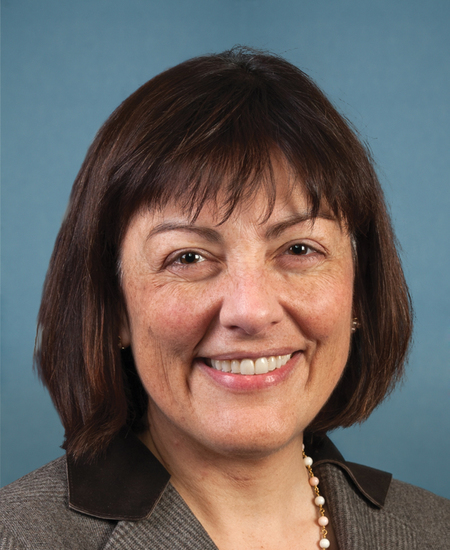
Rep. Suzan K. DelBene
Sponsored bills
Maddy summaryThis bill establishes a federal right to access contraception, protecting individuals' ability to obtain contraceptives and health care providers' ability to offer them without government interference. It prohibits states from banning or restricting contraceptive services, products, or information, including laws that force providers to deny care based on personal beliefs or limit access to specific methods. The law immediately overrides conflicting state regulations and ensures that contraception remains available regardless of factors like race, income, disability, or location. It applies to all individuals and providers, building on existing federal protections like the Affordable Care Act's coverage requirements.
This resolution supports federal investment in public K-12 schools, affirms that the Department of Education (ED) plays a vital role in the public education system, and states that public education funding should not be diverted (e.g., through the use of vouchers) to privately run K-12 schools. The resolution also rejects any claim that the executive branch has the legal authority to (1) dismantle or relocate ED or any of its major offices; or (2) reduce federal funding for public education, block federal grants for education, or transfer funding burdens for education to state and local governments.
Maddy summaryThis bill reauthorizes the Dr. Lorna Breen Health Care Provider Protection Act, extending mental health support programs for healthcare professionals through 2030 (previously ending in 2024). It requires funded programs to specifically address reducing administrative burdens on healthcare workers while continuing to promote access to mental health and substance use disorder services. The legislation directly affects healthcare providers across the U.S. who may access these federally supported resources. Key provisions include extending funding periods and mandating that grant recipients focus on easing workplace administrative tasks, alongside maintaining existing awareness initiatives. The bill does not create new programs but continues and refines existing mental health support for the healthcare workforce.
National Origin-Based Antidiscrimination for Nonimmigrants Act or the NO BAN Act This bill imposes limitations on the President's authority to suspend or restrict aliens from entering the United States. It also prohibits religious discrimination in various immigration-related decisions, such as whether to issue an immigrant or nonimmigrant visa, unless there is a statutory basis for such discrimination. The President may temporarily restrict the entry of any aliens or class of aliens after the Department of State determines that the restriction would address specific and credible facts that threaten U.S. interests such as public safety. The bill also imposes limitations on such restrictions, such as requiring the President, State Department, and the Department of Homeland Security (DHS) to (1) only issue a restriction when required to address a compelling government interest, and (2) narrowly tailor the suspension to use the least restrictive means to achieve such an interest. Before imposing a restriction, the State Department and DHS shall consult with Congress. The State Department and DHS shall report to Congress about the restriction within 48 hours of the restriction's imposition. If such a report is not made, the restriction shall immediately terminate. Individuals or entities present in the United States and unlawfully harmed by such a restriction may sue in federal court. The bill transfers the authority to suspend the entry of aliens traveling to the United States on a commercial airline that failed to comply with regulations related to detecting fraudulent travel documents from the Department of Justice to DHS.

This bill provides for the presentation of a Congressional Gold Medal to the Freedom Riders, in recognition of their contribution to civil rights by fighting for equality in interstate travel.
Health Care Workforce Innovation Act of 2025 This bill establishes the Health Care Workforce Innovation Program within the Health Resources and Services Administration to provide grants to federally qualified health centers, rural health clinics, and post-secondary vocational programs for developing education and training for allied health professionals (e.g., professionals providing clinical or non-clinical support services, community health workers, and health education specialists). Specifically, grant recipients must use the funds to carry out innovative, community-based programs to train allied health professionals, with a focus on supporting rural and underserved areas. Grant recipients may use the funds to launch or expand health care professional partnerships (e.g., between a grant recipient and a school), establish apprenticeship or other career programs, or invest in training equipment, among other activities.
Maddy summaryHR 898 establishes two grant programs to address aviation noise and pollution impacts on communities near airports. First, it creates a 3-year EPA-funded research initiative (with $2.5-$5 million grants) to measure noise and emissions using advanced technology, producing neighborhood-level data to identify disproportionately affected areas. Second, it launches a mitigation grant program prioritizing communities identified in the research, funding projects like noise-reducing home retrofits, health services, and environmental programs for disadvantaged groups. The bill requires grantees to collaborate with local communities and report annually on services provided, demographic impacts, and how the work addresses environmental justice concerns.
Maddy summaryHRES 88 is a symbolic House resolution designating January 31, 2025, as "Earned Income Tax Credit Awareness Day." It supports raising public awareness about the EITC - a refundable federal tax credit for low- and moderate-income workers - and calls on government agencies, nonprofits, and employers to promote access to the credit and free tax filing assistance. The resolution does not create new law or change eligibility; it solely aims to encourage more eligible workers to claim the credit they qualify for. Approximately 20% of eligible individuals currently do not claim the EITC, per the resolution’s background statements.
Stop Antiabortion Disinformation Act or the SAD Act This bill prohibits deceptive advertising for reproductive health services. Specifically, the bill makes it unlawful for a person (i.e., individual, partnership, corporation, association, or organization) to deceptively advertise the reproductive health services they offer, including by misrepresenting that the person (1) offers or provides contraception or abortion services (or referrals for such contraception or abortion services), or (2) employs or offers access to licensed medical personnel. The bill provides for enforcement by the Federal Trade Commission. In addition to any other penalty, violations are subject to a civil penalty that may not exceed the greater of $100,000 (adjusted annually for inflation) or 50% of the revenue earned during the preceding 12-month period by the ultimate parent entity of the person who violated the bill.