

Maddy summaryHR 648, the Agriculture Export Promotion Act of 2023, increases federal funding for key USDA export promotion programs to boost U.S. agricultural sales abroad. It raises annual funding for the Market Access Program from $200 million to $400 million and for the Foreign Market Development Cooperator Program from $34.5 million to $69 million, effective 2024-2029. These changes directly benefit U.S. farmers and agricultural businesses exporting commodities like soybeans, beef, and dairy by expanding their access to international markets. The bill aims to counter competitive disadvantages as foreign competitors grow their export programs faster than U.S. funding has kept pace. This represents a significant funding adjustment to address years of stagnant investment in these programs.
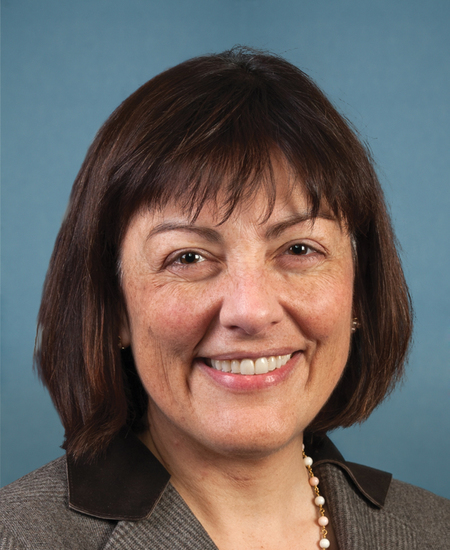
Rep. Suzan K. DelBene
Sponsored bills
Maddy summaryThis bill prohibits the possession, sale, or transfer of most large-capacity ammunition magazines (holding more than 15 rounds) for the general public, while exempting law enforcement officers (including campus security officers), retired officers, and certain licensed entities like nuclear facility security. It requires new magazines manufactured after enactment to have serial numbers and manufacturing dates, and allows federal grant funds to support buy-back programs for these devices. Existing owners of such magazines lawfully possessed before the law's enactment are exempt from the prohibition. The law applies to devices not already covered under current exemptions for law enforcement, nuclear security, and retired officers.
Maddy summaryThis bill amends the U.S. Code to expand appeal rights for certain postal employees. It allows non-unionized postal workers in supervisory, professional, technical, clerical, administrative, or managerial roles (covered under the Executive and Administrative Schedule) to directly appeal personnel decisions to the Merit Systems Protection Board (MSPB). Previously, these employees may have lacked this specific appeal path. The change clarifies their eligibility under Section 1005(a)(4)(A)(ii)(I) of Title 39, U.S. Code, ensuring they can seek MSPB review for employment-related disputes.
Booster Seat Safety Act This bill addresses labeling requirements and testing standards for booster seats used in motor vehicles. Specifically, the bill requires labels on booster seats to include the minimum recommended age (4 years) and weight (40 pounds) for a child to use the seat. It also requires that a label on a car seat or combination car seat list the maximum weight and height limits of the seat, as well as a recommendation to continue using the seat until the child exceeds the listed limits. Additionally, the National Highway Traffic Safety Administration (NHTSA) must either establish a minimum height recommendation for booster seats or a method for manufacturers to use to determine a minimum height recommendation. Once the minimum height or method is established, booster seat labels must also contain the minimum height recommendation. The NHTSA must also establish a standard for side-impact crash tests for booster seats and provide guidelines for creating a testing dummy that approximates a six-year old child for such crash tests. Further, the NHTSA must study systems for tethering child restraint systems in vehicles and make recommendations about using or modifying tether systems to maximize child safety.
Maddy summaryThis bill requires all ammunition sales to occur in person with identity verification, banning online or mail-order purchases for unlicensed individuals. It adds new licensing requirements for ammunition dealers and modifies existing firearm laws to explicitly include ammunition in sales, shipping, and recordkeeping rules. Licensees must report bulk sales of over 1,000 rounds to unlicensed buyers within one business day. The law directly affects ammunition sellers (both licensed and unlicensed) and buyers, making online ammunition transactions impossible without in-person verification.
Maddy summaryThis bill adjusts federal employee pay rates for 2024. It increases basic pay for all federal workers under statutory pay systems and prevailing rate systems by 4.7%, and raises locality pay adjustments by 4.0%. These changes directly affect all federal employees covered by the specified pay systems, including those in wage areas and under sections 5348/5349 of Title 5. The bill implements these raises without altering existing pay system structures or requirements.
Maddy summaryHR 506, the HARM Act, requires the U.S. Secretary of State to designate the Wagner Group as a foreign terrorist organization under immigration law within 90 days of the bill's enactment. This designation would directly affect the Wagner Group and its affiliated entities, subjecting them to sanctions under U.S. law. The bill mandates that the designation apply to any successor or affiliated groups engaged in activities against U.S. interests, including operations in Ukraine, Africa, and the Middle East. It also requires the Secretary of State to submit an annual report on the Wagner Group's international activities to specific congressional committees. The bill focuses on the legal process for designation, not on outcomes or advocacy.
Maddy summaryHRES 49 is a symbolic House resolution recognizing the cultural and historical significance of Lunar New Year in 2023. It formally acknowledges Lunar New Year's origins in China over 4,000 years ago, its celebration across East and Southeast Asia (including the Year of the Rabbit in Chinese tradition and Year of the Cat in Vietnamese tradition), and its observance by millions of Asian Americans and others in the U.S. The resolution expresses respect for Asian Americans and all global communities celebrating this holiday and extends well-wishes for a prosperous new year. As a ceremonial resolution, it has no legal effect or policy changes - it solely serves to affirm cultural recognition.
This resolution condemns the Supreme Court's holding in Dobbs v. Jackson Women's Health Organization (that there is no constitutional right to abortion) and expresses a commitment to instituting judicial reform and supporting access to abortion and the communities affected by the Court's ruling. It also urges the executive branch to advance reproductive justice.
Maddy summaryHR 430, the Lunar New Year Day Act, would designate the Lunar New Year as a federal holiday by adding it to the official list of holidays observed by federal employees. This change would require federal offices to close and federal employees to receive a paid day off on the actual date of the Lunar New Year each year. The holiday would be observed annually on the date the Lunar New Year falls, which varies yearly based on the lunar calendar. This bill directly affects federal workers and operations, aligning with existing federal holiday practices.