

Maddy summaryThis bill allows the Department of Veterans Affairs (VA) to use existing funds more flexibly to assist homeless veterans and veterans in HUD housing programs. It authorizes the VA to provide immediate needs like food, shelter, transportation for appointments, and communication devices (e.g., phones, tablets) to support veterans' stability and health. The law expands how VA funds can be applied beyond traditional housing assistance, focusing on urgent, practical support. It directly affects homeless veterans and those in HUD's housing assistance program by enabling faster, more adaptable aid. The bill amends existing VA law to improve responsiveness to veterans' immediate survival and health needs.
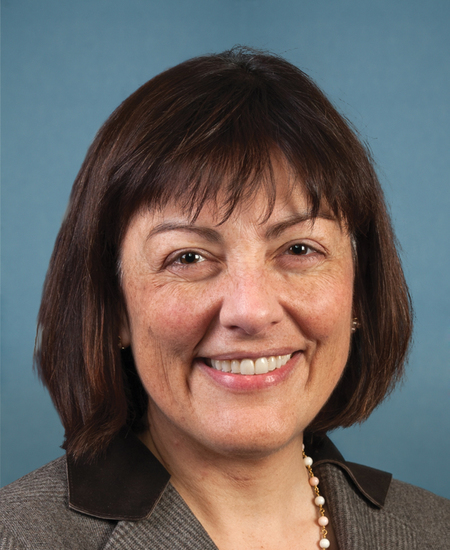
Rep. Suzan K. DelBene
Sponsored bills
Maddy summaryHR 2413, the Dental Care for Veterans Act, reclassifies dental care as standard medical services under the VA's existing benefits structure, eliminating prior restrictions that treated dental care separately. It modifies how dental appliances are procured and establishes a phased eligibility timeline: veterans already eligible for dental benefits gain immediate access, while others qualify over 1-4 years based on their current benefit status. The bill affects all veterans currently covered under VA dental programs, changing their access to care without creating new funding. Key provisions streamline dental service delivery under Title 38, aligning it with other medical benefits.
Maddy summaryHR 2414 extends CHAMPVA health coverage for children of veterans from age 21 to 26, regardless of marital status. This change directly affects children of veterans enrolled in the CHAMPVA program who would otherwise lose coverage upon turning 21. The bill amends Section 1781(c) of Title 38, U.S. Code, to update eligibility rules for medical care provided after the law's enactment. It does not impact existing coverage for children under a specific subsection (section 101(4)(A)(ii)).
Maddy summaryHR 1351, the "Save Oak Flat From Foreign Mining Act," repeals Section 3003 of the 2015 National Defense Authorization Act, which had mandated transferring 2,422 acres of Oak Flat in Arizona’s Tonto National Forest to foreign-owned Resolution Copper for mining. The bill withdraws this land from all mining activities, preventing Resolution Copper from using destructive block cave mining that would destroy the sacred site and harm water resources. Oak Flat, a National Register-listed Traditional Cultural Property sacred to Indigenous tribes, would be protected from a mine projected to deplete 775,000 acre-feet of groundwater over 40 years and create a 4,000-acre toxic waste dump. The legislation directly affects Resolution Copper (owned by Rio Tinto and BHP) and aims to halt the project that would obliterate cultural resources and exacerbate regional water shortages.
Eliminating Paperwork for Startups Act This bill requires the Internal Revenue Service to allow the election relating to property transferred in connection with services (i.e., to include in gross income the amount of such property in the year of transfer) to be made in electronic form.
Maddy summaryHR 2630, the Safe Step Act, requires group health plans and health insurance issuers to establish a clear, transparent process for patients or their doctors to request exceptions to medication step therapy protocols. These protocols typically force patients to try cheaper drugs first before covering more expensive alternatives. The bill mandates that plans must approve exceptions when prior treatments failed, delay would cause serious harm, a treatment is unsafe, or a patient is stable on a previously approved drug, with strict 72-hour (or 24-hour in emergencies) decision timelines. It also requires plans to publish the exception process online and limit documentation requests to only necessary medical information. This law directly affects health insurers, employers offering health plans, and patients using step therapy for prescription drugs.
Maddy summaryHJRES 54 proposes a constitutional amendment stating that only natural persons (human beings) have rights protected by the U.S. Constitution, explicitly denying constitutional rights to corporations, limited liability companies, and other artificial entities. It would require governments to regulate or restrict corporate political contributions and spending to ensure equal access to elections, mandate public disclosure of all political spending, and clarify that campaign finance rules do not violate the First Amendment. This amendment directly affects corporations and other artificial entities by removing their constitutional standing in legal challenges and subjecting their political activities to stricter government oversight. If passed, it would fundamentally change how corporations interact with election laws and constitutional protections, though it preserves press freedom under Section 3. The bill is a proposed amendment requiring ratification by 3/4 of state legislatures to become part of the Constitution.
Maddy summaryThis bill creates a program allowing airports to seek federal funding for repairing or replacing sound insulation in residential buildings near airports. It directly affects homeowners who previously received federal noise mitigation assistance and now need repairs due to deteriorated or ineffective soundproofing. The key mechanism provides a one-time waiver of standard funding rules if an FAA noise auditor confirms the need - either due to increased aircraft noise or physical damage/deterioration from the original sound insulation. Homeowners must first exhaust warranties, insurance, or legal remedies before applying. The program requires verification that the insulation failure wasn’t caused by neglect and aligns with FAA noise exposure standards.
Maddy summaryThis bill allows Medicaid coverage for incarcerated individuals during the 30 days preceding their release from public institutions. It directly affects people transitioning from prisons or jails back into communities by extending health coverage during this critical period. The key mechanism amends the Social Security Act to remove a Medicaid exclusion for this 30-day window. Additionally, it requires an 18-month report analyzing correctional healthcare standards, current discharge practices, and the potential impact of this coverage extension on post-release health access.
Helping Kids Cope Act This bill establishes programs within the Health Resources and Services Administration (HRSA) to support pediatric behavioral health care. Specifically, HRSA must award grants, contracts, or cooperative agreements to eligible health care providers for (1) integrating and coordinating pediatric behavioral health care within communities, and (2) pediatric mental health and substance use disorder workforce training. Additionally, HRSA must award grants, contracts, or cooperative agreements to hospitals or rural health clinics that predominately treat individuals under age 21 for expanding their capacity to provide pediatric behavioral health services. Recipients may use awards for constructing or modernizing sites of care and enhancing digital infrastructure, telehealth capabilities, or other improvements to patient care infrastructure.