

Maddy summaryHR 3850, the Pride In Mental Health Act of 2023, establishes a federal grant program to improve mental health and substance abuse services for LGBTQ+ youth (including nonbinary, intersex, and Two Spirit individuals). The bill directs the Health and Human Services Secretary to fund eligible organizations to provide trauma-informed care, cultural competency training for caregivers, school bullying prevention guidelines, and family support resources. It explicitly prohibits grant funds from being used for conversion therapy or advertising related to such therapy. The bill also requires data collection on LGBTQ+ youth mental health and a federal survey to measure psychological distress.
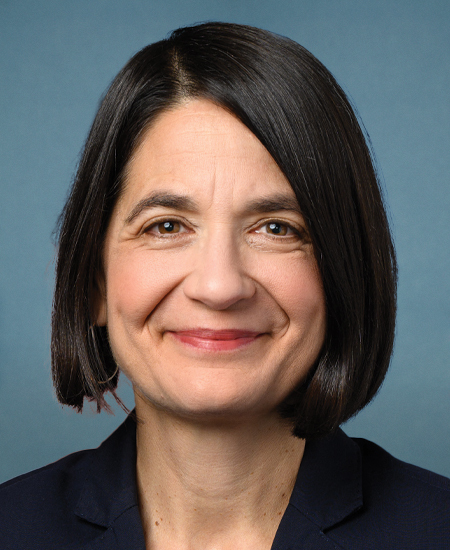
Rep. Becca Balint
Sponsored bills
Maddy summaryHR 3860, the Humane Correctional Health Care Act, removes the exclusion that previously prevented incarcerated individuals under 65 from receiving Medicaid or CHIP health care coverage. The bill amends the Social Security Act to allow states to provide Medicaid, CHIP, or pregnancy-related assistance to incarcerated people starting January 1, 2024. It requires the Comptroller General to report annually on health care access, quality, and outcomes for incarcerated people, including post-release enrollment in community health programs. The legislation also states Congress' view that incarceration should not be used to provide health care unavailable in communities, and federal funds should not replace community-based health investments. This is a policy change directly affecting incarcerated individuals' health care eligibility and state program administration.
Maddy summaryThe American Family Act establishes a monthly child tax credit of $250 per month for each child under age 6 and $300 per month for each child aged 6-18, with income limits of $150,000 for joint filers and $112,500 for other filers. The credit is refundable, meaning it can be paid even if the taxpayer owes no income tax, and will be adjusted annually for inflation. The bill includes detailed rules for determining eligibility, including requirements that the child resides with the taxpayer for more than half the month and provisions to prevent fraud through recapture of improperly received payments. The credit will be paid monthly in advance rather than as a single annual payment, with specific mechanisms for calculating and distributing the payments.
Maddy summaryThe ASSIST Act increases federal funding for mental health and substance use disorder services provided in schools and school-based health centers. It raises the federal funding match for these services to 90% (from the standard rate) and creates a new grant program to help schools hire more licensed mental health providers like counselors, social workers, and psychologists. Schools, school-based health centers, and students needing these services directly benefit from the increased funding and expanded access to care. The law requires grant recipients to provide culturally competent care and prohibits using funds for threat assessment teams, with annual reporting on provider numbers and service effectiveness.
Maddy summaryThis House resolution symbolically recognizes May as Jewish American Heritage Month, celebrating Jewish Americans' historical contributions to U.S. society and culture. It references rising antisemitism in 2022 (including ADL data showing a 36% increase in incidents) and includes a non-binding call for leaders to combat antisemitism. As a purely symbolic resolution, it does not create new policies or legal requirements.
Maddy summaryThe Universal School Meals Program Act of 2023 would establish a universal school meals program providing free breakfast and lunch to all children enrolled in participating schools, regardless of family income. Key provisions include eliminating income-based eligibility requirements for school breakfast and lunch programs, setting specific reimbursement rates ($2.80 for breakfast and $4.63 for lunch with annual inflation adjustments), and prohibiting schools from collecting debt for unpaid meals or "shaming" students. The bill also replaces references to "free or reduced price" with "economically disadvantaged students" in related laws and establishes new methods for identifying children from low-income backgrounds. This legislation would directly affect all public schools participating in the National School Lunch Program and School Breakfast Program.
Maddy summaryHR 3174 creates two new grant programs to address forests damaged by invasive plant pests and weeds. It authorizes competitive research grants (up to $400,000 annually per entity) for organizations like universities and nonprofits to study forest restoration methods, including biological control and genetic solutions, with a 20% non-Federal matching requirement. It also establishes implementation grants ($25 million annually) for eligible groups to carry out restoration projects, requiring a 10% non-Federal match and prioritizing areas most at risk from invasive species. Funding for these programs totals $3 million in 2023, increasing to $10 million annually for research and $25 million yearly for implementation through 2026.
Maddy summaryThis bill removes a barrier for college students seeking food assistance by amending the SNAP program rules. It directly affects students enrolled at least half-time in recognized colleges or training programs, who were previously automatically ineligible unless they met separate requirements. The key change eliminates the prior restriction (in section 6(e)) that barred most higher education students from SNAP, allowing them to qualify under the new provision in section 3(m)(5)(F). The changes take effect January 2, 2024.
Maddy summaryThe Closing the Meal Gap Act of 2023 amends the Food and Nutrition Act to update how SNAP (Supplemental Nutrition Assistance Program) benefits are calculated. It replaces the "thrifty food plan" with a "low-cost food plan" based on a specific 4-person family diet, requiring the government to reevaluate this plan by 2029 and every 5 years after. The bill also updates medical expense deductions, eliminates time limits on benefits, and allows Puerto Rico to join SNAP with specific transition requirements. These changes directly affect SNAP recipients, particularly in Puerto Rico, Hawaii, and Alaska, by adjusting benefit calculations to better reflect current food costs.
Maddy summaryHRES 459 is a resolution expressing the House of Representatives' support for designating June 2, 2023, as "National Gun Violence Awareness Day" and June 2023 as "National Gun Violence Awareness Month." It encourages the public to wear orange, promote gun safety awareness, and discuss community safety measures during this time, particularly highlighting the summer months when gun violence often increases. The resolution references statistics on gun violence deaths and pays tribute to victims like Hadiya Pendleton, but does not create new laws or impose requirements.