

Maddy summaryThis bill allows the U.S. Postal Service to ship alcoholic beverages under specific conditions. It enables registered businesses (like wineries, breweries, and retailers) to mail alcohol directly to consumers, provided the recipient is at least 21 with valid ID, the shipment isn’t for resale, and state alcohol taxes are paid upfront. The Postal Service must establish rules for delivery, registration, and verification, while explicitly preserving all existing state, local, or tribal laws governing alcohol sales and shipments. The bill does not override state restrictions on alcohol delivery, and the Postal Service remains liable for violations under state law.
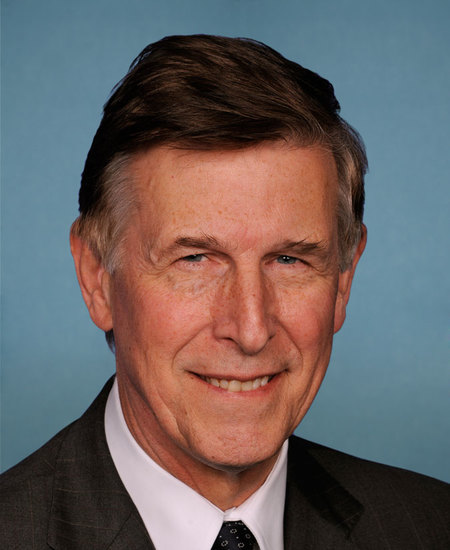
Rep. Donald S. Beyer, Jr.
Sponsored bills
Maddy summaryThis bill prohibits corporal punishment (such as spanking or paddling) in all schools receiving federal funding, directly affecting students, school personnel, and school administrators. It requires schools to notify parents within 24 hours if corporal punishment occurs and establishes enforcement through civil lawsuits by students/parents, Attorney General actions, and Office for Civil Rights oversight. The bill mandates states to submit school climate reports and develop training programs on positive behavioral interventions to reduce exclusionary discipline practices that disproportionately affect students of color, students with disabilities, and other marginalized groups. It creates a grant program to help schools implement these approaches, with priority given to schools with high suspension rates and disciplinary actions. The bill does not apply to private schools or home schools that don't receive federal funding.
Maddy summaryHCONRES 47 is a non-binding resolution urging the U.S. Senate to provide "advice and consent" for ratifying the UN Convention on Biological Diversity (CBD), which the U.S. signed in 1993 but has never ratified. Currently, the U.S. participates only as an observer in CBD negotiations without voting rights, limiting its influence on global biodiversity policies that affect national security and economic interests. The resolution notes the U.S. is already legally compliant with the CBD’s obligations under existing law and is a top international conservation funder. It argues that ratification would restore U.S. voting power and alignment with global efforts to address biodiversity loss, which impacts all Americans.
Maddy summaryHRES 430 is a non-binding resolution expressing Congress's sense that the U.S. should work to protect and conserve at least 50% of the nation's land, freshwater, and ocean ecosystems, while encouraging global diplomatic efforts to achieve similar conservation goals worldwide. It highlights biodiversity loss as an urgent crisis and emphasizes that protecting natural areas provides climate mitigation, clean water, economic benefits, and health advantages. The resolution does not create new laws or funding but calls for stakeholder collaboration and equitable approaches to conservation. It builds on existing goals like the America the Beautiful Initiative's 30% target by proposing a more ambitious 50% benchmark for U.S. ecosystems.
Maddy summaryThis resolution (HRES 423) supports designating May 19, 2023, as "Endangered Species Day" to recognize the importance of protecting at-risk wildlife. It does not create new laws or policies but formally acknowledges the value of species conservation and the 50th anniversary of the Endangered Species Act of 1973. The resolution highlights the biodiversity crisis, the Act's success in preventing extinctions (like for the California condor), and the cultural significance of species to Indigenous communities. It is a symbolic gesture by the House of Representatives, not a binding mandate, intended to raise awareness about conservation efforts.
Maddy summaryThis bill would designate approximately 1.7 million acres of public land in Utah's Colorado Plateau and Great Basin regions as wilderness areas, protecting them from development while preserving traditional uses by Indigenous communities. It establishes specific wilderness areas across Utah's red rock canyons, including the Great Basin Wilderness Areas, Grand Staircase-Escalante Wilderness Areas, and others, with detailed acreage for each designated zone. The bill includes administrative provisions for managing these areas, such as maintaining existing livestock grazing rights, setting road setbacks to protect wilderness character, and reserving water rights for the wilderness areas. This legislation directly affects how the Bureau of Land Management administers public lands in Utah and defines the boundaries for public use of these designated wilderness areas.
Maddy summaryThe Keeping All Students Safe Act prohibits the use of "unlawful" seclusion and restraint in schools, including physical restraint that's life-threatening, contraindicated for a student's disability, or not properly trained for. It requires schools to use less restrictive interventions first, mandates training for school personnel in crisis intervention, and establishes reporting requirements for restraint incidents, including immediate parent notification and annual public reporting. The bill prohibits using physical restraint as a planned intervention in student education plans and requires states to submit compliance plans with data on restraint incidents disaggregated by race, disability status, and other factors. It applies to public schools and programs receiving federal funding, but does not affect private schools not receiving federal funds or home schools.
Maddy summaryThe Extinction Prevention Act of 2023 establishes four separate conservation funds to protect specific species: butterflies across North America, plants in the Pacific Islands, freshwater mussels in the United States, and desert fish in the Southwest. Each fund authorizes $5 million annually from 2024-2029 to provide competitive grants for habitat protection, research, and conservation programs. Projects must be submitted by eligible organizations (states, tribes, nonprofits) and include specific elements like stakeholder engagement and demonstration of conservation potential. The Secretary of the Interior will review proposals based on criteria including conservation priority, sustainability, and matching funds, with annual reports required to Congress on fund usage and species status.
Maddy summaryThe Clean Energy Minerals Reform Act of 2023 establishes a new regulatory framework for hardrock mineral mining on federal lands, replacing the 1872 Mining Law. It requires permits for exploration and operations, imposes new royalty rates (minimum 8-12.5% of gross value), and creates a new Abandoned Hardrock Mine Reclamation Program funded by fees and royalties. The bill establishes a "small miner's lease" program with reduced fees for small operations (up to 200 acres) and requires financial assurance to cover reclamation costs. It also mandates consultation with Indian Tribes before mineral activities that may impact tribal lands or resources, and prohibits mining in protected areas including National Parks, wilderness areas, and sacred sites. The bill applies to all existing mining claims and new mineral activities on federal lands, with new rules taking effect upon enactment.
Maddy summaryHR 3537 authorizes the minting of commemorative coins to mark the 100th anniversary of the U.S. Foreign Service, established by the 1924 Rogers Act. The bill specifies three coin types ($5 gold, $1 silver, and half-dollar clad) with limited mintage (50,000 gold, 400,000 silver, 750,000 half-dollars) to be issued in 2025, featuring designs honoring diplomatic history. A surcharge on each coin sale ($35 for gold, $10 for silver, $5 for half-dollars) will fund the Association for Diplomatic Studies and Training (ADST) to support its oral history program and diplomatic preservation efforts. The coins will be legal tender, sold at cost-plus-surcharge, with all revenue directed to ADST per the bill's provisions.