

Reduce Excessive Decibels and Unwanted Commotion and Emissions to Heighten Enforcement and Limitation of Intrusive Chopper Operations to Protect Towns and Enhance Residents from Noise Act of 2023 or the REDUCE HELICOPTER Noise Act of 2023 This bill directs the Federal Aviation Administration (FAA) to establish and maintain a database for the Aircraft Noise Ombudsman to receive, collect, and provide access to information regarding helicopter noise complaints. Under the bill, an owner or operator of a helicopter that receives any complaint from an individual must submit the information to the ombudsman within 48 hours. The submission must include a description of any action the owner or operator is taking or plans to take to address the complaint (to the extent that the owner or operator is the subject of the submitted complaint). Individuals may also directly submit a helicopter noise complaint to the ombudsman. Within 48 hours of receiving a noise complaint submission, the ombudsman must (1) determine which owner or operator is the subject of the complaint, (2) determine whether the complaint is meritorious, and (3) input meritorious complaints into the database. In the case of a complaint not submitted by an owner or operator of a helicopter that is the subject of the complaint, the bill establishes requirements for FAA notification and owner or operator response. A violation of the database requirements is subject to civil penalties. The bill also requires any individual or entity that has registered a helicopter or that has at least a 10% ownership interest in a registered helicopter to submit specific information to the FAA to be verified. The bill also includes additional verification requirements for the issuance of dealers' certificates of registration.
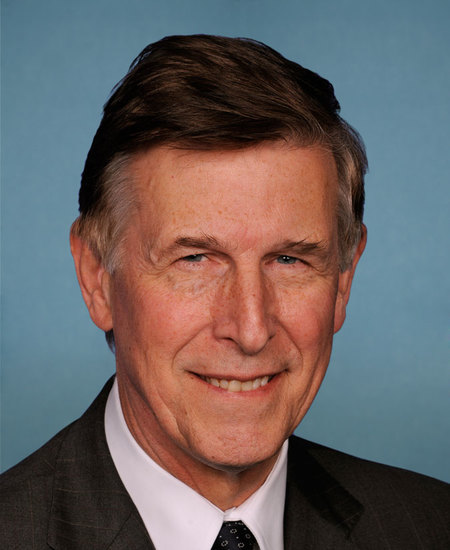
Rep. Donald S. Beyer, Jr.
Sponsored bills
Uyghur Human Rights Protection Act This bill designates certain residents of the Xinjiang region in China as prioritized refugees of special humanitarian concern and addresses other related issues. This priority designation shall apply to individuals (and the spouses, children, and parents of such individuals) who (1) reside in or fled Xinjiang and who suffered persecution on account of their peaceful political, religious, or cultural activities or associations, or have a well-founded fear of such persecution; or (2) have been formally charged, detained, or convicted for certain peaceful actions related to Xinjiang. Such an individual may not be denied admission into the United States based primarily on an arrest or other adverse government action due to that individual's participation in protests. The bill also waives certain immigration-related requirements for such individuals. Furthermore, a Chinese national seeking refugee status shall be considered to have been persecuted on account of political opinion if the Chinese government revoked that individual's residency in any region of China because the individual submitted a nonfrivolous application for a U.S. immigration benefit. Similarly, if the Chinese government revoked a Chinese national's citizenship, nationality, or residency because that individual filed for a U.S. immigration benefit, that revocation shall constitute a changed circumstance. (Among other things, a changed circumstance may allow an individual who has been rejected for asylum to apply again.)
Maddy summaryThe American Family Act establishes a monthly child tax credit of $250 per month for each child under age 6 and $300 per month for each child aged 6-18, with income limits of $150,000 for joint filers and $112,500 for other filers. The credit is refundable, meaning it can be paid even if the taxpayer owes no income tax, and will be adjusted annually for inflation. The bill includes detailed rules for determining eligibility, including requirements that the child resides with the taxpayer for more than half the month and provisions to prevent fraud through recapture of improperly received payments. The credit will be paid monthly in advance rather than as a single annual payment, with specific mechanisms for calculating and distributing the payments.
Maddy summaryThe TRACE Act requires firearm manufacturers to add a second, hidden serial number inside the firearm's frame or visible only under infrared light, starting 12 months after enactment. It also extends the retention period for instant background check records from 180 days to 180 days after compliance (previously 180 days from the check date) and mandates that licensed dealers conduct physical inventory checks of their firearms. These provisions directly affect firearm manufacturers, dealers, and the Bureau of Alcohol, Tobacco, Firearms and Explosives (ATF), which must implement the rules within 180 days. The bill aims to improve tracking of firearms and enforcement of background checks, with no mention of new taxes or fees in related appropriations.
Maddy summaryThis bill requires federal agencies to incorporate bird-safe design features in public buildings during construction, acquisition, or major renovations (over 50% facade alteration). It mandates the General Services Administration to develop and update a design guide with strategies like specialized glass, lighting modifications, and maintenance practices to reduce bird collisions. The guide must be shared with all federal agencies and include input from bird conservation experts. Exemptions apply to historic sites, the White House, Supreme Court, and Capitol complex. Annual reports on compliance and bird fatality assessments must be submitted to Congress.
Maddy summaryThe Barriers to Suicide Act of 2023 establishes a federal grant program to fund evidence-based suicide deterrents on bridges. The Transportation Secretary will award competitive grants to states or local governments for installing proven safety measures like nets or barriers, prioritizing areas with high suicide rates, with federal funding covering up to 80% of project costs. The bill also mandates a study by the Comptroller General to assess effective deterrents for non-bridge structures (e.g., buildings) and report findings within one year. It authorizes $10 million annually for 2024-2028 to support these initiatives. The law directly affects bridge safety planning for state and local agencies seeking federal assistance.
Maddy summaryThe SHOPP Act (HR 3127) expands the types of healthy foods SNAP participants can buy with their benefits. It allows fresh frozen fruits and vegetables to count toward nutrition incentives year-round and adds legumes (like beans and lentils) to the list of eligible items. This directly affects SNAP recipients by increasing access to affordable, nutritious options beyond just fresh produce. The changes take effect March 6, 2024, modifying the 2008 Food, Conservation, and Energy Act.
Maddy summaryThe Real Education and Access for Healthy Youth Act of 2023 would provide federal grants to support comprehensive sex education and sexual health services for young people ages 10-29, with specific focus on marginalized communities including Black, Indigenous, Latine, Asian American, Native Hawaiian, Pacific Islander, and LGBTQ+ youth. The bill authorizes $100 million annually for 2024-2029 to fund programs through grants for elementary/secondary schools (section 4), colleges (section 5), educator training (section 6), and youth-friendly sexual health services for marginalized young people (section 7). These programs must be evidence-informed, medically accurate, culturally responsive, age-appropriate, and trauma-informed, while addressing racial and gender inequities in current sex education approaches. The bill also repeals the "abstinence-only-until-marriage" program and redirects its funding to support this comprehensive approach, requiring grantees to report on implementation and impact.
Maddy summaryThis bill makes the adoption tax credit refundable, meaning adoptive parents who claim the credit can receive a cash refund even if they owe no federal income tax. Currently, the credit is non-refundable, so any excess credit beyond taxes owed is lost. The bill redesignates the credit in tax code (from section 23 to 36C), adds new requirements for third-party affidavits to verify adoptions, and applies to tax returns filed for 2024 and later. It directly affects adoptive parents who qualify for the credit but have no tax liability.
Maddy summaryThis bill creates a new tax credit for expenses related to "qualified access technology for the blind" under the Internal Revenue Code. It allows taxpayers to claim a credit of up to $2,000 per year (adjusted for inflation) for costs paid for hardware, software, or IT that converts visual information into formats usable by blind individuals, covering the taxpayer, their spouse, or a dependent who is blind. The credit is limited to $2,000 over any three consecutive tax years per blind individual and expires after 2028. It directly affects blind individuals and their families who purchase qualifying assistive technology. The credit cannot be claimed for expenses already covered by other tax deductions or credits.