

Protecting our Students in Schools Act of 2021 This bill prohibits the use of corporal punishment in schools that receive federal funding. Specifically, the bill authorizes the Department of Education (ED) to take specified actions (e.g., withholding funds and issuing cease-and-desist orders) for schools that allow school personnel, law enforcement officers, or school security guards to subject students to corporal punishment. The bill also establishes enforcement provisions, including a private right of action for a student who has been subjected to corporal punishment. Each state educational agency (SEA) that receives federal funding must submit specified information to ED, including a school climate report that describes the SEA's policies and procedures related to exclusionary and aversive discipline practices in schools. Additionally, the bill authorizes ED to award three-year grants to SEAs and, through them, subgrants to local educational agencies to implement positive behavioral interventions and supports to address student behavior and reduce exclusionary and aversive discipline practices. ED must promulgate regulations as necessary to ensure compliance with the bill. The Department of Defense and the Department of the Interior must ensure that the schools they operate or fund also comply with these regulations.
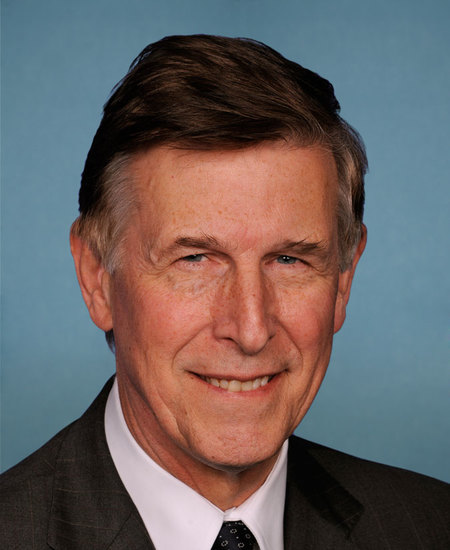
Rep. Donald S. Beyer, Jr.
Sponsored bills
This bill places restrictions on recurring political contributions or donations. Specifically, the bill prohibits any person from soliciting a recurring contribution or donation for a political committee, an independent expenditure, or an electioneering communication by any method that does not require the affirmative consent of the contributor or donor. In addition, the bill prohibits a political committee, a person funding an independent expenditure, or a person funding an electioneering communication from accepting a recurring contribution or donation unless the contributor or donor gave affirmative consent. This affirmative consent cannot be a passive action by the contributor or donor, such as failing to uncheck a prechecked box. Further, any person who accepts a recurring contribution or donation must (1) provide a receipt for the initial contribution or donation and for each recurrence that clearly and conspicuously discloses all material terms, (2) provide all information needed to cancel the recurring contribution or donation in each communication with the contributor or donor, and (3) immediately cancel recurring contributions or donations upon request of the contributor or donor.
Promoting Respect for Individuals' Dignity and Equality Act of 2021 or the PRIDE Act of 2021 This bill requires the equal treatment of same sex married couples for tax purposes. It permits such couples to amend their filing status to married filing jointly for tax returns outside of the statute of limitations and modifies tax rules relating to married couples to include same sex couples.
FAIR Leave Act or the Fair Access for Individuals to Receive Leave Act This bill repeals the limit on the aggregate number of workweeks of family and medical leave that spouses employed by the same employer may be entitled to during any 12-month period. The current limit is 12 aggregate workweeks.
Disclosure of Tax Havens and Offshoring Act This bill requires certain issuers of securities to annually disclose information related to the tax jurisdiction, income, and assets of their constituent entities on a country-by-country basis.
Paycheck Fairness Act This bill addresses wage discrimination on the basis of sex, which is defined to include pregnancy, sexual orientation, gender identity, and sex characteristics. Specifically, it limits an employer's defense that a pay differential is based on a factor other than sex to only bona fide job-related factors in wage discrimination claims, enhances nonretaliation prohibitions, and makes it unlawful to require an employee to sign a contract or waiver prohibiting the employee from disclosing information about the employee's wages. The bill also increases civil penalties for violations of equal pay provisions. Additionally, the Equal Employment Opportunity Commission (EEOC) and the Office of Federal Contract Compliance Programs must train EEOC employees and other affected parties on wage discrimination. The bill directs the Department of Labor to (1) establish and carry out a grant program to provide training in negotiation skills related to compensation and equitable working conditions, (2) conduct studies to eliminate pay disparities between men and women, and (3) make available information on wage discrimination to assist the public in understanding and addressing such discrimination. The bill establishes the National Award for Pay Equity in the Workplace for an employer who has made a substantial effort to eliminate pay disparities between men and women. It also establishes the National Equal Pay Enforcement Task Force to address compliance, public education, and enforcement of equal pay laws. Finally, the bill requires the EEOC to issue regulations for collecting from employers compensation and other employment data according to the sex, race, and national origin of employees for use in enforcing laws prohibiting pay discrimination.
Stop Mental Health Stigma in Our Communities Act This bill requires the Substance Abuse and Mental Health Services Administration to develop and implement an outreach and education strategy regarding behavioral health issues among the Asian American, Native Hawaiian, and Pacific Islander populations. The strategy must be designed to promote behavioral and mental health and reduce stigma associated with mental health conditions and substance abuse among such populations.
Social Media Disclosure And Transparency of Advertisements Act of 2021 or the Social Media DATA Act This bill requires consumer-facing websites and mobile applications with a large number of users to maintain advertisement libraries and make them available to academic researchers and the Federal Trade Commission (FTC). Each library must include, among other things, a digital copy of the advertisement content, a description of the target audience, and the number of views generated from the advertisement. The FTC and state attorneys general are authorized to enforce these requirements, and the FTC must use information from the advertisement libraries to enforce other laws within its jurisdiction. Additionally, the bill establishes a working group to address social media research access and make policy recommendations with respect to the information an interactive computer service (e.g., a social media company) should make available to academic researchers.
Greener Transportation for Communities Act This bill authorizes the use of tax-exempt facility bonds to fund zero-emission vehicle infrastructure used to charge or fuel zero-emissions vehicles. The bill defines zero-emissions vehicles as (1) any any light-duty vehicle or light-duty truck conforming to the applicable low-emission vehicle standard, or any heavy-duty vehicle with an engine conforming to such standard; or (2) vehicles that produce zero exhaust emissions of any criteria pollutant (or precursor pollutant) or greenhouse gas under any possible operational modes and conditions.
Reproductive Rights are Human Rights Act of 2021 This bill directs the Department of State to include in its annual reports on human rights in countries receiving U.S. development and security assistance a discussion of the status of reproductive rights in each country. This must include whether a country has adopted and enforced policies to (1) promote access to contraception and accurate, nondiscriminatory family planning and sexual health information; (2) provide services to ensure safe and healthy pregnancy and childbirth; (3) expand or restrict access to safe abortion services; and (4) prevent and treat sexually transmitted diseases. For each country, the reports shall also contain (1) data concerning pregnancy-related injuries and deaths; and (2) a description of the nature and extent of discrimination and violence against women, girls, and LGBTQI+ individuals in health care settings and the relevant government's response to such actions.