

Helping Homeless Veterans Act of 2021 This bill permanently extends the following Department of Veterans Affairs programs and services: homeless veterans reintegration programs, financial assistance for supportive services for very low-income veteran families in permanent housing, a grant program for homeless veterans with special needs, treatment and rehabilitation for seriously mentally ill and homeless veterans, housing assistance for homeless veterans, and the Advisory Committee on Homeless Veterans.
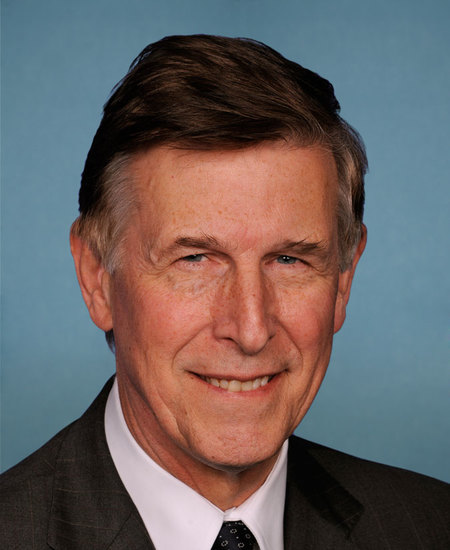
Rep. Donald S. Beyer, Jr.
Sponsored bills
Michael Lecik Military Firefighters Protection Act This bill establishes a presumption of service-connection for specified diseases becoming manifest in certain veterans to a degree of disability of 10% or more within 15 years of the veteran's separation from active military, naval, or air service. Under a presumption of service-connection, specific diseases or disabilities diagnosed in certain veterans are presumed to have been caused by the circumstances of their military service. Health care benefits and disability compensation may then be awarded. Veterans addressed by this bill are those who (1) are trained in fire suppression, and (2) served on active duty in a military occupational specialty or career field with a primary responsibility of firefighting or damage control for at least five years in the aggregate.
National Children's Museum Act This bill requires the General Services Administration (GSA) to cover the rent of the National Children's Museum for the duration of the museum's current building lease, including renewals. The GSA must use specified funds for such expenses.
Puerto Rico Statehood Admission Act This bill establishes a process for the admission of Puerto Rico into the union as a state, on an equal footing with all other states, based on a majority vote of the people of Puerto Rico.
American Dream and Promise Act of 2021 This bill provides certain aliens with a path to receive permanent resident status and contains other immigration-related provisions. The Department of Homeland Security (DHS) or the Department of Justice (DOJ) shall provide conditional permanent resident status for 10 years to a qualifying alien who entered the United States as a minor and (1) is deportable or inadmissible, (2) has deferred enforced departure (DED) status or temporary protected status (TPS), or (3) is the child of certain classes of nonimmigrants. The bill imposes various qualifying requirements, such as the alien being continuously physically present in the United States since January 1, 2021, passing a background check, and being enrolled in or having completed certain educational programs. DHS shall remove the conditions placed on permanent resident status granted under this bill if the alien applies and meets certain requirements, such as completing certain programs at an educational institution, serving in the military, or being employed. Furthermore, DHS and DOJ shall cancel the removal of certain aliens who had TPS, were eligible for TPS, or were eligible for DED status on certain dates. Such an alien shall receive permanent resident status upon meeting certain requirements and applying for such status within three years of this bill's enactment. For an alien seeking permanent resident status under this bill, DHS may (1) waive certain grounds of inadmissibility, or (2) provisionally deny the application if the alien poses a danger to public safety or has knowingly participated in certain offenses involving a criminal street gang. An alien shall have the right to administrative and judicial review of a denial or revocation of permanent resident status granted under this bill. An alien seeking judicial review of a provisional denial shall be appointed counsel upon request. An alien who appears to be prima facie eligible for relief under this bill shall receive a reasonable chance to apply for such relief and may not be removed until there is a final decision on that application for relief. DHS may not use information from applications filed under this bill or for Deferred Action for Childhood Arrivals status for immigration enforcement purposes. DHS shall establish a grant program for nonprofit organizations that assist individuals with certain immigration-related issues. This bill also repeals a restriction that bars a state from providing higher education benefits to undocumented aliens unless those benefits are available to all U.S. nationals without regard to residency in the state.
National Heritage Area Act of 2021 This bill establishes a National Heritage Areas System to recognize certain areas of the United States that tell nationally significant stories and to conserve, enhance, and interpret the areas' natural, historic, scenic, and cultural resources that illustrate significant aspects of U.S. heritage, and authorizes appropriations through FY2034 for each National Heritage Area. Through such system, the Department of the Interior may provide technical and financial assistance to local coordinating entities to support the establishment, development, and continuity of such areas. The bill extends the authority for the Erie Canalway National Heritage Corridor Commission and the Gullah/Geechee Cultural Heritage Corridor Commission until September 30, 2034. The local coordinating entity of a National Heritage Area, not later than three years after the area is included in the National Heritage Area System, shall submit to Interior a management plan for approval. Interior, not later than one year before the authorization for federal funding expires for a National Heritage Area, shall (1) conduct an evaluation of the accomplishments of that area, and (2) submit a report detailing the evaluation to specified congressional committees. Based upon the evaluation, Interior shall prepare a report with recommendations for the National Park Service's continued role, if any, with respect to the area. Interior may carry out or certify a study to assess the suitability and feasibility of designating a specific geographic area as a National Heritage Area to be included in the National Heritage Area System.
Pink Tax Repeal Act This bill prohibits product manufacturers or service providers from selling substantially similar products at different prices based on the gender of the intended purchaser. If, for example, the only difference between two products is the color, they are substantially similar. The bill provides authority for the Federal Trade Commission and state attorneys general to enforce these requirements.
Hastening Arms Limitations Talks Act of 2021 or the HALT Act of 2021 This bill prohibits the obligation or expenditure of funds to conduct an explosive nuclear weapons test that produces yield unless (1) the President details any change to the condition of the U.S. nuclear weapons stockpile from the previous year, and (2) Congress enacts a joint resolution approving the test. Further, the bill declares it to be U.S. policy to lead international negotiations on specific arms-reduction measures.
Millionaires Surtax Act This bill imposes an additional 10% tax on individual taxpayers whose modified adjusted gross income exceeds $2 million ($1 million for taxpayers not filing a joint return or surviving spouses). The bill sets forth special rules for the taxation of nonresident aliens and citizens and residents living abroad, and exempts charitable trusts from such tax.
Equal Dignity for Married Taxpayers Act of 2021 This bill modifies several tax provisions that refer to married couples to make the provisions equally applicable to legally married same-sex couples.