

Black History is American History Act This bill requires entities (e.g., institutions of higher education, libraries, and museums), in order to be eligible for certain grants administered by the Department of Education (ED), to include Black history in their teaching of American history. It also requires Black history to be included in tests administered by the National Assessment of Educational Progress (NAEP). Specifically, the bill mandates the inclusion of Black history as a required component of American history for such entities to be eligible for American History and Civics Academies' competitive grants. These grants support the establishment of (1) Presidential Academies for Teachers of American History and Civics, which offer workshops to teachers of American history and civics to strengthen their knowledge and prepare them to teach in these subjects; and (2) Congressional Academies for Students of American History and Civics, which support high school students in developing an understanding of these subjects. (Currently, Black history is not a required component of American history for either academy.) In addition, ED must give priority to grant applicants that align their activities with programs and resources of the Smithsonian Institution's National Museum of African American History and Culture. The bill also requires the inclusion of Black history in tests administered by the NAEP, which measures student academic achievement in various subjects.
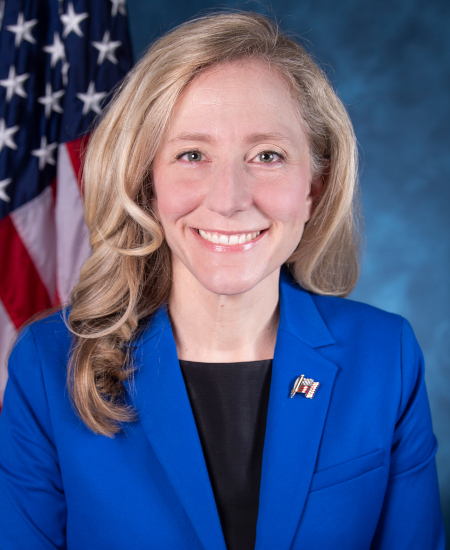
Rep. Abigail Davis Spanberger
Sponsored bills
Telehealth Modernization Act This bill modifies requirements relating to coverage of telehealth services under Medicare. Specifically, the bill extends certain flexibilities that were initially authorized during the public health emergency relating to COVID-19 (i.e., coronavirus disease 2019). Among other things, the bill allows (1) rural health clinics and federally qualified health centers to serve as the distant site (i.e., the location of the health care practitioner); (2) the home of a beneficiary to serve as the originating site (i.e., the location of the beneficiary) for all services (rather than for only certain services); and (3) all types of practitioners to furnish telehealth services, as determined by the Centers for Medicare & Medicaid Services.
Children's Health Insurance Program Pandemic Enhancement and Relief Act or the CHIPPER Act This bill extends through FY2022 the 11.5% increase to the enhanced federal matching rate, also known as the enhanced Federal Medical Assistance Percentage (FMAP), that is otherwise applicable under the Children's Health Insurance Program (CHIP), subject to specified conditions. For example, in order to receive the increased FMAP in FY2021 and FY2022, a state must cover, without cost-sharing, testing and treatment for COVID-19 (i.e., coronavirus disease 2019), including vaccines, specialized equipment, and therapies.
K2 Veterans Care Act of 2021 This bill establishes a presumption of service-connection for certain diseases becoming manifest in a veteran who served on active duty at Karshi-Khanabad (K2) Air Base in Uzbekistan between January 1, 2001, and December 31, 2005. Specifically, there must be a presumption of service-connection for veterans who manifest illnesses that have a positive association with exposure to jet fuel, volatile organic compounds, high levels of particulate matter, depleted uranium, asbestos, or lead-based paint, as determined by the National Academies of Sciences, Engineering, and Medicine (NASEM). Under a presumption of service-connection, specific conditions diagnosed in certain veterans are presumed to have been caused by the circumstances of their military service. Health care benefits and disability compensation may then be awarded. Veterans who served at K2 Air Base during the specified period are eligible for Department of Veterans Affairs hospital care, medical services, and nursing home care for an illness that has been determined by NASEM to have a positive association with exposure to jet fuel, volatile organic compounds, high levels of particulate matter, depleted uranium, asbestos, or lead-based paint.
Juneteenth National Independence Day Act This bill establishes Juneteenth Independence Day as a federal holiday.
American Values and Security in International Athletics Act This bill requires the Department of State to distribute specified briefing materials to individuals representing the United States at international athletic competitions. These materials must contain information on human rights concerns and personal privacy and security risks posed by certain host countries (e.g., specified communist countries and countries that do not meet certain minimum standards with respect to human trafficking and are not making significant efforts to do so).
National Apprenticeship Act of 2021 This bill provides statutory authority for the registered apprenticeship program within the Department of Labor and for related grant programs. The bill provides statutory authority for the Office of Apprenticeship (OA) within Labor. The OA's responsibilities include (1) supporting the development of apprenticeship models; (2) recognizing qualified state apprenticeship agencies, and operating apprenticeship offices in states without a recognized agency; (3) providing technical assistance to state agencies; (4) periodically updating requirements for each occupation in the apprenticeship program and determining whether to approve new occupations for the program; (5) promoting greater diversity in the national apprenticeship system; and (6) awarding grants provided by this bill. The bill also establishes in statute the responsibilities of state apprenticeship agencies and offices, including (1) providing technical assistance to stakeholders, (2) resolving complaints, (3) establishing state performance goals, and (4) including in its written plan a description of how its apprenticeship programs align with the skills needs of the state's employers. The OA shall enter into an agreement with the Department of Education to promote the integration and alignment of apprenticeship programs with secondary, postsecondary, and adult education. The OA shall award grants, contracts, or cooperative agreements to eligible entities to (1) expand national apprenticeship system programs, including by expanding pre-apprenticeship and youth apprenticeship programs; (2) encourage employer participation; and (3) strengthen alignment between the apprenticeship system and education providers. The bill provides statutory authority for criteria for various programs, including (1) quality standards for apprenticeships, (2) requirements for apprenticeship agreements between a program sponsor and an apprentice, and (3) acceptable uses for grant funds awarded by this bill. The bill also provides statutory authority for the National Advisory Committee on Apprenticeships. The committee's duties shall include advising the OA on matters relating to this bill and providing recommendations on topics such as increasing the participation of populations not traditionally involved in the national apprenticeship system. Labor shall engage an independent entity to conduct research on ways to improve the management and effectiveness of national apprenticeship system programs.
Medicare-X Choice Act of 20 21 This bill establishes and funds the Medicare Exchange health plan, which allows individuals who are not otherwise eligible for Medicare to enroll in a government-administered health insurance plan. The Centers for Medicare & Medicaid Services (CMS) must offer such plan in certain individual health insurance exchanges beginning plan year 2022 and offer it in all individual health insurance exchanges beginning plan year 2025. CMS must offer the plan in the small group market in all geographic areas for plan year 2025. The plan must cover primary care services without cost sharing and meet the same requirements, including essential health benefits, as existing health insurance exchange plans. Unless they opt out, health care providers enrolled under Medicare or under a state Medicaid plan must participate in the plan and are reimbursed at Medicare rates. The bill establishes a grants program for community organizations, educational institutions, and health agencies to create service partnerships and establish interactive data systems for health care providers. Additionally, the bill expands the premium tax credit available for plans purchased through an exchange and eliminates the restriction on the Department of Health and Human Services negotiating prescription drug prices for Medicare.
Living Donor Protection Act of 2021 This bill prohibits certain insurance carriers from discriminating against, and provides other protections for, living organ donors. Specifically, carriers may not deny, cancel, or otherwise impose conditions on policies for life insurance, disability insurance, or long-term care insurance based on an individual's status as a living organ donor. The bill also expressly specifies that recovery from organ-donation surgery constitutes a serious health condition that entitles eligible employees to job-protected medical leave. In addition, the Department of Health and Human Services must update educational materials on live organ donation to include information about the benefits of live organ donation and about access to insurance for living organ donors.
Revitalize and Expand SNAP Education and Training for America's Future Act or the RESET for America's Future Act This bill increases federal reimbursement for certain state employment and training programs under the Supplemental Nutrition Assistance Program (SNAP, formerly known as the food stamp program). The Department of Agriculture (USDA) must issue certain guidelines that permit a state to submit for full and expedited federal reimbursement of any costs incurred through SNAP employment and training programs that meet certain criteria (e.g., programs with proven positive outcomes), with no match requirement. USDA must temporarily reimburse each state 100% of costs incurred in connection with transportation costs and other expenses related to participation in such programs through the end of the COVID-19 (i.e., coronavirus disease 2019) public health emergency or two years, whichever is later. It must also reimburse each state 100% of costs incurred to build, modernize, or improve state and local data systems related to SNAP employment and training programs. Further, USDA must commission a thorough national assessment of its SNAP employment and training programs to develop a strategy for continuous improvement to the programs.