Maddy summaryThe ARCH Act extends funding for two critical rural hospital payment programs through 2029 (instead of 2024). It directly affects rural hospitals classified as Medicare-dependent hospitals (MDHs) or low-volume hospitals (LVHs), ensuring continued financial support. Key provisions include extending payment methodologies, allowing hospitals to decline reclassification, and requiring a GAO report analyzing rural hospital classification overlaps and recommending improvements. The GAO must report within 180 days on classification criteria, overlaps, and potential changes to improve rural hospital sustainability and patient access.
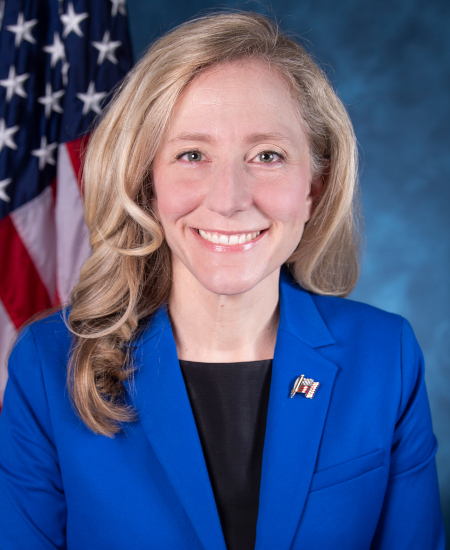
Rep. Abigail Davis Spanberger
Sponsored bills
Maddy summaryHR 6283, the DRUG Act, regulates pharmacy benefit managers (PBMs) to prevent practices that may increase prescription drug costs for consumers. The bill prohibits PBMs from earning revenue based on drug prices or discounts, requiring them to charge flat dollar service fees instead of fees tied to drug costs. It bans PBMs from steering patients to pharmacies they own or control, mandates equal reimbursement for affiliated and non-affiliated pharmacies, and prohibits charging different fees for the same drug. These provisions apply to group health plans, health insurance issuers, and PBMs, with enforcement beginning for plan years starting January 1, 2026. Violations would result in $10,000 daily penalties and require disgorgement of improperly received payments.
Maddy summaryHR 6110, the Access to Inpatient Rehabilitation Therapy Act of 2023, would change how Medicare determines eligibility for inpatient rehabilitation therapy. It restores physicians' authority to modify a patient's therapy plan after admission to include additional medically necessary services - such as recreational or respiratory therapy - beyond the current four required therapies (physical, occupational, speech therapy, and orthotics/prosthetics). This applies to Medicare beneficiaries in inpatient rehabilitation facilities who already meet the initial requirement of needing at least two of the core therapies at admission. The change takes effect after December 31, 2023, allowing treatment teams to tailor care more flexibly based on patient needs.
Maddy summaryThe Drug-price Transparency for Consumers Act of 2023 would require pharmaceutical companies to include the standard list price (wholesale acquisition cost) for a 30-day supply in direct-to-consumer advertisements for drugs covered by Medicare or Medicaid. It exempts low-cost drugs priced under $35 for a 30-day supply and mandates that the price be displayed clearly in ads. Manufacturers failing to comply could face civil penalties of up to $100,000 per violation, with regulations to be established within one year of enactment. The bill aims to provide consumers with upfront price information to help them compare costs before discussing treatment options with healthcare providers.
Maddy summaryThe Lowering Drug Costs for American Families Act expands Medicare's drug price negotiation program from 20 to 50 drugs, allowing the government to negotiate lower prices for these medications. It requires private health insurance plans and group health coverage to apply these negotiated prices to their members' cost-sharing for covered drugs, with plans able to opt out while publicly disclosing their decision. The bill also extends these negotiated prices to drugs covered by commercial insurance markets, not just Medicare. This would directly affect Medicare beneficiaries and people with private health insurance who take the negotiated drugs.
Maddy summary# Summary of the Farm Workforce Modernization Act of 2023 This comprehensive legislation introduces significant reforms to employment verification and immigration processes in the United States, with particular focus on agricultural workers. Key provisions include: ## Electronic Verification System (Section 301) - Establishes a new electronic verification system (replacing E-Verify) that must confirm identity and employment authorization within 3 business days - Includes photo matching tools, individual monitoring features, and fraud prevention measures - Requires employers to verify employment eligibility through this system ## Agricultural Industry Requirements (Section 302) - Mandates electronic verification for agricultural employers based on business size: * 500+ employees: 6 months after application period * 100-499 employees: 9 months after application period * 20-99 employees: 12 months after application period * 1-19 employees: 15 months after application period - Creates rural access points through USDA offices to assist with verification challenges ## System Modernization (Section 303) - Repeals the E-Verify Program and replaces it with the new verification system - Requires former E-Verify users to transition to the new system ## Compensation for Errors (Section 301) - Establishes an Electronic Verification Compensation Account to reimburse workers for lost wages due to government errors in verification - Includes procedures for contesting non-confirmations and appealing final nonconfirmations ## Additional Protections - Prohibits unfair immigration-related employment practices (e.g., terminating employees due to tentative nonconfirmations) - Creates a new compensation mechanism for workers wrongfully denied employment - Requires employers to provide specific notices to individuals with verification issues This legislation represents a major overhaul of employment verification processes, with special attention to agricultural workers and a focus on reducing errors that could lead to wrongful termination or denied employment. It also includes significant protections for workers against discrimination based on immigration status.
Maddy summaryThe CONNECT for Health Act of 2023 aims to expand access to telehealth services under Medicare by removing barriers that previously limited who could provide these services and where they could be delivered. The bill eliminates geographic restrictions on telehealth coverage, allows telehealth services to be provided from the patient's home and other clinically appropriate locations, and expands the types of healthcare providers who can offer telehealth services. It also improves the process for adding new telehealth services to Medicare coverage and includes provisions to ensure quality measurement includes telehealth services. This legislation directly affects Medicare beneficiaries seeking remote care and healthcare providers delivering telehealth services, with key provisions taking effect between 2024 and 2025.
Maddy summaryHR 3851, the Access to Breast Cancer Diagnosis Act of 2023, requires most health insurance plans (including group and individual coverage) to cover diagnostic and supplemental breast exams without any out-of-pocket costs like copays or deductibles. This applies to medically necessary exams used to evaluate abnormalities detected during screening (diagnostic) or to screen high-risk individuals without abnormalities (supplemental), following National Comprehensive Cancer Network guidelines. Plans may still require prior authorization for these exams, and state laws providing stronger protections remain in effect. The law takes effect for plan years beginning January 1, 2024.
Maddy summary# Comprehensive Immigration Reform Bill Summary This document appears to be a draft of a comprehensive immigration reform bill with significant changes to U.S. immigration policy, particularly focusing on employment verification and asylum processing. ## Key Provisions ### Employment Eligibility Verification (E-Verify) System - **Replaces the current E-Verify system** with a new "Employment Eligibility Verification" system under Section 274A - **Phased implementation schedule** for different employer sizes (10,000+ employees, 500-10,000 employees, 20-500 employees, and fewer than 20 employees) - **New penalties** for violations, including: - Civil penalties ranging from $2,500 to $25,000 per violation - Criminal penalties of up to $5,000 per unauthorized alien - **Good faith defense** for employers who comply with verification requirements - **Repeal of Subtitle A of Title IV of the Illegal Immigration Reform and Immigrant Responsibility Act of 1996** ### Asylum Reform - **Establishment of 5 "Humanitarian Campuses"** along the southern border for processing asylum seekers - **Expedited asylum procedures** including: - Mandatory 72-hour rest period after arrival - Initial screening within 15 days - Expedited asylum decisions within 45 days for approved cases - Case management for those referred to immigration judges - **5 Western Hemisphere facilities** for asylum pre-screening and family reunification - **New requirements** for recording credible fear interviews and expedited removal proceedings - **Stricter penalties** for asylum fraud, including permanent ineligibility for asylum benefits ### Additional Provisions - **Criminal background checks** for sponsors of unaccompanied children - **Fraud prevention measures** for Social Security numbers and identity verification - **New verification system** with requirements for biometric checks, medical screenings, and legal orientation - **Provisions for vulnerable populations** including pregnant women, victims of violence, and people with disabilities The bill contains detailed implementation timelines (with many provisions taking effect within 1-5 years), specific numerical requirements for staffing, and extensive procedural requirements for processing immigrants and asylum seekers. This appears to be a comprehensive proposal that would significantly change U.S. immigration enforcement, asylum processing, and employer verification requirements.

Maddy summaryHR 3355 reauthorizes a federal program providing loan repayment assistance to healthcare professionals working in substance use disorder (SUD) treatment. It makes these repayments tax-free under the Internal Revenue Code and requires detailed annual reporting on applicants, including those denied due to insufficient funding. The program is funded at $75 million annually for fiscal years 2024-2028. This directly supports clinicians in SUD treatment who have student loan debt, helping address workforce shortages in addiction care.