

Maddy summaryThe Afghan Adjustment Act creates a pathway for certain Afghans who directly supported U.S. missions in Afghanistan during the 20-year U.S. military presence to adjust to lawful permanent resident status (green card holders). It specifically targets Afghans who worked with U.S. forces or agencies, including military personnel, security personnel, and their families, who received "Chief of Mission approval" for special immigrant status. Key provisions include new vetting requirements (in-person interviews and biometric screening), exemption from immigration numerical limits, $20 million annually for implementation, and a task force to develop resettlement strategies. The bill also establishes a new category of special immigrant visas for at-risk Afghan allies and sets a two-year application deadline after guidance is published.
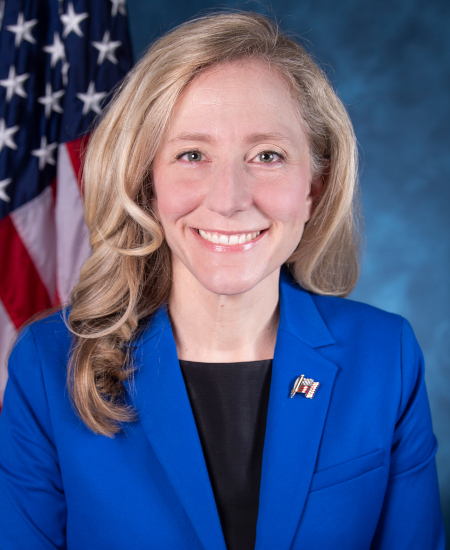
Rep. Abigail Davis Spanberger
Sponsored bills
Maddy summaryThe DISCLOSE Act of 2023 would increase transparency in political spending by requiring organizations making campaign-related disbursements over $10,000 to disclose the names and addresses of their major donors, including the top five funders for political communications. It would close loopholes allowing foreign nationals to secretly fund election activities through corporations or other entities by expanding the definition of prohibited foreign contributions. The bill would mandate "stand by every ad" disclosure requirements for political communications across all media, including audio, video, and internet ads, requiring clear identification of funders. It would also require reporting of disbursements related to Federal judicial nominations, which currently aren't subject to disclosure requirements. These provisions would apply to corporations, labor organizations, and certain nonprofits that engage in political activity.
Maddy summaryThe IDEA Full Funding Act (HR 4519) mandates specific annual increases in federal funding for special education programs under the Individuals with Disabilities Education Act (IDEA). It requires Congress to appropriate increasing amounts each fiscal year - from $5.87 billion for 2024 up to $55.53 billion for 2033 - to reach 40% of the national average per-pupil expenditure for public schools by 2033. This directly affects all public school districts serving students with disabilities, as federal IDEA funding supports their special education services. The bill sets fixed dollar amounts or percentage targets (whichever is greater) for each fiscal year, aiming to gradually close the long-standing gap between promised and actual federal funding. It does not alter eligibility for services but mandates higher, phased funding levels to meet the 40% target.
Cybersecurity for Rural Water Systems Act of 2023 This bill amends the Department of Agriculture (USDA) Circuit Rider Program to include cybersecurity technical assistance for rural water systems serving fewer than 10,000 people. Under the program, USDA provides technical assistance to rural water systems that are experiencing day-to-day operational, financial, or managerial issues. Specifically, the program's cybersecurity technical assistance must (1) assess system efficacy in protecting against cyber threats; and (2) implement cybersecurity plans, procedures, and technologies to protect against cyber threats. The bill also reauthorizes the Circuit Rider Program through FY2028.
Maddy summaryThis bill repeals the 1957 joint resolution (Public Law 85-7) that promoted peace and stability in the Middle East. It removes this outdated law from federal statutes, effective 90 days after enactment. The repeal has no new policy provisions or direct impact on current programs or individuals, as it only eliminates a historical legal reference. No affected parties or mechanisms are created, as this is a purely procedural repeal.
Maddy summaryHR 4400, the Veteran Overmedication and Suicide Prevention Act of 2023, requires the Department of Veterans Affairs (VA) to commission the National Academies of Sciences, Engineering, and Medicine to review all veteran suicides and related deaths from 2018-2023. This review analyzes medication use (including drugs with serious safety warnings or off-label prescriptions), treatment approaches (comparing medication-only vs. non-medication therapies like therapy), staffing levels for mental health providers, and data-sharing practices. It specifically examines veterans who died by suicide, violent death, or accidental death during the five-year period, focusing on medication histories, treatment protocols, and facility-specific patterns. The VA must submit the findings to Congress and the public within 30 days of the review's completion.
Maddy summaryHR 4422 (Global Respect Act) requires the President to publicly identify foreign officials responsible for violence, torture, or arbitrary detention against LGBTQI individuals and block their entry to the U.S., including revoking visas for them and their immediate families. It mandates annual reporting to Congress on the list of sanctioned individuals, the reasons for additions/removals, and efforts to coordinate with other countries on similar sanctions. The bill also updates U.S. human rights reporting requirements to explicitly include data on violence and discrimination against LGBTQI people worldwide. These measures aim to increase accountability for human rights violations against LGBTQI individuals without advocating for specific policy outcomes.
Maddy summaryHR 4340, the Therapeutic Fraud Prevention Act of 2023, prohibits paid providers from offering conversion therapy - defined as any commercial service attempting to change a person's sexual orientation or gender identity - and bans advertising that claims such therapy is effective or harmless. It directly affects therapists, counselors, or organizations offering paid conversion therapy services, including those advertising such services. Key provisions make it unlawful to provide, advertise, or facilitate paid conversion therapy, with enforcement led by the Federal Trade Commission (FTC) under consumer protection laws and allowing states to pursue civil actions. The bill explicitly excludes supportive care for gender transition or identity exploration from its definition of prohibited therapy.
Maddy summaryHRES 535 is a symbolic resolution designating November 12, 2023, as "National Warrior Call Day" to raise awareness about veterans' mental health and connection to support systems. It does not create new programs or funding but encourages Americans to call veterans or military members for meaningful conversation and to connect them with resources. The resolution cites rising veteran suicide rates (6,261 in 2019) and aims to address isolation through public engagement. It directly affects veterans, active-duty service members, and first responders by promoting community support. This is a non-binding awareness measure with no concrete policy changes.
Maddy summaryHR 3696 is a procedural bill that names the Department of Veterans Affairs community-based outpatient clinic in Lynchburg, Virginia, as the "Private First Class Desmond T. Doss VA Clinic." The bill directs all federal references in laws, regulations, maps, and documents to use this new name. It does not change the clinic's operations, funding, or services. This is a symbolic renaming effort with no substantive policy changes or direct impact on veterans' benefits. The bill affects only the official designation of this specific clinic location.