

Bring Entrepreneurial Advancements To Consumers Here In North America Act This bill provides tax incentives for relocating manufacturing facilities in the United States. Specifically, it allows accelerated depreciation (20-year recovery period) for nonresidential real property acquired in connection with the relocation of manufacturing facilities in the United States. It also excludes from gross income, for income tax purposes, gain on the sale or exchange of such relocated facilities. Finally, the bill allows permanent 100% expensing of manufacturing property relocated in the United States.
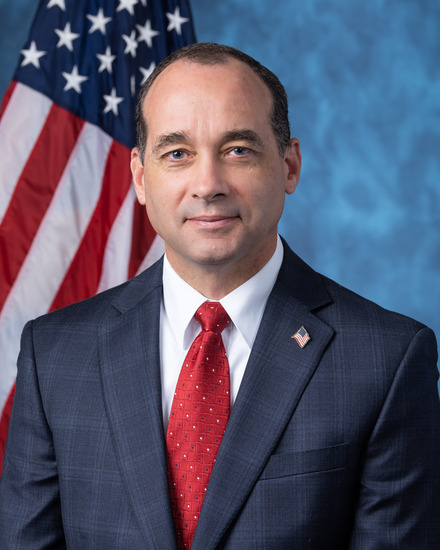
Rep. Bob Good
Sponsored bills
Protecting Individual Sovereignty Through Our Laws Act or the PISTOL Act This bill modifies the definition of rifle for purposes of the National Firearms Act to exclude from such definition a pistol equipped with a rear brace or rear attachment designed to assist the shooter in controlling the pistol. The bill also directs the Department of Justice to amend applicable regulations governing pistols to provide that the presence or absence of rear mounted braces or attachments that can assist a user in controlling the pistol shall not cause a firearm to be considered a pistol.
Finish the Wall Act This bill requires the Department of Homeland Security (DHS) to resume activities related to the construction of a barrier system along the U.S.-Mexico border and addresses other border-related issues. DHS must resume all such construction activities that were planned or underway prior to January 20, 2021. DHS must also expend all funds appropriated or explicitly obligated since October 1, 2016, for construction of this barrier system. DHS may not cancel contracts for activities related to such construction entered into on or before January 20, 2021. Furthermore, within 14 days of this bill's enactment, DHS must certify to Congress that U.S. Customs and Border Protection facilities that process adults taken into custody at the border are fully compliant with certain laws related to the collection of DNA. (Among other things, these laws allow for the collection of DNA samples from non-U.S. persons detained under U.S. authority.)
Travel Mask Mandate Repeal Act of 202 3 This bill prohibits federal agencies from mandating the use of masks or face coverings on planes, trains, buses, and other public conveyances and at transportation hubs to prevent the transmission of COVID-19. Specifically, the bill nullifies (1) the rule issued by the Centers for Disease Control and Prevention (CDC) on January 29, 2021, that mandates such use of masks or face coverings; and (2) orders and directives of the Transportation Security Administration that relate to the CDC rule.
Maddy summaryHR 29, the Border Safety and Security Act of 2023, grants the Secretary of Homeland Security authority to restrict entry at U.S. land or maritime borders for certain immigrants deemed "covered aliens" (those inadmissible under immigration law due to lack of proper documentation). The bill requires the Secretary to suspend entry if they cannot detain or process these individuals as required by existing immigration law. It also allows state attorneys general to sue the Secretary in federal court if they believe border policies harm their state's residents. The law defines "operational control" using terms from the Secure Fence Act of 2006. This bill directly affects immigrants seeking entry who fall under the specified inadmissibility category.
Maddy summaryHJRES 31 is a procedural resolution seeking congressional disapproval of a specific rule issued by the Department of Veterans Affairs (VA) concerning reproductive health services. It targets the VA's September 2022 rule (published in the Federal Register as 87 Fed. Reg. 55287), which established policies for reproductive health care access for veterans. If passed, this resolution would nullify the VA rule, preventing it from taking effect under the Congressional Review Act (Chapter 8 of Title 5, U.S. Code). The bill directly affects the VA’s ability to implement its reproductive health services policy for veterans.
Maddy summaryHCONRES 13 is a concurrent resolution expressing Congress's support for maintaining the current policy that prohibits imposing new fees on local radio stations for playing music. It states that Congress should not impose any performance fee, tax, royalty, or charge on local radio stations for broadcasting sound recordings over the air, or on businesses like bars and restaurants that play music publicly. The resolution argues that such fees would harm local radio stations - critical sources for emergency information and community programming - and jeopardize the economic model that has supported both radio and the music industry for decades. This resolution does not create new law but formally opposes potential legislative changes to the existing fee structure.
Maddy summaryHRES 96, the "Transparency in Federal Spending Resolution," requires that any House bill, resolution, or amendment authorizing or making appropriations must include a machine-readable table detailing program-specific funding amounts, annual breakdowns, and estimated debt servicing costs. This procedural rule change applies to all appropriations-related legislation considered by the House, directly affecting how such bills are processed. The bill itself does not alter spending levels but mandates greater disclosure of fiscal details before debate can begin. It aims to improve transparency in federal budgeting by standardizing how spending information is presented. (Note: As a procedural rule change, this summary is concise per the bill's nature.)
Maddy summaryHR 812, titled the "Inflation Reduction Act of 2023," would repeal the Inflation Reduction Act of 2022 (Public Law 117-169) and rescind unobligated funds from that law. This bill does not establish new policy but reverses the existing 2022 legislation, halting its ongoing programs and redirecting unused funding. It directly affects the continuation of the 2022 act's provisions, including climate and healthcare initiatives, by formally terminating them. The key mechanism is the repeal of the 2022 law and the rescission of remaining unobligated balances.
Maddy summaryHR 558 amends the Defense Production Act to prohibit China, Iran, North Korea, and Russia (and entities they control) from purchasing or leasing property within 10 miles of designated sensitive sites. These sites include U.S. military bases, ports, government facilities, and other locations where foreign access could threaten national security through intelligence collection or surveillance. The bill requires the Committee to notify Congress of any violations and applies to transactions occurring after its enactment. It directly affects foreign entities from the listed countries seeking real estate near critical U.S. infrastructure.