

Maddy summaryThe Equality Act (HR 15) amends federal civil rights laws to explicitly prohibit discrimination based on sexual orientation and gender identity in employment, housing, public accommodations, credit, and jury service. It expands existing protections under the Civil Rights Act of 1964 by adding sexual orientation and gender identity as protected characteristics under sex discrimination prohibitions. The bill clarifies that discrimination against LGBTQ people is a form of sex discrimination, consistent with the Supreme Court's Bostock decision, and adds specific definitions for gender identity and sexual orientation. This legislation directly affects businesses, employers, housing providers, financial institutions, and government entities that serve the public. The bill creates a more comprehensive legal framework to address discrimination that LGBTQ people face in multiple aspects of daily life.
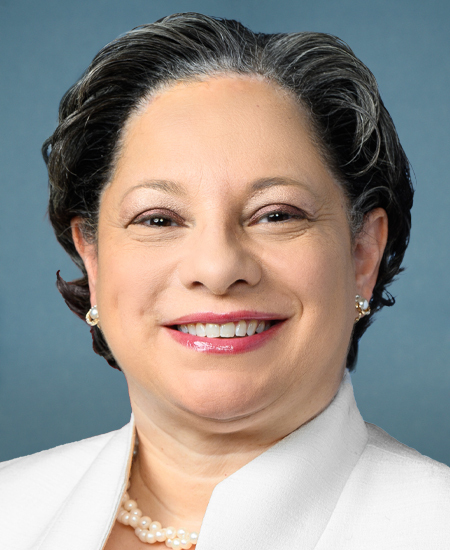
Rep. Jennifer L. McClellan
Sponsored bills
Maddy summaryThe RESEARCHER Act (HR 3054) requires federal research agencies to develop policies addressing financial instability for graduate students and postdoctoral researchers at federally funded universities. It mandates the Office of Science and Technology Policy to create guidelines within six months covering stipend increases (including location-based indexing), healthcare access, housing, food security, and family care support. The bill also adds new data collection requirements to track stipends and financial challenges by demographics, and directs the National Academies to study these issues with a report due within two years. Federal agencies must implement these guidelines within six months and report progress annually to Congress.
Maddy summaryHR 2313, the Celestial Time Standardization Act, directs NASA to develop a new time standard for lunar and deep space operations, addressing challenges with Earth-based time systems in space. It requires NASA to create a strategy for a coordinated lunar time, including features like accuracy for navigation, resilience without Earth contact, and scalability beyond the Moon. The bill mandates coordination with federal agencies (like Commerce and Defense), private companies, academic institutions, and international partners. NASA must report this strategy to Congress within two years, focusing on enabling future Moon missions and infrastructure.
Maddy summaryThis bill requires most private health insurance plans to cover diagnostic and supplemental breast exams with no out-of-pocket costs (like deductibles or copays) for enrolled patients. It specifically covers exams used to evaluate abnormalities found in screenings (diagnostic) or for high-risk screening without abnormalities (supplemental), based on medical guidelines. Plans can still require prior authorization for these exams, and state laws offering stronger protections remain in effect. The rule takes effect for plan years starting January 1, 2026.
Maddy summaryHR 3045, the West Bank Violence Prevention Act of 2025, imposes U.S. sanctions on foreign individuals and entities responsible for violence, displacement, or property destruction in the West Bank. It targets those directly involved in attacks on civilians, forced displacement, or property seizures, including settler leaders or officials of groups engaged in such activities. Key provisions require freezing assets of sanctioned individuals within U.S. jurisdiction and blocking their entry into the United States via visa restrictions. The law applies to foreign nationals meeting specific criteria outlined in the bill, not U.S. citizens or entities.
Maddy summaryHRES 341 is a symbolic House resolution expressing support for Earth Day, not a substantive bill. It urges the President to issue an Earth Day proclamation, encourages Americans to address environmental challenges (like climate change and litter), and calls for rejoining the Paris Agreement - though these are non-binding recommendations with no legal force. The resolution references historical environmental legislation (like the Clean Air Act) but does not create new policies, allocate funds, or change regulations. It directly affects no specific group, as it solely serves to affirm environmental values through symbolic recognition. (Note: The document header incorrectly lists "Federal Water Pollution Control Act" as the bill text, but this is a formatting error; the actual resolution is about Earth Day.)
Maddy summaryHR 2518 expands access to existing agricultural credit programs for businesses supporting the fishing industry. It amends the Farm Credit Act of 1971 to allow Farm Credit Banks and Production Credit Associations to provide loans and financial services to businesses that supply services directly related to the operating needs of fishermen or seafood harvesters (like equipment suppliers or processing services). This change specifically includes these service providers under the same eligibility rules currently applied to fishing producers themselves. The bill does not create new funding but broadens the scope of existing credit mechanisms to better serve the full fishing supply chain.
Maddy summaryHR 2473, the Healthy Food Access for All Americans Act, creates tax credits and grants to help establish grocery stores, food banks, and temporary food access points in areas with limited food access (called "food deserts"). The bill offers a 15% tax credit for new grocery stores or permanent food banks in food deserts, and a 10% credit for renovations or temporary food access points like mobile markets. To qualify, locations must meet specific criteria including being in areas with high poverty rates and limited access to grocery stores, and applicants must be certified by the government. The program aims to improve access to healthy food in underserved communities by making it more financially feasible for businesses to operate in these areas. The bill also requires annual updates to the USDA's Food Access Research Atlas to track food retailer locations.
Maddy summaryHRES 332 is a resolution designating April 11-17, 2025, as "Black Maternal Health Week" to raise awareness about maternal health disparities affecting Black women and birthing people in the U.S. It references CDC data showing Black women are 2-3 times more likely to die from pregnancy-related causes than White women and that the U.S. has the highest maternal mortality rate among developed nations. The resolution emphasizes the need to address systemic inequities contributing to these outcomes without creating new laws or funding. It serves as a symbolic recognition to amplify community-led efforts, such as those by the Black Mamas Matter Alliance, rather than implementing policy changes.
Maddy summaryHR 2906, the SERVICE Act, requires federal agencies to submit a detailed report to Congress and the Government Accountability Office (GAO) before reducing their workforce by more than 5% in a fiscal year. The report must analyze financial impacts (including pay, benefits, and replacement costs), mission effects on specific offices/services, and the agency’s analytical basis for the reduction. The GAO must then review the report within 180 days and assess whether it includes all required elements and credible supporting data. This 210-day review period applies to all agencies covered under the law, directly affecting federal workforce planning decisions. The bill aims to ensure transparency and evidence-based decision-making around federal staffing changes.